

What is an entrepreneur?
An entrepreneur is someone who starts or owns a business. Whether it’s in farming, retail, manufacturing or in the service sector, entrepreneurs are businesspeople who find their success by taking risks. In their pursuits, they often become disruptors in established industries.
Yet beyond this simple definition, coming up with a definitive answer to “What is an entrepreneur?” can be a difficult exercise, explains Étienne St-Jean, Canada Research Chair in Entrepreneurial Careers and a Professor at the Université du Québec à Trois-Rivières.
He says some in his field define an entrepreneur as someone who launches their own business, others will consider you one if you’ve started to pay employees, while some will only give you the entrepreneur designation—rather than a business owner—once your business is recording growth.
His definition of an entrepreneur? “Someone who creates, or owns and manages, a business,” he says, explaining that this would include small- and medium-sized business owner-managers, including those who bought the business from someone else. “As long as you have control over the firm’s strategic orientation, you’re an entrepreneur.”
Being an entrepreneur means carving your own path. “It’s a career choice. You’ve chosen to not work for a salary,” says St-Jean.
As long as you have control over the firm’s strategic orientation, you’re an entrepreneur.
Étienne St-Jean
Canada Research Chair in Entrepreneurial Careers and Professor at the Université du Québec à Trois-Rivières
What makes someone an entrepreneur?
For Brian King, a professor at HEC Montréal in the Department of Entrepreneurship and Innovation, the characteristics that define a good entrepreneur are the same traits that define a high-performing athlete, journalist or physician. “All the traits that drive people to success, you see them in an entrepreneur.”
A 2025 BDC study found that 40% of Canadian business owners cite independence as their main reason for becoming entrepreneurs.
What motivated you to become an entrepreneur?
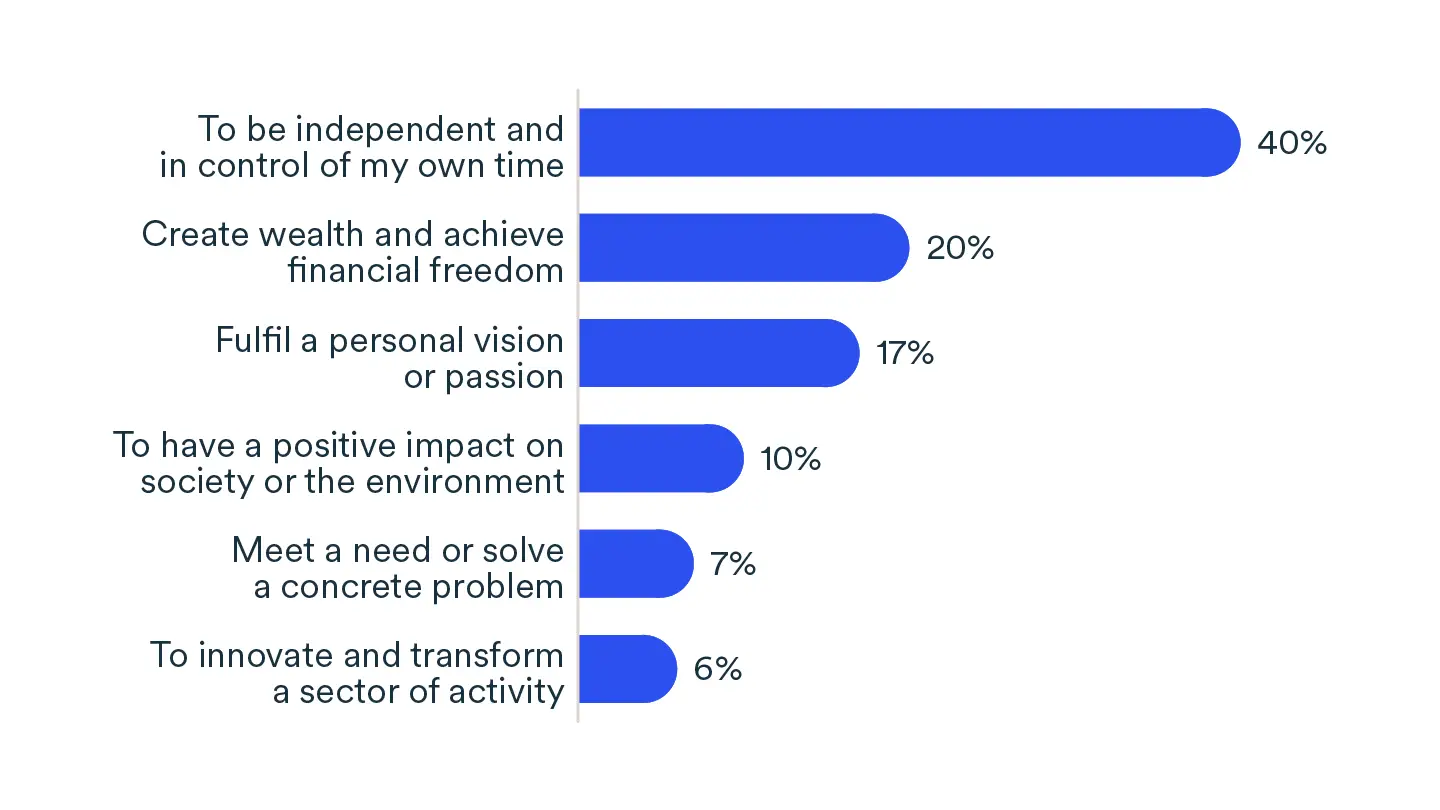
Source: BDC, State of Entrepreneurship Survey
How to become an entrepreneur
There are natural skills you’ll need as an entrepreneur, some that you can develop through experience or training, and others that will be part of the skillset of a trusted member in your new venture.
There are also steps to take, such as choosing the right product or service, and establishing networks, that will help you develop and bring your ideas to market.
Figure out if entrepreneurship is right for you
Before you decide to become an entrepreneur, you may want to look at your skillset and personality type.
Generally, you are well suited for entrepreneurship if you find yourself…
- constantly needing to learn
- taking on difficult projects
- looking for solutions
- tolerating ambiguity
- needing to act
- wanting to be your own boss
Are you unsure about your suitability for a career in entrepreneurship? Want to help confirm it could be the right path for you? Try BDC’s free Entrepreneurial Potential Self-Assessment to assess your entrepreneurial traits.
When you get your results, remember that while personality traits are important, personal circumstances, milieu and experience, as well as the timing of your venture, can be key factors in predicting the success of a would-be entrepreneur.
Get the skills to become a successful entrepreneur
As an entrepreneur, you will feel more confident and less stressed with the right skills to manage your business. Think about investing in your own development to help your business grow.
Managerial skills include:
Technical skills include:
Delegation is another key skill for entrepreneurs. King says many successful entrepreneurs recognize that they can’t do it all—as do investors. “Whenever a solo entrepreneur tries to raise venture capital, they generally aren’t very successful.” King suggests that solo entrepreneurs seek out a group of people with complementary skills to help them build their business.
In short, entrepreneurs who try to manage everything on their own often run into difficulties when they lack expertise in certain areas. Those who succeed tend to build strong teams and delegate key responsibilities.
Find an innovative niche
Ask yourself if your product or service stands apart from the crowd. By finding your niche and creating something with genuine value, rather than replicating what already exists, is key to achieving sustainable margins.
As St-Jean notes, “You need to be innovative and different. Starting a restaurant when there’s already a lot of restaurants in your city, that’s not very innovative.”
Get support
There are a number of organizations that budding entrepreneurs can take advantage of, including Futurpreneur, business accelerators, business incubators and seed funds.
King suggests approaching successful individuals for advice. “Reach out to people who are in your industry; they will actually help you.” He says you’d be surprised how many people are ready to aid new entrepreneurs.
Not every business owner will face the same challenges when setting up a new business, says St-Jean, who studies the process of launching ventures. “For some, it’s straightforward: they build the plan, they have the contacts, they have the capital. In just a few steps they’re in business. But for others, it’s a lot of trial and error and building up competencies.”
“Some entrepreneurs have the information and resources to move forward. But for those that don’t, they’re always navigating between having a plan and trying to execute the plan. They’re doing what is called effectuation, which is dealing with what they have at the moment,” says St-Jean.
King says most students should wait until they have some experience in the field before becoming entrepreneurs. “I don’t encourage our undergraduate students to launch themselves into business right from school. I suggest to them that they’re better off working for somebody and learn the necessary skills.”
He gives the example of a student who worked for a large company and became adept at digital marketing. When she spotted a tech opportunity, she convinced two people close to her to take leadership roles. She generated business by way of her new talents. “She was the person who was able to reach out through social media and really connect and get people excited about the company.”
Part-time entrepreneurs
A part-time or hybrid entrepreneur is someone who starts a new venture while still involved with their previous occupation. For example, you might decide to quit your salaried position as a robotics engineer once your new AI start-up becomes viable. Or perhaps you’re a new mom pursuing your passion for baby shoes while on maternity leave and those early sales eventually turn into a profitable business. Some refer to these as businesses on the side, side hustles or part-time businesses.
Part-time entrepreneurs are starting from a safer place, financially. “For some people, the new business is a way to complement their salary. Some will remain part-time and just want the new revenue from the entrepreneurial activity,” says St-Jean. He brings up the example of his friends who began a gin distillery, and, a year and a half into the business, sales are going well. However, some of the partners are still working in their day jobs. “Before they quit, they want to be sure that the business is running well.”
Entrepreneurship in Canada is large and diverse
Entrepreneurs make up a large part of the Canadian economy and represent a wide selection of the population.
Canada has approximately 1.1 million small‑ and medium‑sized businesses (SMEs). Together, they employ 7.9 million Canadians. In terms of economic output, SMEs generated nearly half of Canada’s private‑sector gross domestic product.
Every year, tens of thousands of Canadians, young and old, some with formal education, others having learned their entrepreneurial skills on the job, and many from diverse backgrounds, decide to launch a business.
The gap between male and female entrepreneurship rates in Canada
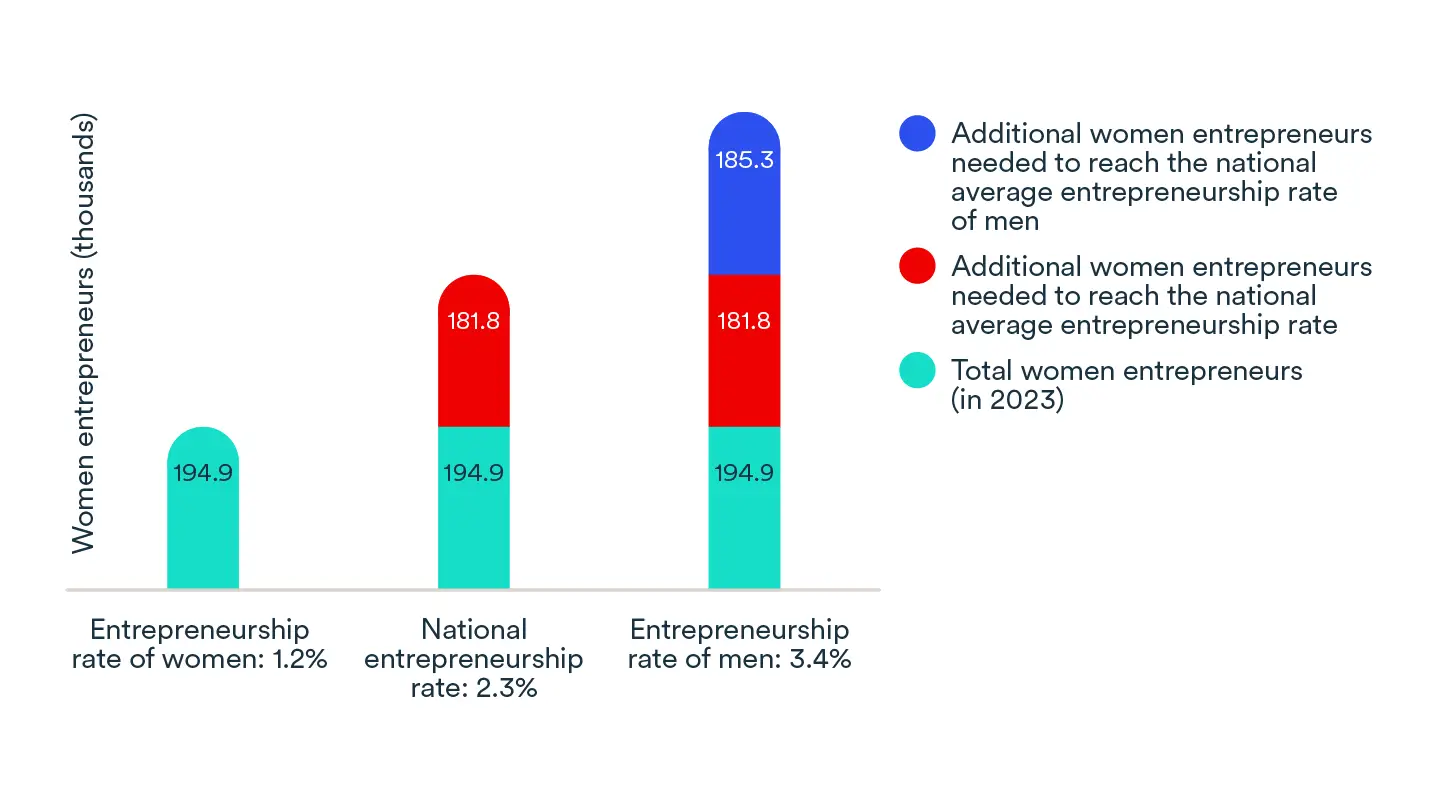
Source : Statistics Canada, special tabulations from the Labour Force Survey, BDC calculations.
The ability to become an entrepreneur should not be limited by gender, race or age. At BDC, we tailor advice for entrepreneurs who may face challenges not experienced by the general population. See the kinds of support you can receive if you are a:
Entrepreneurs and risk
Most new businesses survive their first five years. After five years, about 70% of businesses in the goods‑producing sector and 68% in the services‑producing sector are still operating.
Businesses fail because of macro-economic issues, such as the domination of markets by large players, as well as micro-economic factors, such as an individual who may not be ready to start a business.
St-Jean sees some problems with many would-be entrepreneurs having unrealistic expectations. “People think ‘I’ll work for myself, no boss, make a lot of money.’ They think of Elon Musk and Mark Zuckerberg.”
Most experts agree that doing research in advance, seeking out mentors, forming a good team and gaining a variety of experience before going into business will raise your chances of success when starting a new business.
The challenge is always coming up with an advantage over your competitor, and one that they just can’t immediately copy.
Brian King
Professor, Department of Entrepreneurship and Innovation, HEC Montréal
Entrepreneurs and stress
Entrepreneurs continue to face high levels of stress, and new data from a 2025 BDC study shows just how strongly mental health is affecting their productivity.
As economic and political uncertainty grows, along with global events and crises, more than one-third (36%) of business owners say mental health challenges interfere with their ability to work at least once a week.
The impact is even greater for younger entrepreneurs: 60% of those under 40 report weekly interference, compared to 19% of those aged 50 and over.
On a positive note, many entrepreneurs are taking meaningful steps to address their mental health. In the last year, 35% sought professional help, including 57% of entrepreneurs under 45. Those who accessed support reported clear benefits:
- 47% saw reduced anxiety
- 40% improved their stress management
More than half (51%) sought support after recognizing their own struggles, while 35% were encouraged by family and friends. This highlights how personal networks are crucial to well-being.
How entrepreneurs help the economy
Entrepreneurs have become the economic engines of Canada, and as St-Jean says, they also help spur innovation and growth. “When you have a new business that starts something more innovative, it forces the established businesses to change, to take on this new competitor. So, it’s a driver of innovation, which is a driver of growth.”
But there can also be a negative side to all this entrepreneurial activity.
“There are some highly skilled entrepreneurs who would otherwise be welcomed by established businesses. But they’re too busy trying to get their own businesses off the ground,” says St-Jean.
He adds that there are currently a lot of small and medium-sized businesses that need more employees and would better develop in an atmosphere where qualified workers, some of them being struggling entrepreneurs, were more available.
Entrepreneurship in a challenging environment
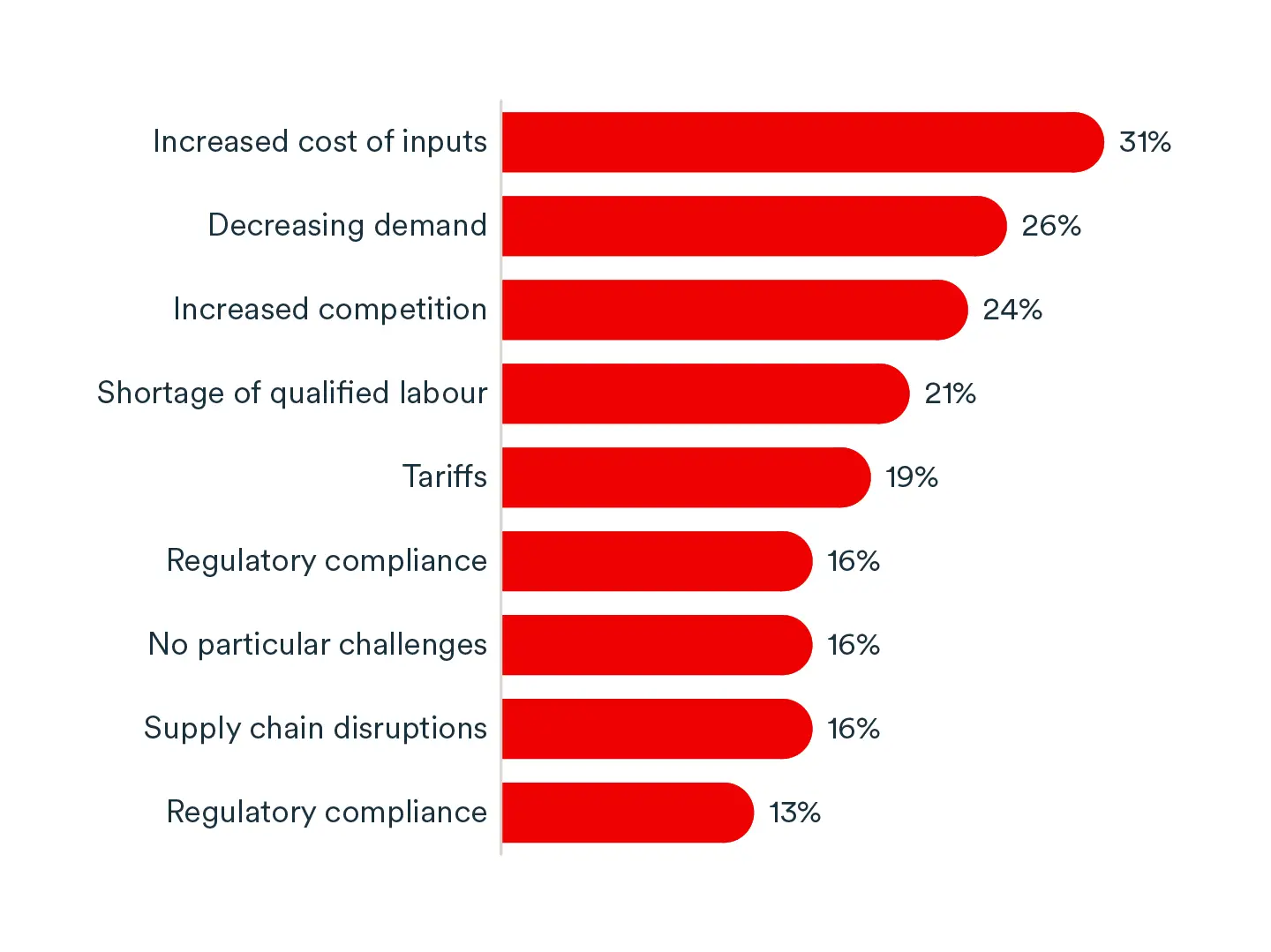
Economic uncertainty, higher costs and softer demand are weighing on businesses across the country. While inflation has eased, it remains high in several sectors, continuing to pressure margins and profitability.
Labour market constraints persist as well. Although labour shortages are no longer the top concern nationally, recruiting workers with specific skills remains difficult. This limits growth for many small and medium-sized businesses.
At the same time, entrepreneurs face heightened competitive pressures, tariff-related disruptions and ongoing supply chain challenges. Trade tensions, exchange rate volatility and rapid technological change are complicating planning and operations, especially for manufacturers and exporters, forcing businesses to adapt simply to remain competitive.
What main challenges has your business faced over the last 12 months?
Still, most entrepreneurs would do it all over again
Despite economic headwinds and day‑to‑day pressures, commitment to entrepreneurship remains remarkably strong among Canadian business owners.
According to BDC’s State of Entrepreneurship report, 92% of entrepreneurs say they would choose to start a business again if they had to do it all over. This speaks to more than financial outcomes. It reflects a deep attachment to independence, purpose and the opportunity to build something of one’s own.
In that sense, being an entrepreneur is not only about navigating challenges. It’s about choosing, time and again, to build something.
For more on running a successful new venture, see BDC’s collection of articles on entrepreneurial skills.