
Results by region
Canada: A lasting recovery or temporary bump?
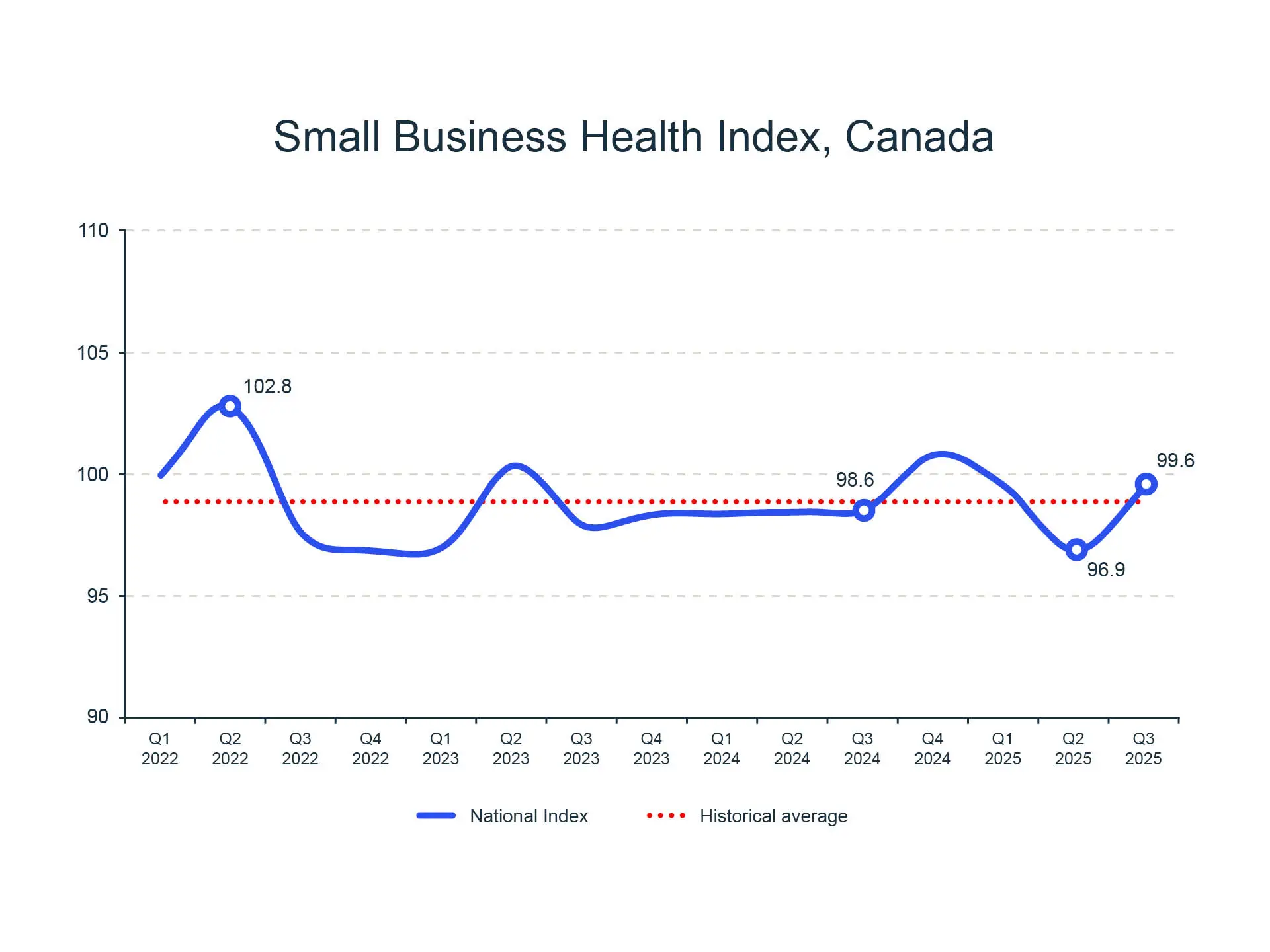
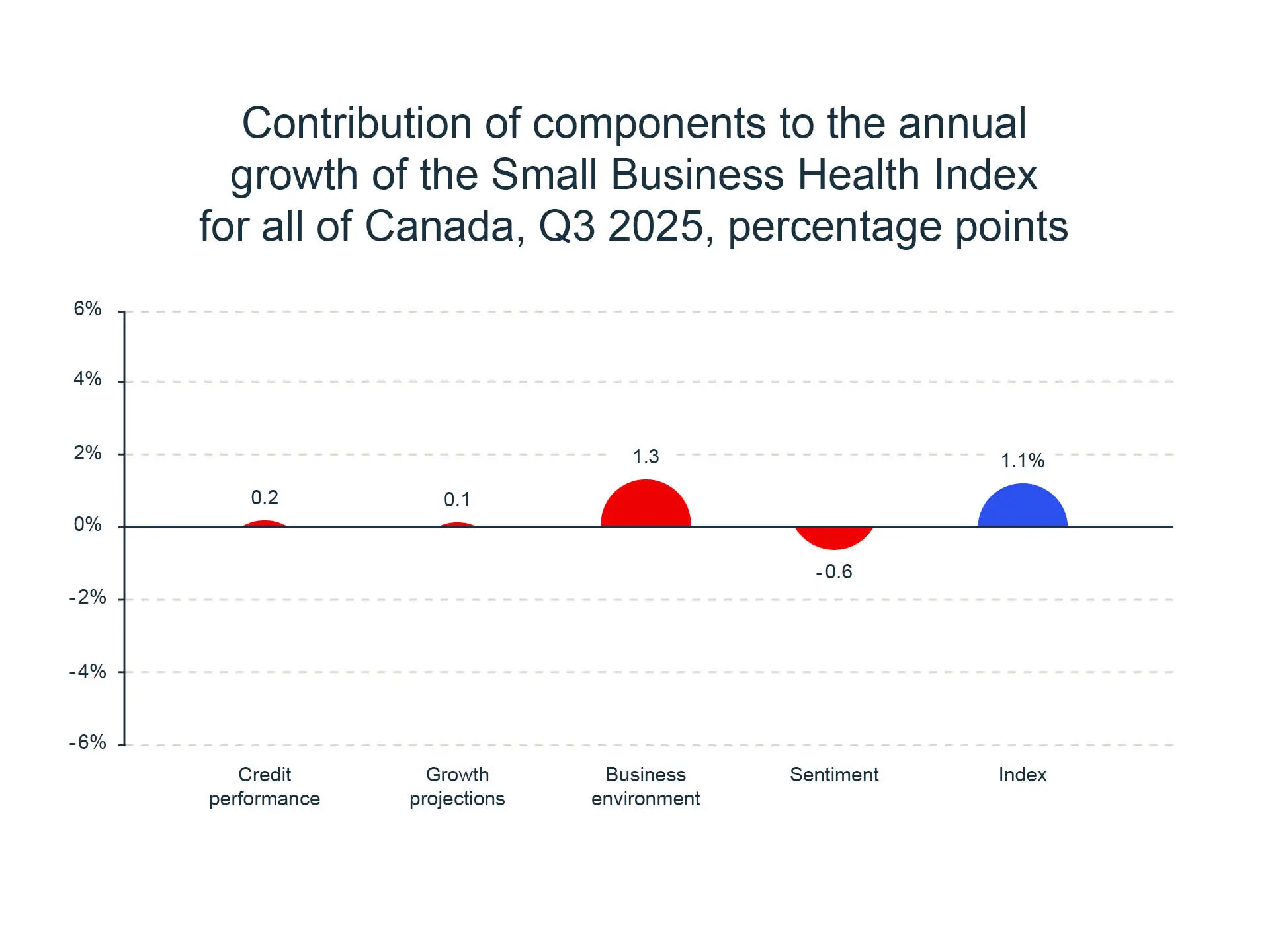
The national index climbed to 99.6 in Q3 2025, a 2.8% increase from the previous quarter. While uncertainty remained elevated, consumer fundamentals were solid—employment held up despite weakness in the manufacturing sector. The Canadian economy also showed resilience to tariffs, which helped restore some confidence among entrepreneurs.
This momentum may be short-lived, however, as trade tensions reignited in September and October, casting some doubt on the recovery’s durability.
The quarterly rebound was driven by a 9.7% surge in sentiment and a 2.9% rise in growth projections, reflecting increased optimism. General economic conditions improved as the effect of last year’s interest rate cuts became evident across the economy.
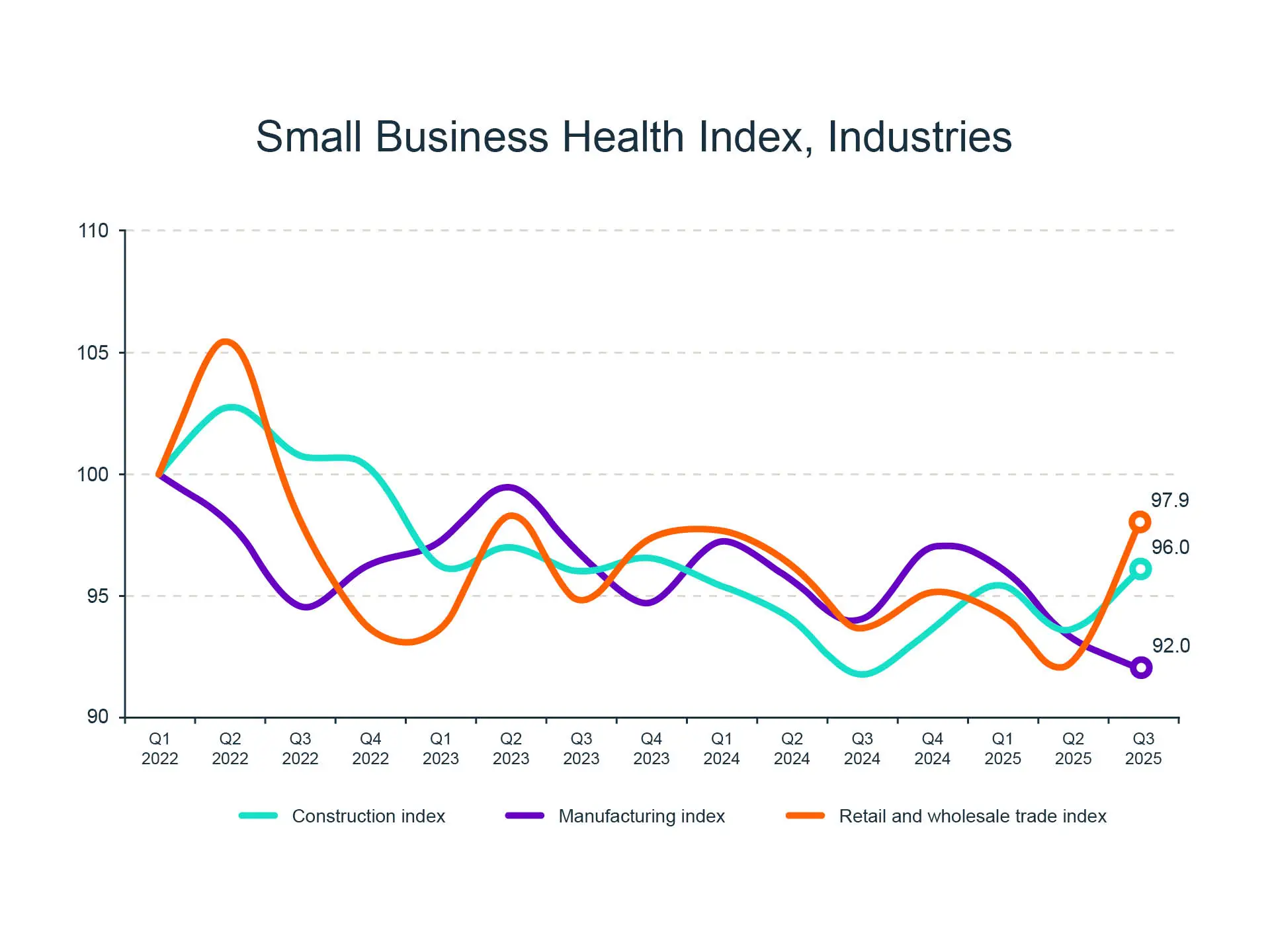
The current context affects specific sectors more than others. The manufacturing sector, which U.S. tariffs have most directly impacted, has struggled this year. In Q3 2025, the manufacturing index posted a 2.1% annual decline and a 1.5% quarterly decline.
Meanwhile, the construction and retail and wholesale trade sectors all posted gains in the index. The construction index rose 2.6% quarterly and 4.6% annually. Stronger sentiment and growth projections among construction SMEs compensated for weaker employment in the sector compared to Q2 2025.
The retail and wholesale sector benefited from resilient consumer spending as retail sales continued to grow. In recent quarters, SMEs in this sector have demonstrated greater confidence and higher employment, resulting in an index 6.2% higher than in Q2 2025.
Atlantic: A rebound in spite of a difficult environment
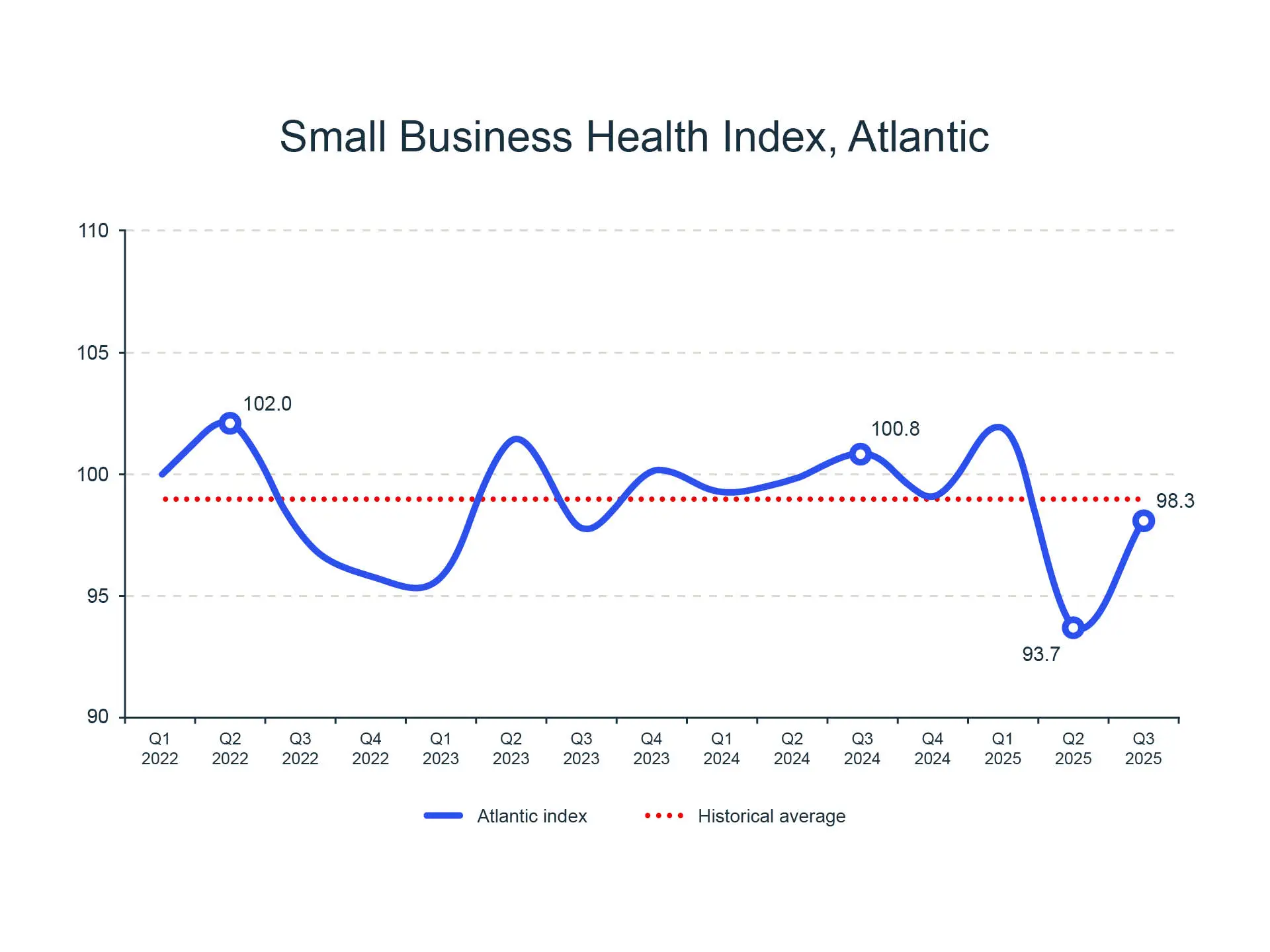
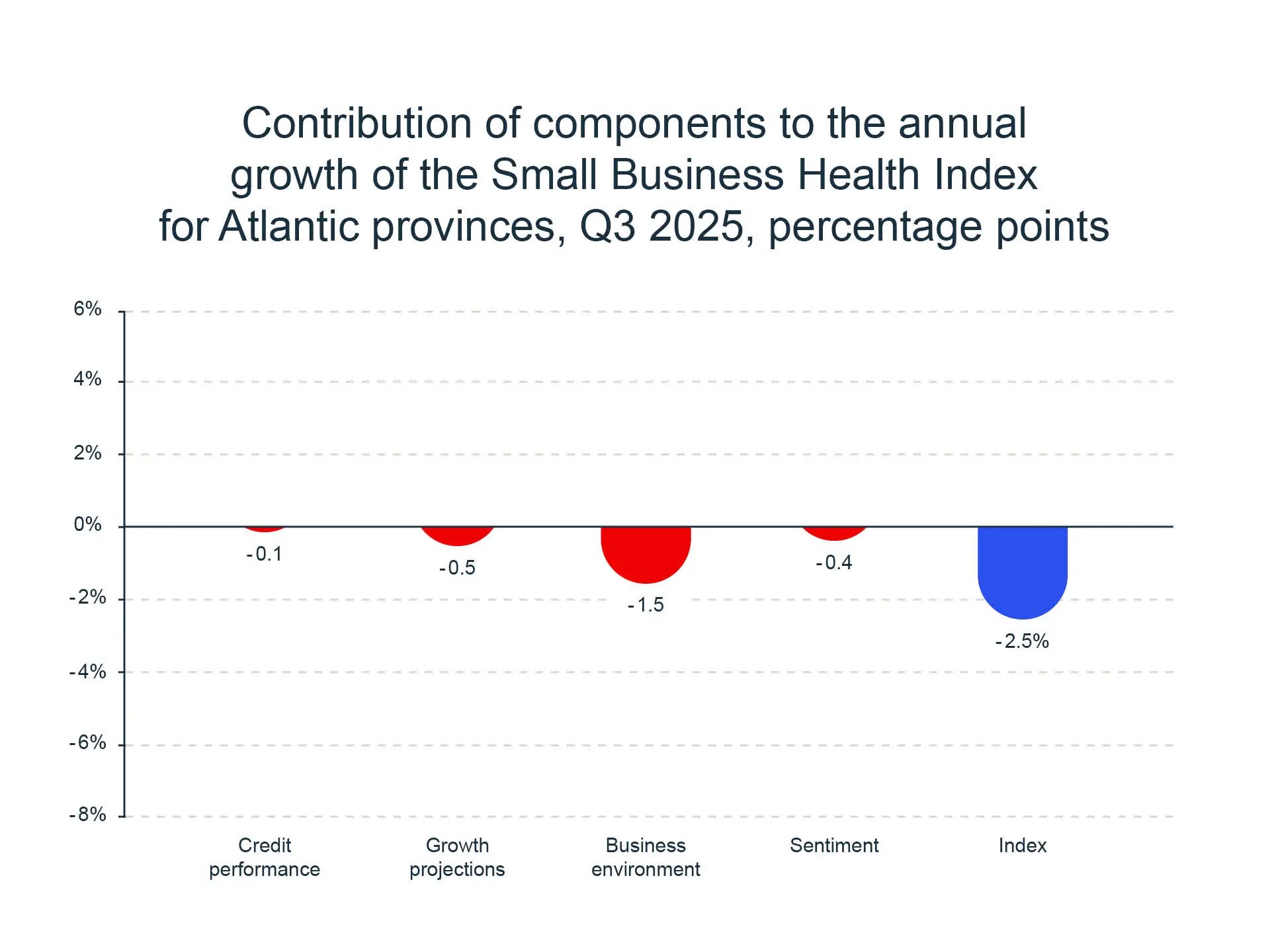
The index for the Atlantic region rebounded in Q3 2025, following a low in the previous quarter. While the level remains 2.5% weaker than it was last year, the improvement versus Q2 2025 was significant. This signals a relatively mild impact from U.S. tariffs, alongside decent employment and consumption fundamentals.
Quebec: Recovering from peak uncertainty but still cautious
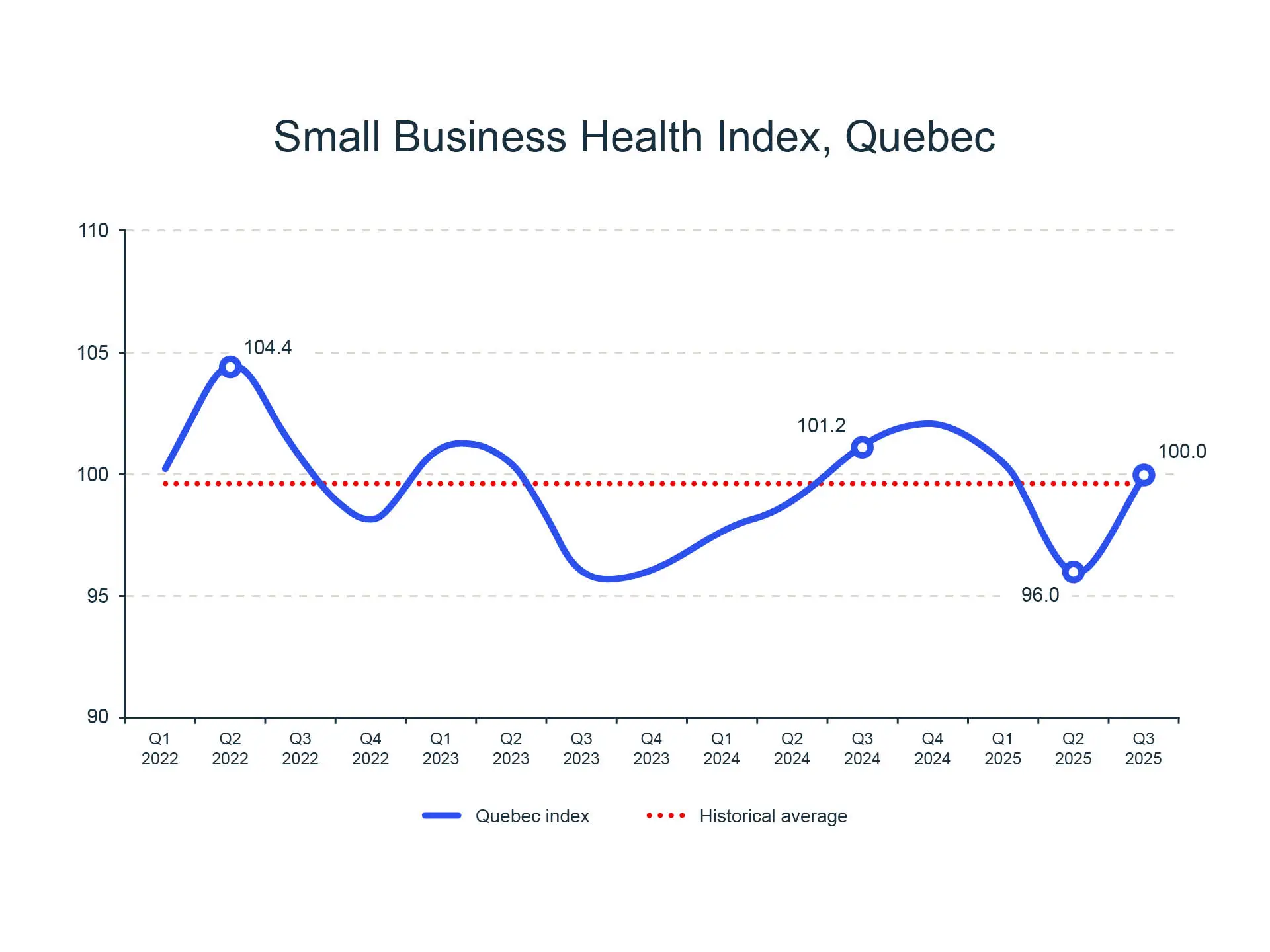
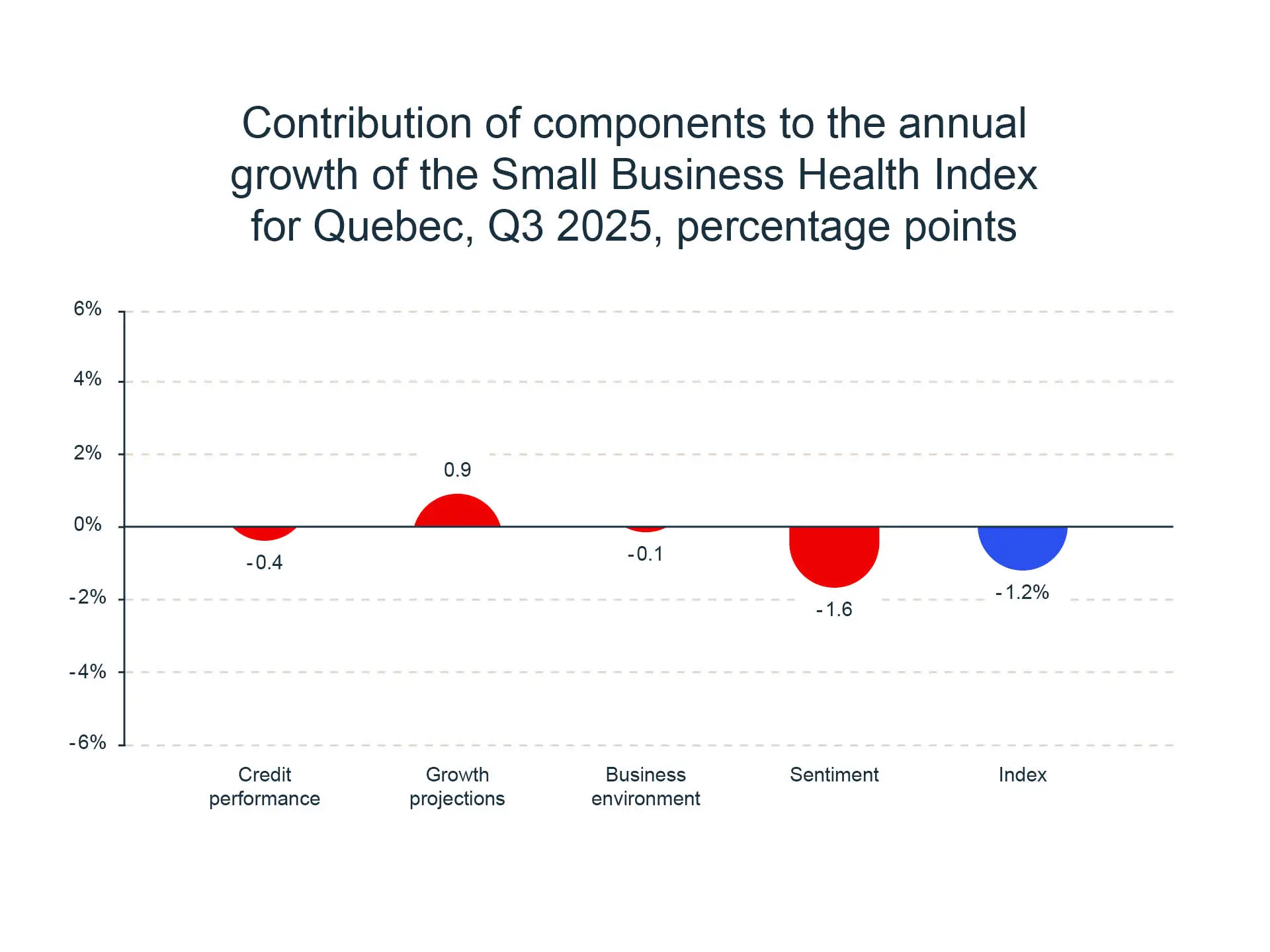
The Quebec index stood at 100 in Q3 2025, reflecting a 4.2% quarterly increase but a 1.2% decline compared to the same period last year. Quebec remains directly exposed to tariffs, particularly on aluminum and softwood lumber. While the current outlook and financial health of SMEs have improved compared to Q2 2025, when uncertainty was at its peak, they remain weaker than they were at this time last year. In short, businesses continue to face headwinds, and confidence remains tepid.
Ontario: Resilient despite continued tariff pressures
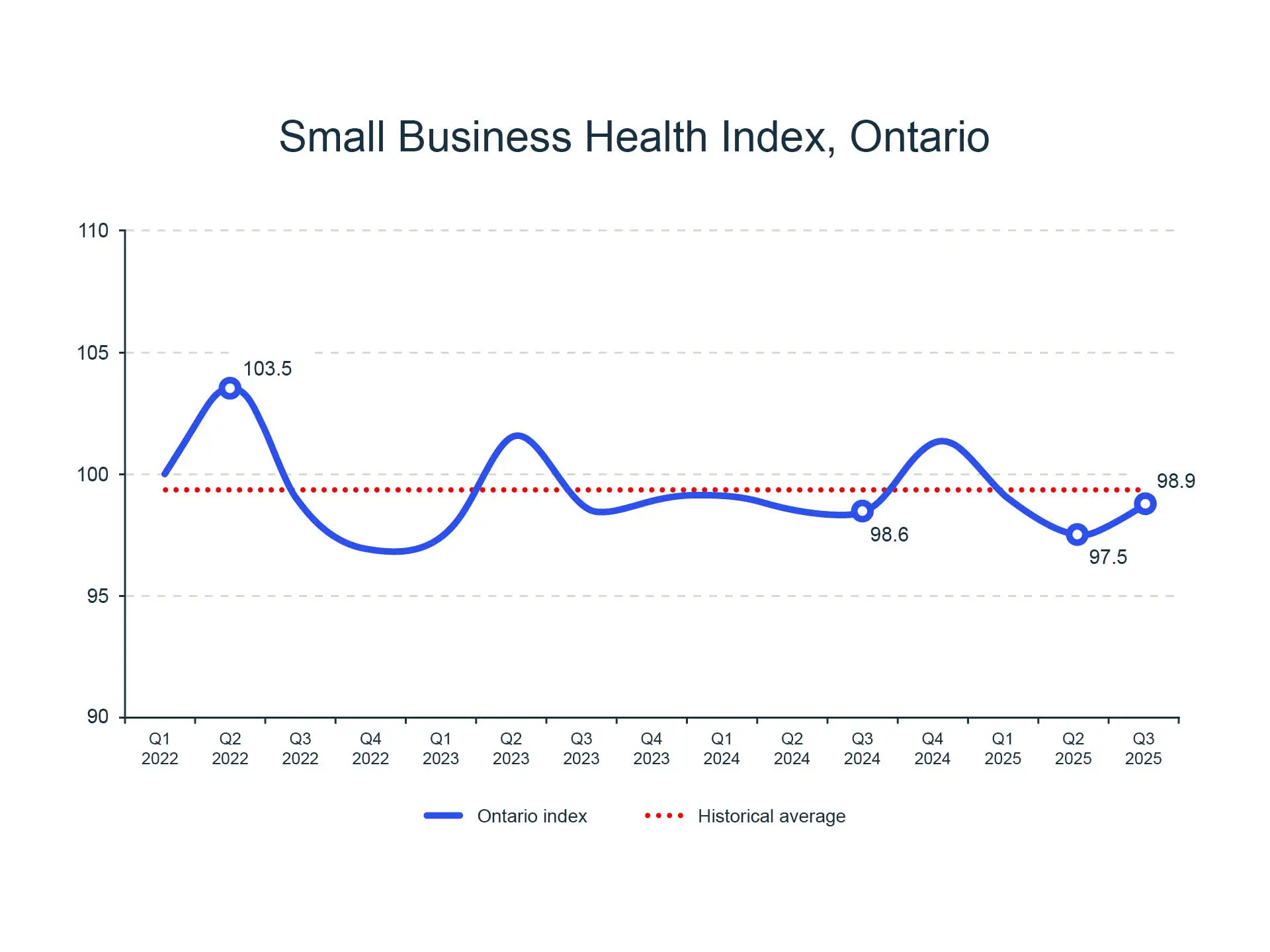
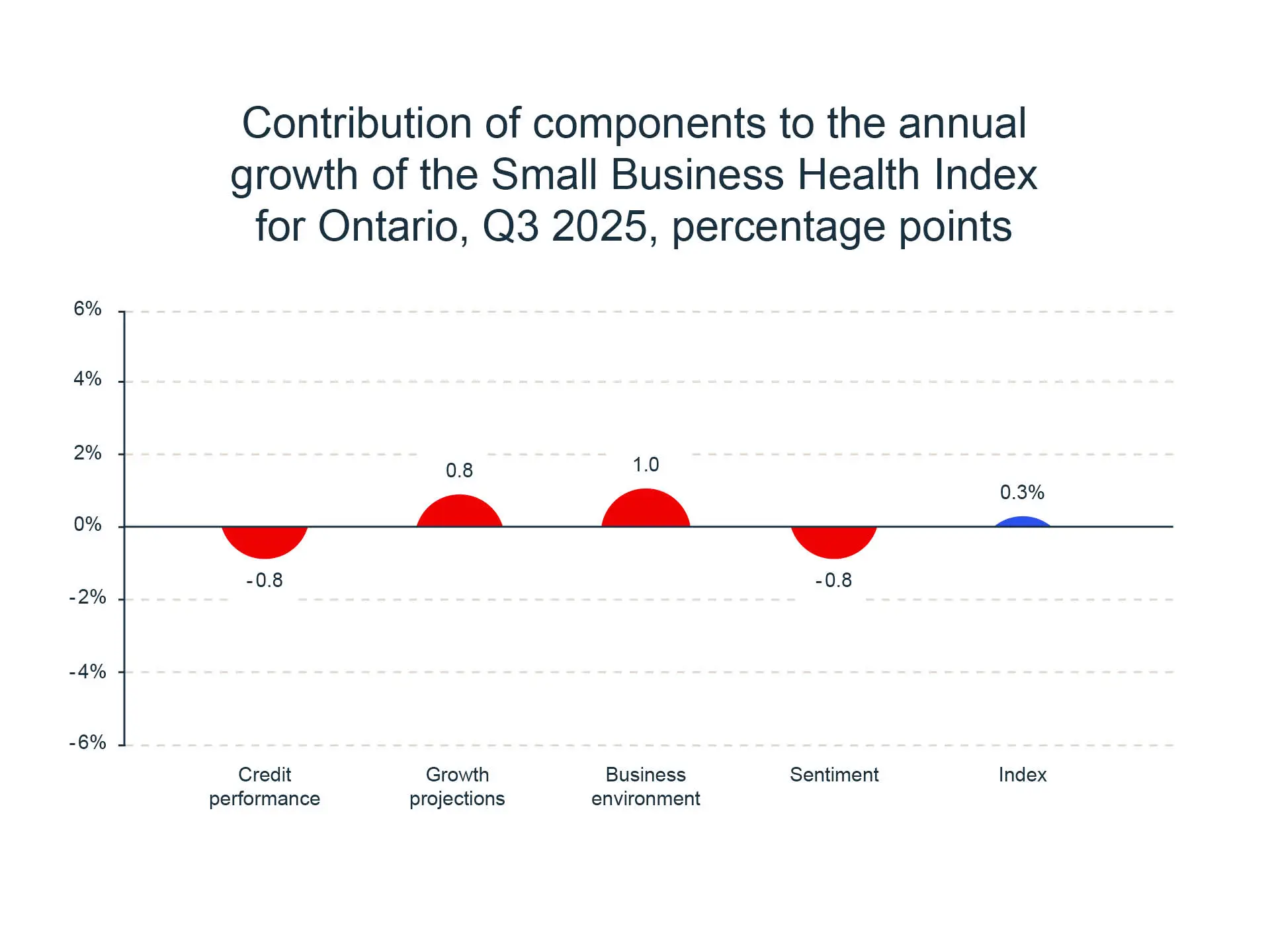
Ontario’s index rose to 98.9 in Q3 2025, a modest improvement of 1.4% quarter-over-quarter and 0.3% year-over-year.
Tariffs have had a significant impact on the Ontario economy and continue to exert greater pressure on wages, interest rates, and consumer spending.
Still, as with many other regions, sentiment improved over the last quarter, driven by cashflows and a less pessimistic economic outlook. The growth projection component also increased quarterly, returning to its start-of-the-year level as hiring, sales and investment expectations improved.
Manitoba and Saskatchewan: Leading the pack, but financial strains remain
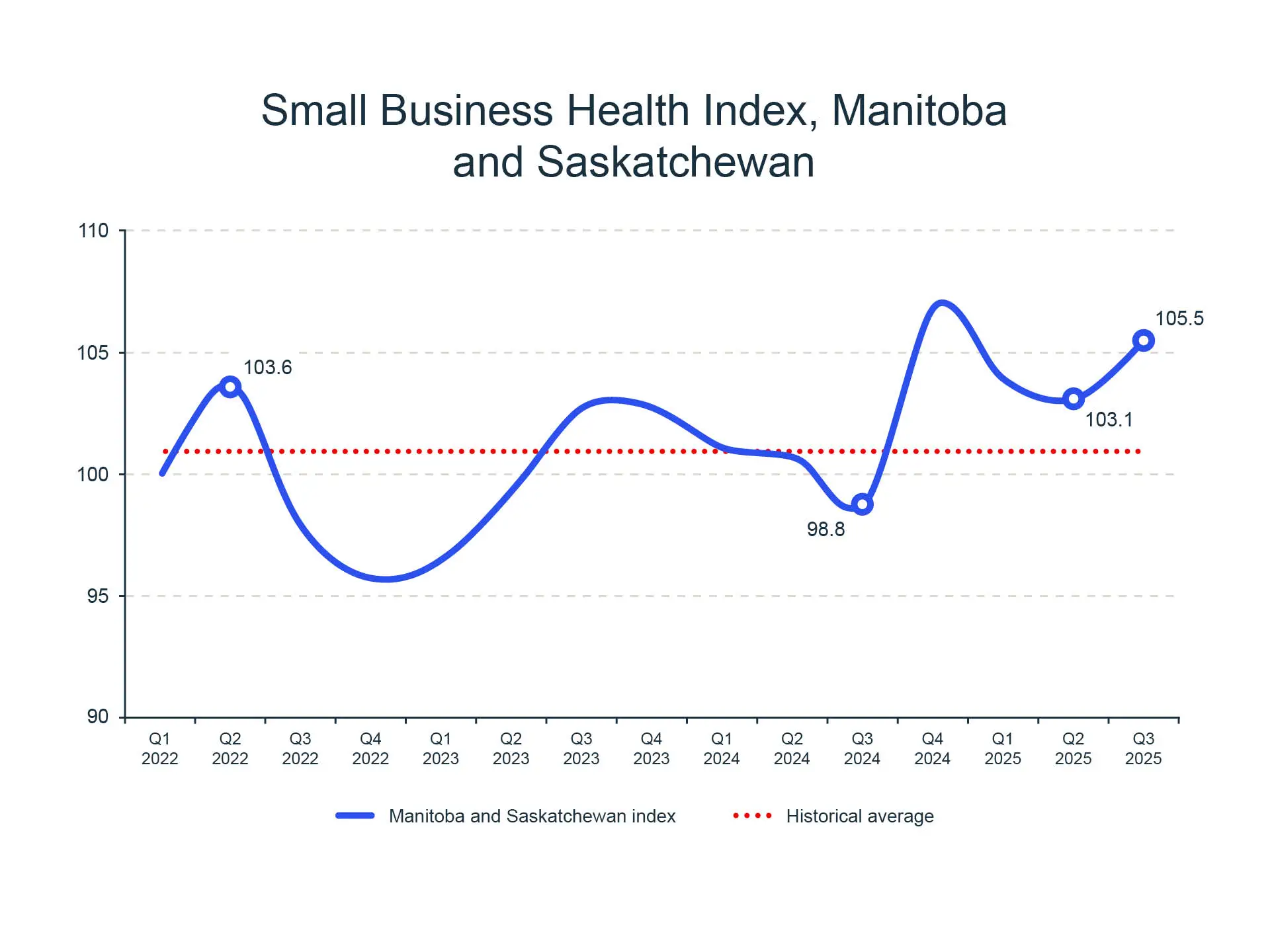
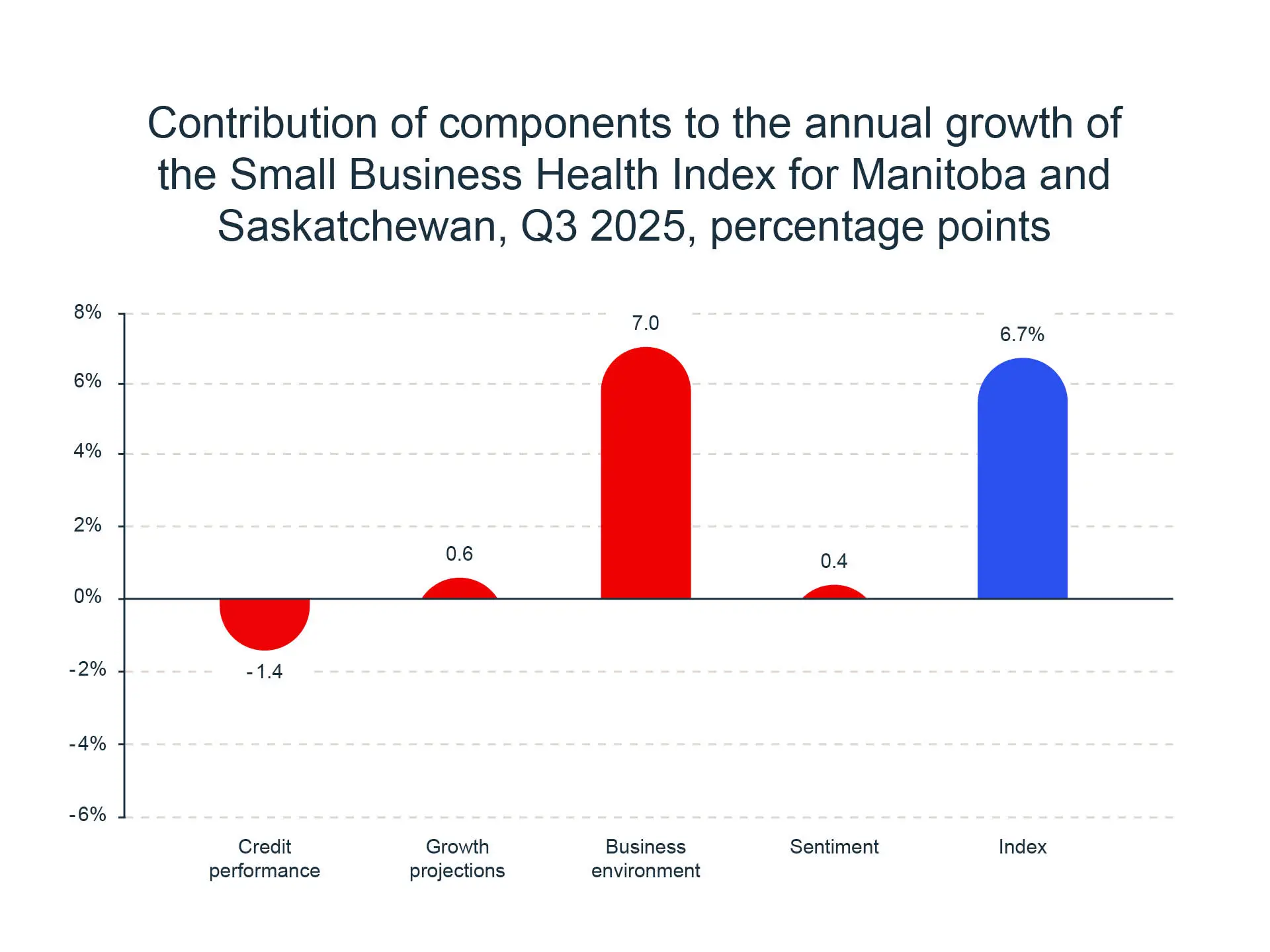
At 105.5, the Manitoba-Saskatchewan index was the best-performing region in Q3 2025.
It posted growth both on a quarterly (+2.3%) and annual basis (+6.7%), driven by positive labour market trends.
However, credit performance showed signs of weakness. The growth projection component also fell 3.6% quarter-over-quarter, as businesses anticipate lower investment and hiring over the next year. This indicates mounting pressure on SMEs, despite continued employment and wage growth.
Alberta: Strong economic performance in 2025
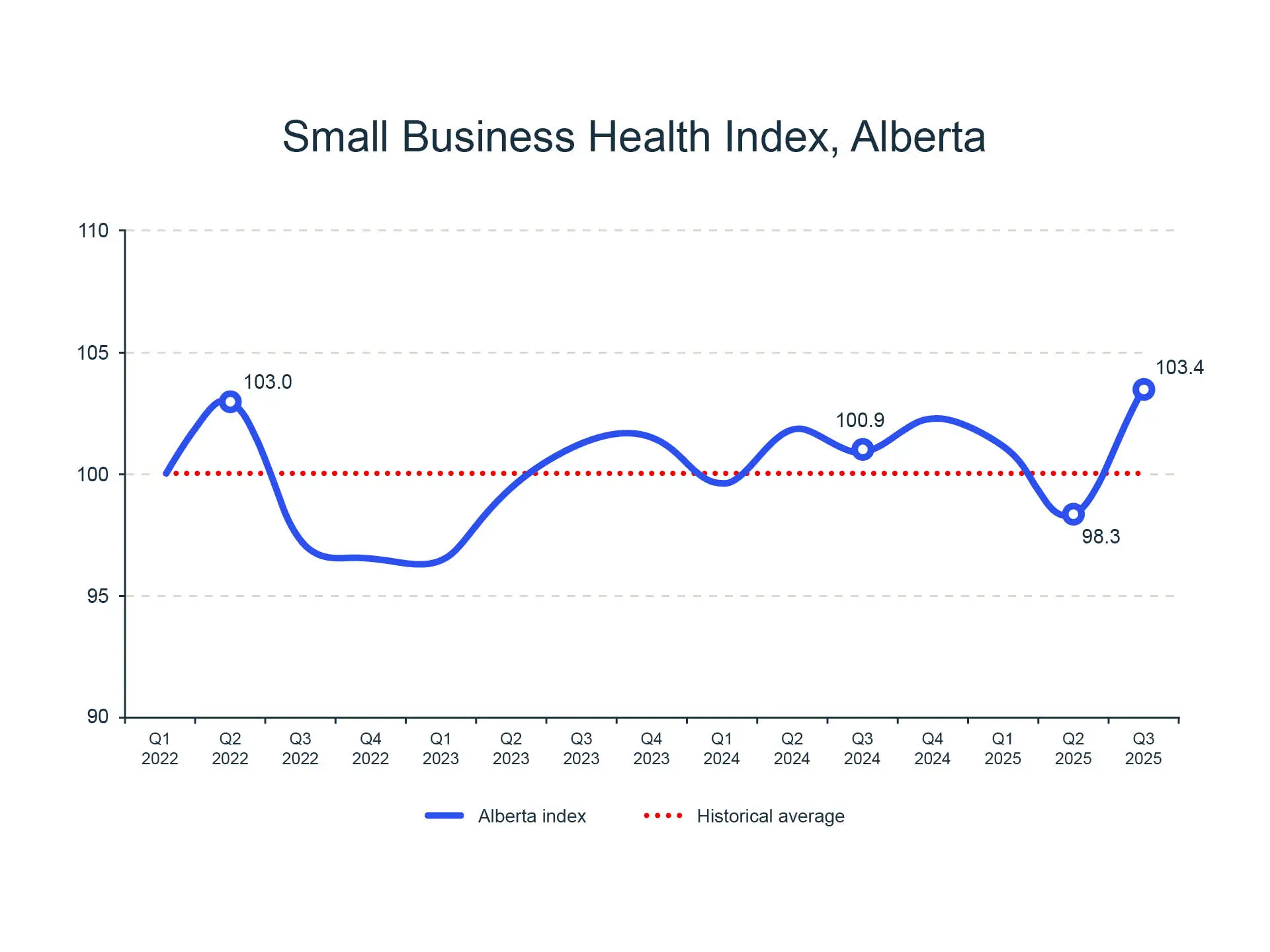
The index for Alberta rose to 103.4, a 5.2% quarter-over-quarter increase and the most significant uptick of any region in Q3 2025. This marked the highest level for the Alberta Small Business Health Index since its inception in the first quarter of 2022.
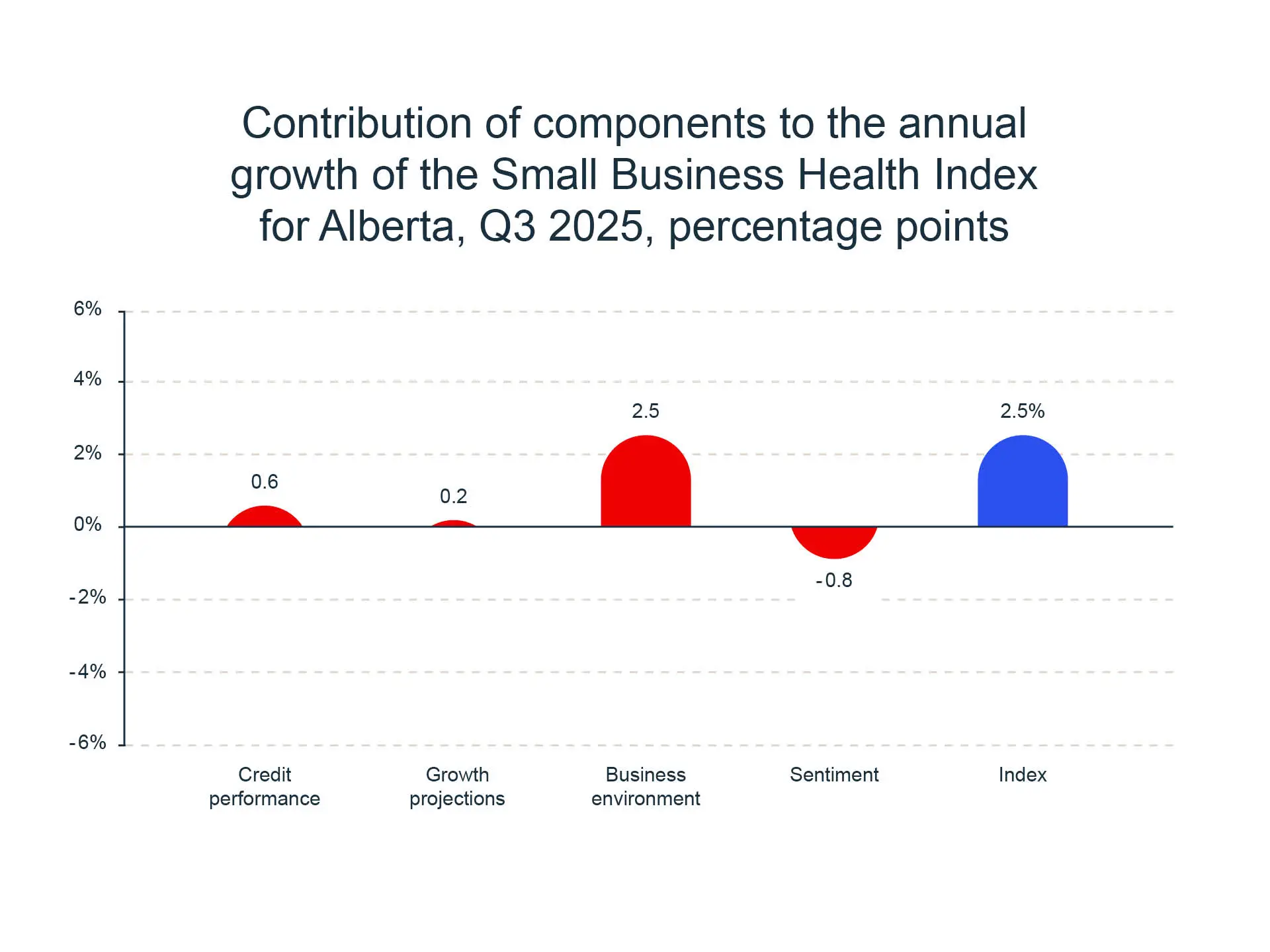
Alberta is expected to have one of the strongest GDP growths in 2025. This is driven by a focus on investments in natural resource projects paired with a relatively mild drag from U.S. tariffs. Quarterly, this results in substantial improvements in the business environment and sentiment. Credit performance also remains stable and is improving, although at the lowest component value compared to all other regions.
British Columbia: Improving sentiment, weak outlook
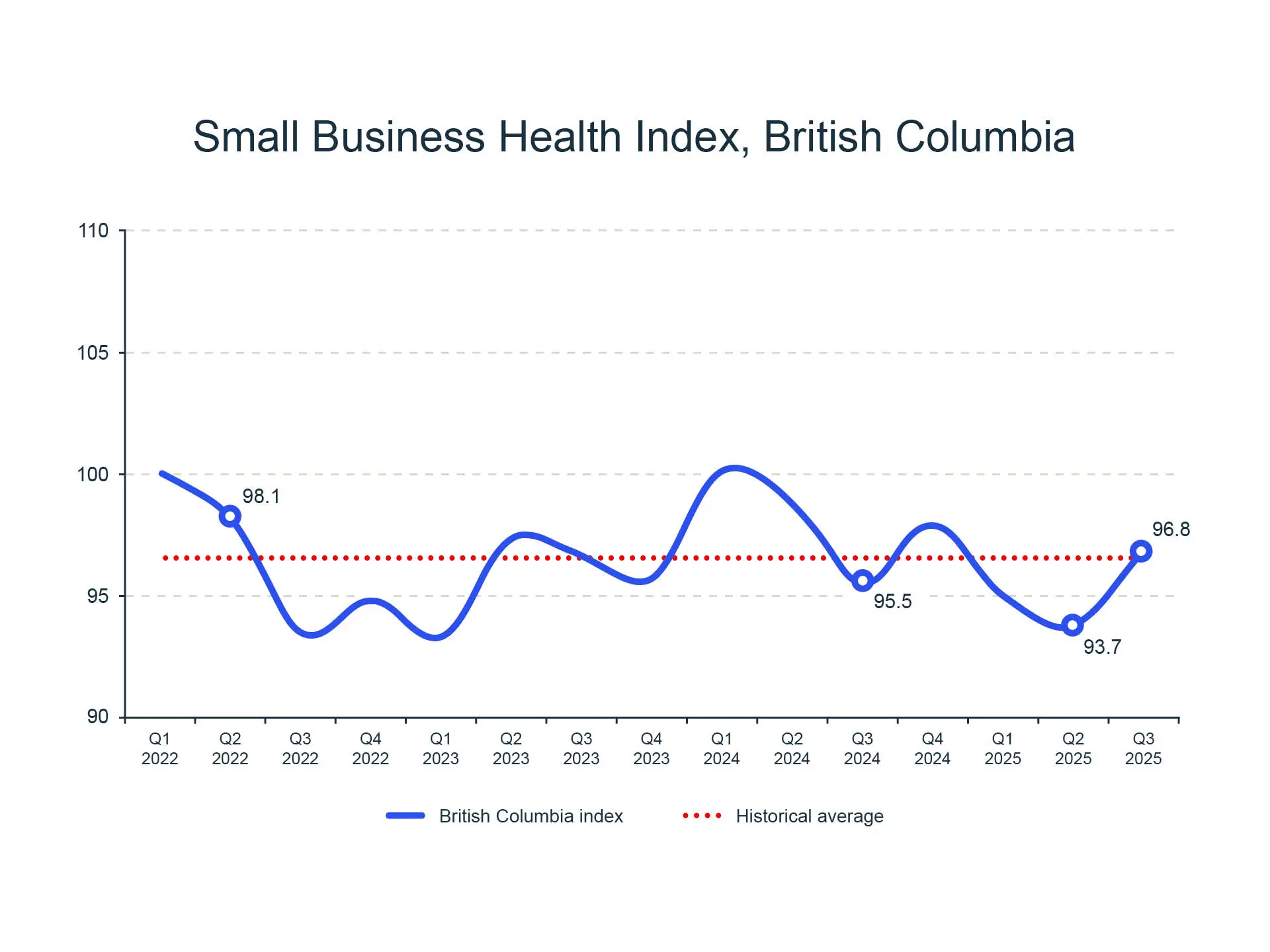
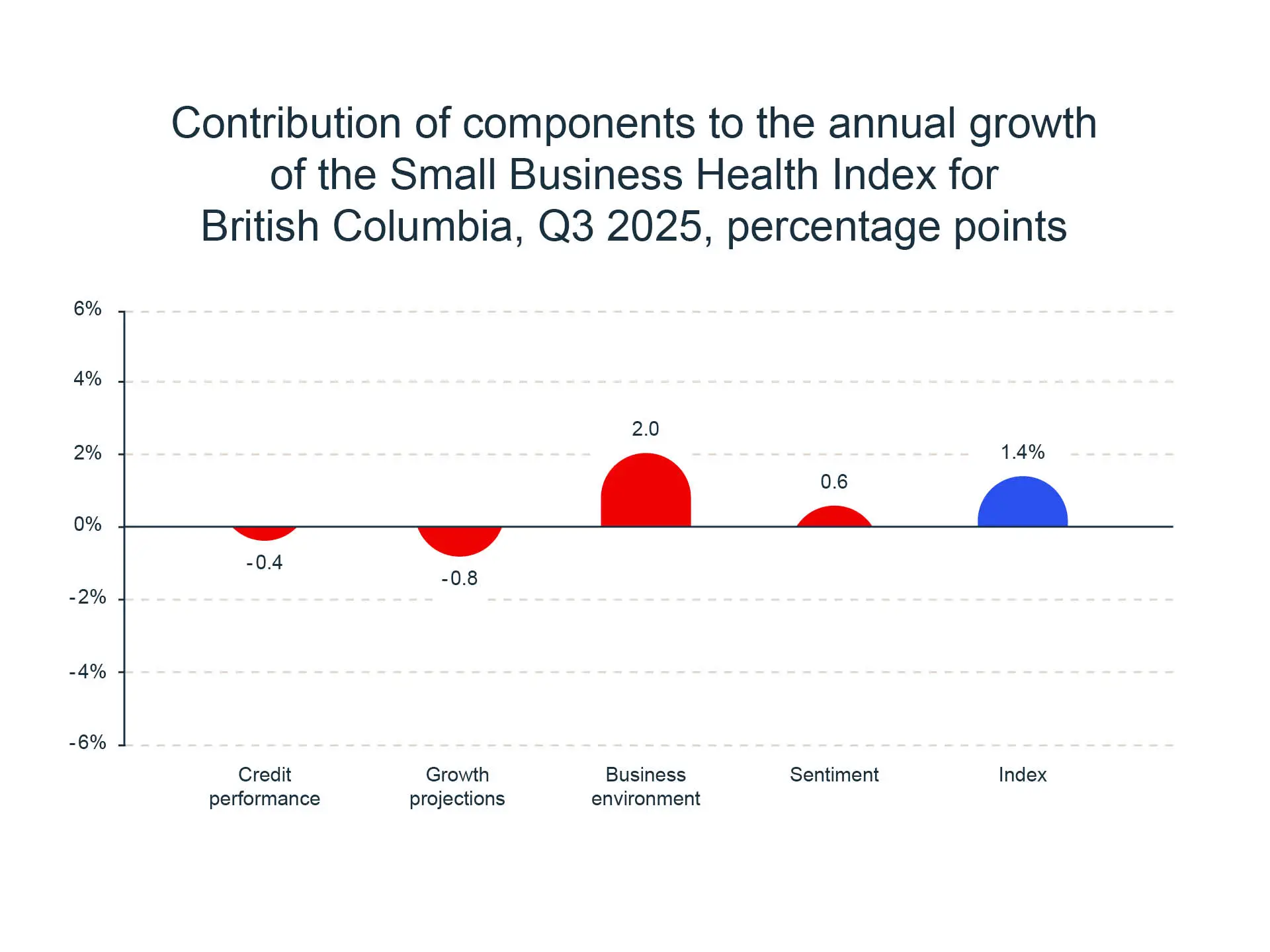
The index in British Columbia reached 96.8 in Q3 2025, the lowest among all regions, but still 3.3% higher than the previous quarter and 1.4% above the same quarter last year.
Lower exposure to U.S. trade and declining interest rates contributed to a more optimistic sentiment among SMEs, while retail sales remained among the most robust in the country.
However, growth projections and credit performance continue to lag. With uncertainty that remains elevated, SMEs in British Columbia are scaling back investment plans in anticipation of weaker sales over the next year.