

Results by region
Canada: Early signs of financial strain
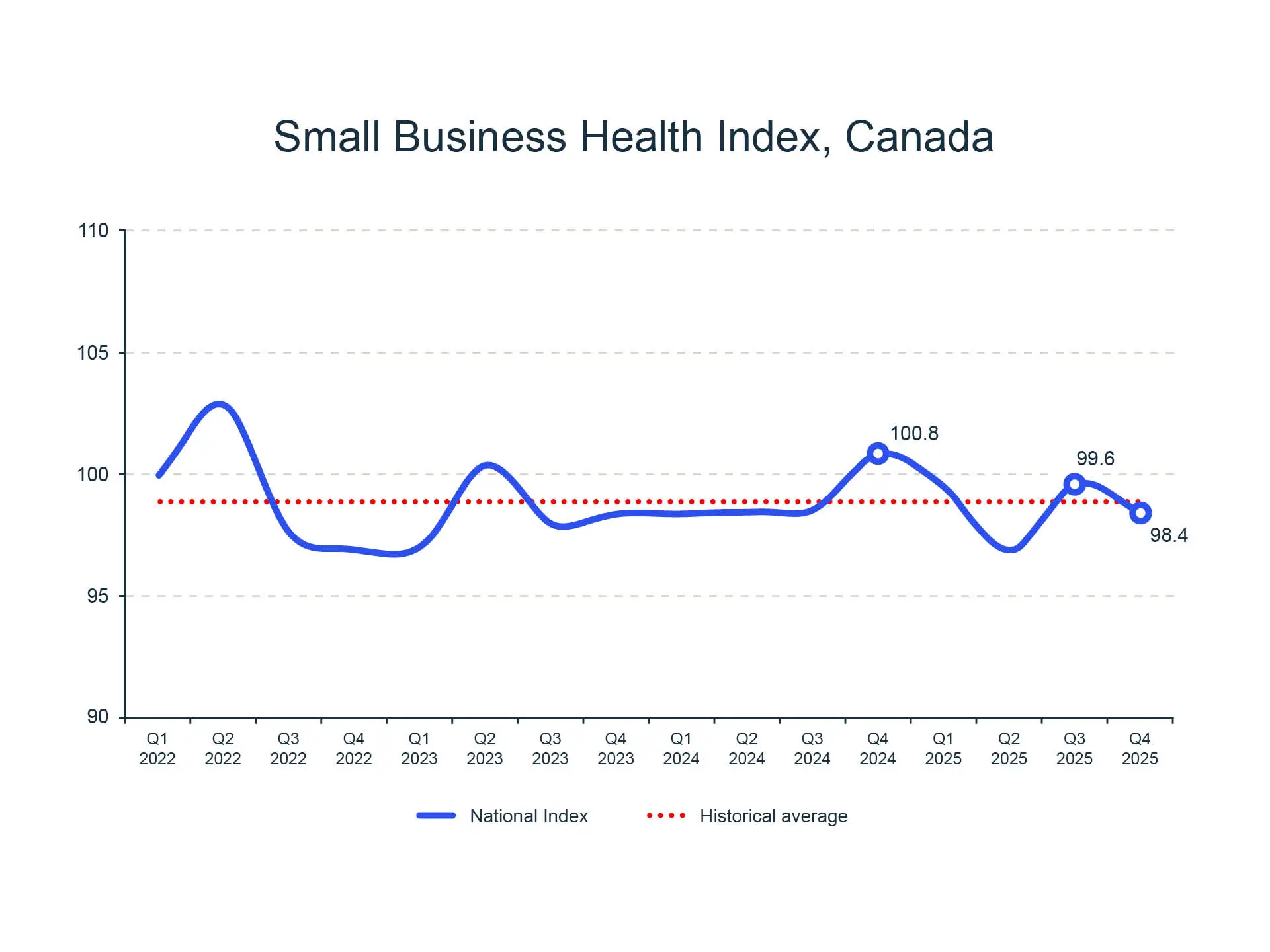
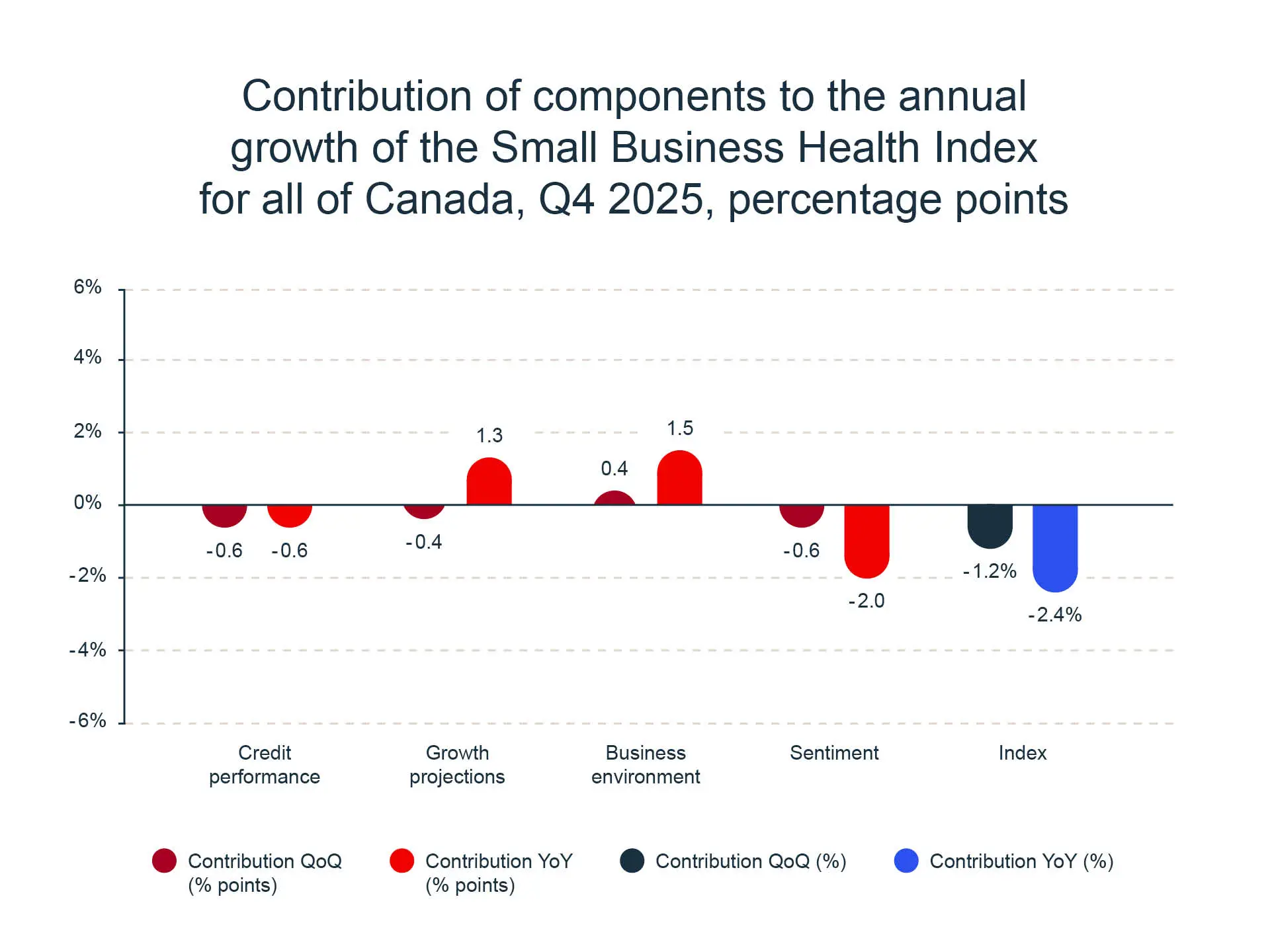
The national index lost ground in Q4 2025, falling to 98.4, which represents a 1.2% quarterly decline and a 2.4% drop year‑over‑year. The summer’s optimism faded quickly in the fall as the U.S. introduced a new wave of tariffs targeting softwood lumber, upholstered wood products and kitchen and bathroom cabinets.
The decline was attributed to a weakening business sentiment, as expectations regarding cash flow and economic conditions over the next 12 months deteriorated. Tightened credit access had fewer SMEs reporting that financial institutions met their needs. Growth projections fell, with credit performance reaching its lowest level since the index began. Declining sales and hiring expectations, combined with rising bankruptcies and late delinquencies on supplier credit, point to deteriorating financial health among Canadian SMEs. While the business environment component remained resilient, ongoing weakness in credit performance and growth expectations could eventually weigh it down.
A national downturn accompanied by diverging industry trends
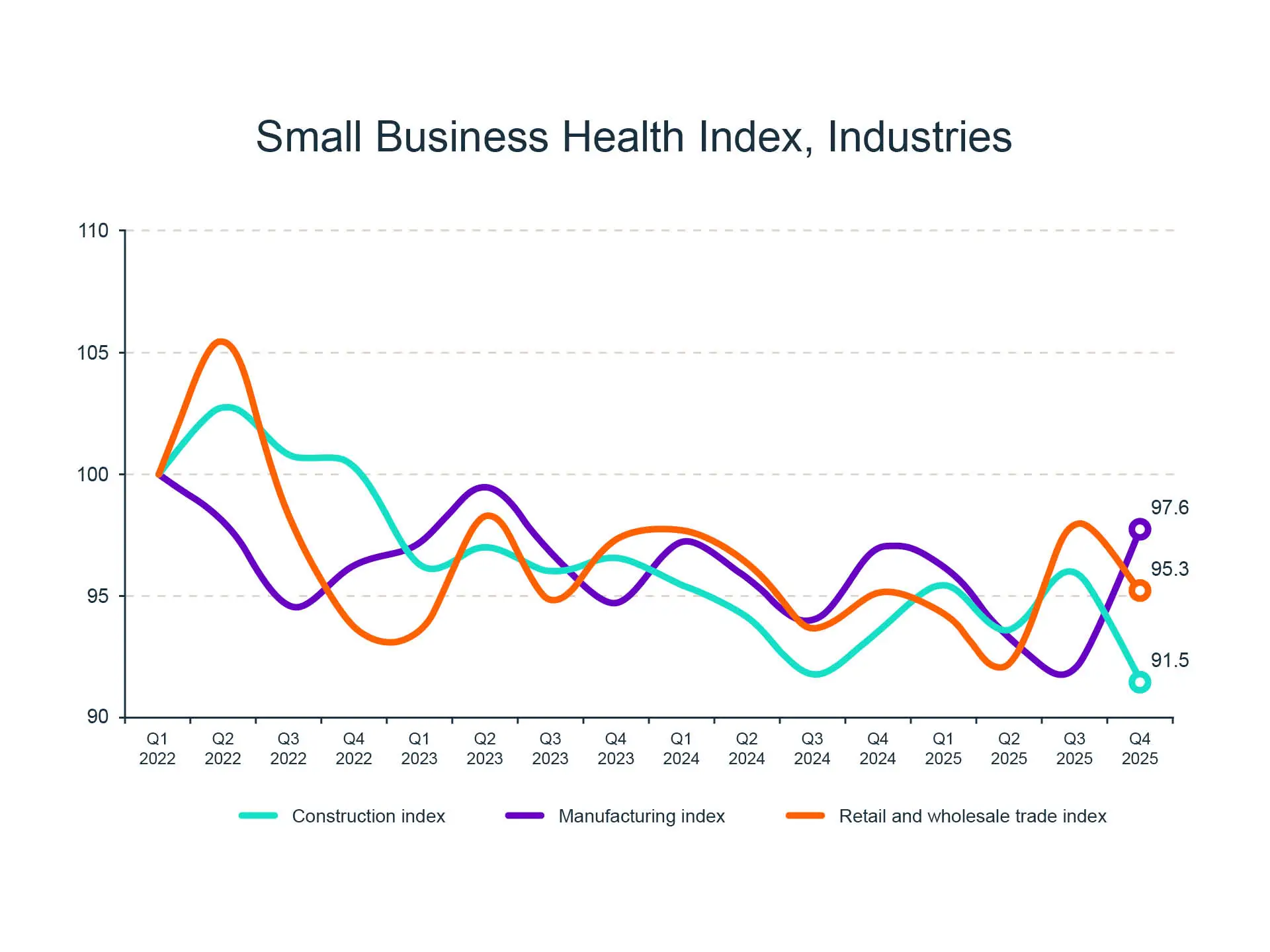
The manufacturing index fully reversed its previous decline, rising 6.1% in Q4 2025 and slightly surpassing last year’s level. All components showed quarterly improvement, mainly driven by sentiment and growth forecasts. SMEs in the manufacturing sector reported stronger investment intentions and improved cash flow expectations for the next 12 months. The sector also saw increases in credit activity and business openings.
The construction index reached its lowest level on record, with all components declining. The drop was driven by a weaker business environment, largely due to job losses, although recent labour data signaled some recovery. Businesses in the construction sector also reported worsening cash flow expectations. In fact, 32% expect deterioration over the next 12 months, up from 17% in the previous quarter. This reflects a weakening credit performance, which hit its lowest level amid rising bankruptcies and late delinquencies on supplier credit.
In Q4 2025, the retail and wholesale trade index edged down by 2.6% from Q3 2025, but remained close to last year’s level. A deteriorating outlook and rising late delinquencies weighed on sentiment and credit performance components. Business sentiment in the sector declined to level comparable to those observed in Q3 2022, when inflation was at its peak. Softening demand and increasingly price‑sensitive consumers remain a significant challenge for the retail and wholesale trade sector.
Atlantic: Consumers driving growth
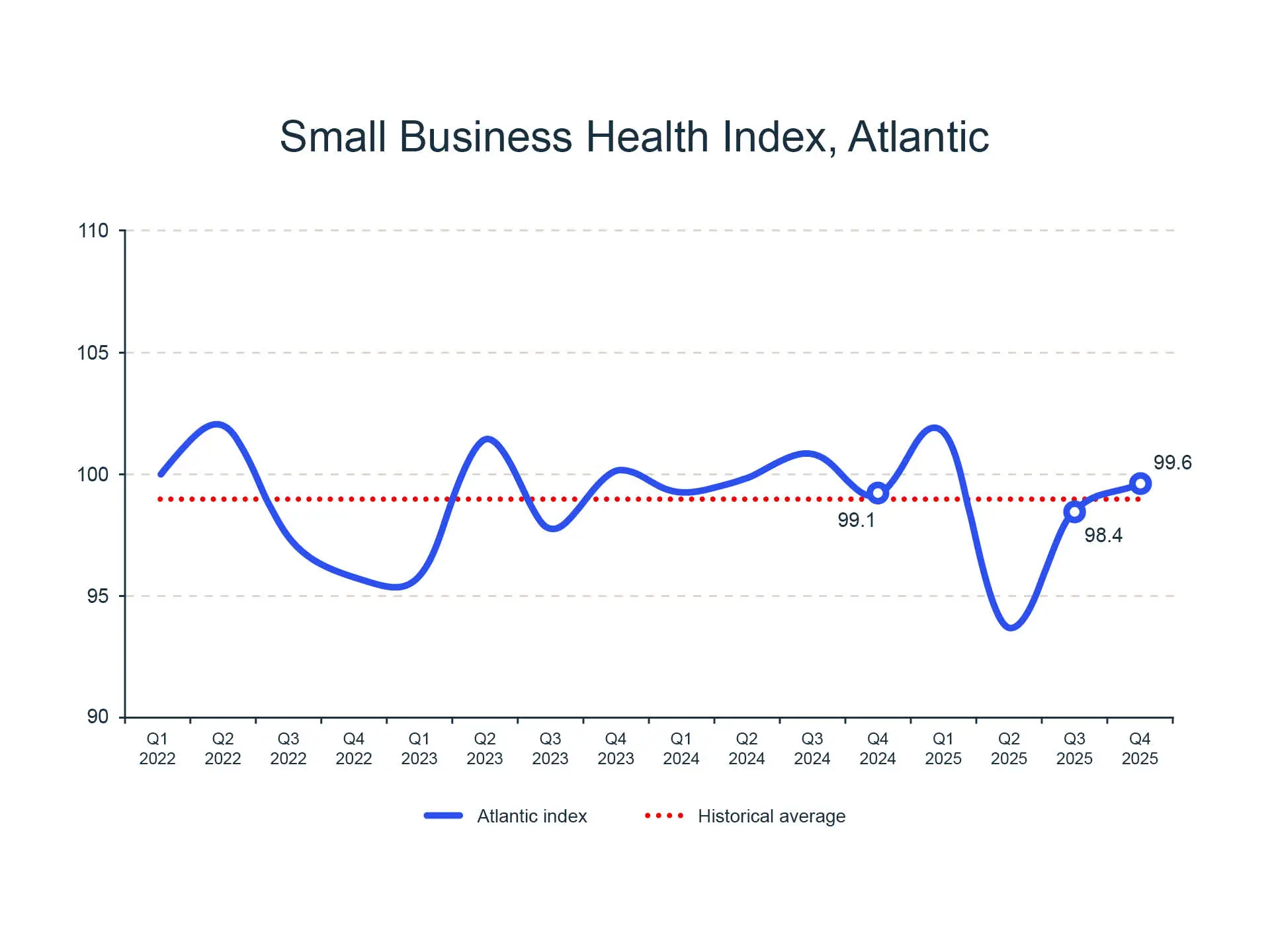
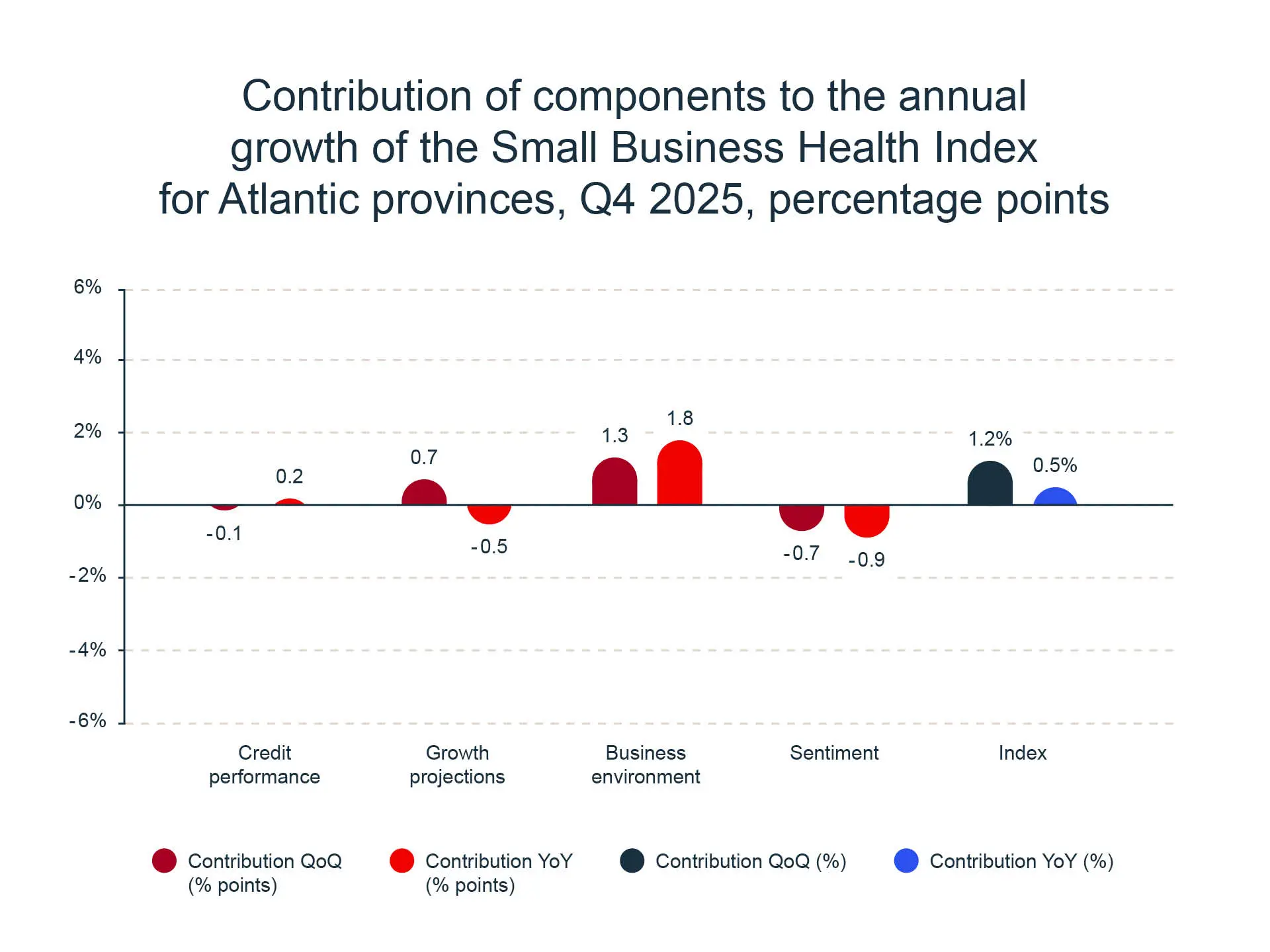
The index for the Atlantic region continued to rise in Q4 2025, landing at 99.6, a 1.2% quarterly increase (0.5% year-over-year). A resilient labour market and rising wages helped sustain a solid business environment. Higher consumer spending and business openings improved investment and hiring prospects for the next 12 months, lifting the growth projection component on a quarterly basis.
However, in Q4 2025 SMEs in the Atlantic remained pessimistic about the economic outlook for the year ahead. Recent negotiations with China, which eliminated tariffs on seafood starting March 2026, may help bolster sentiment in the coming quarter.
Quebec: Holding steady in a cautious environment
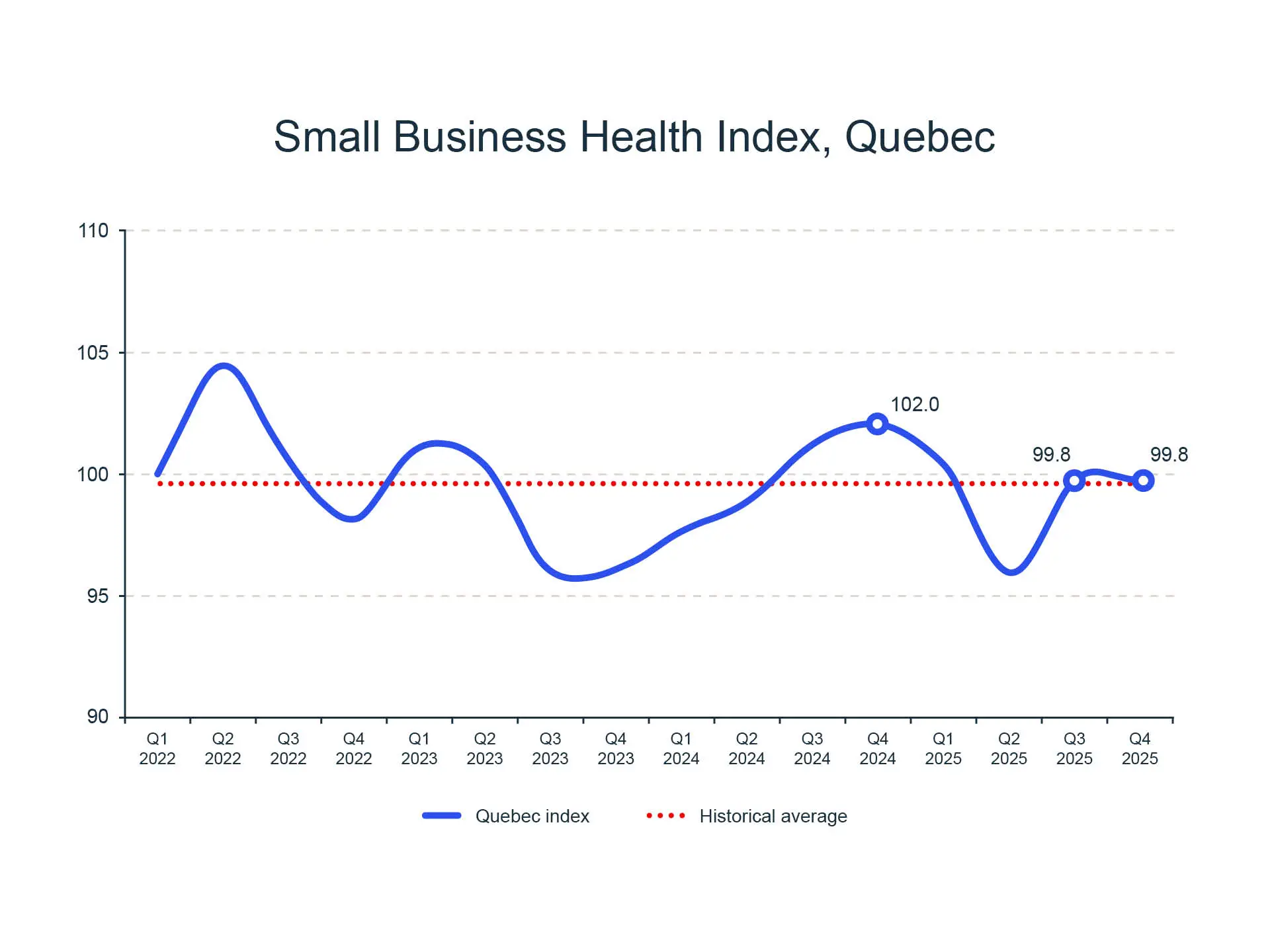
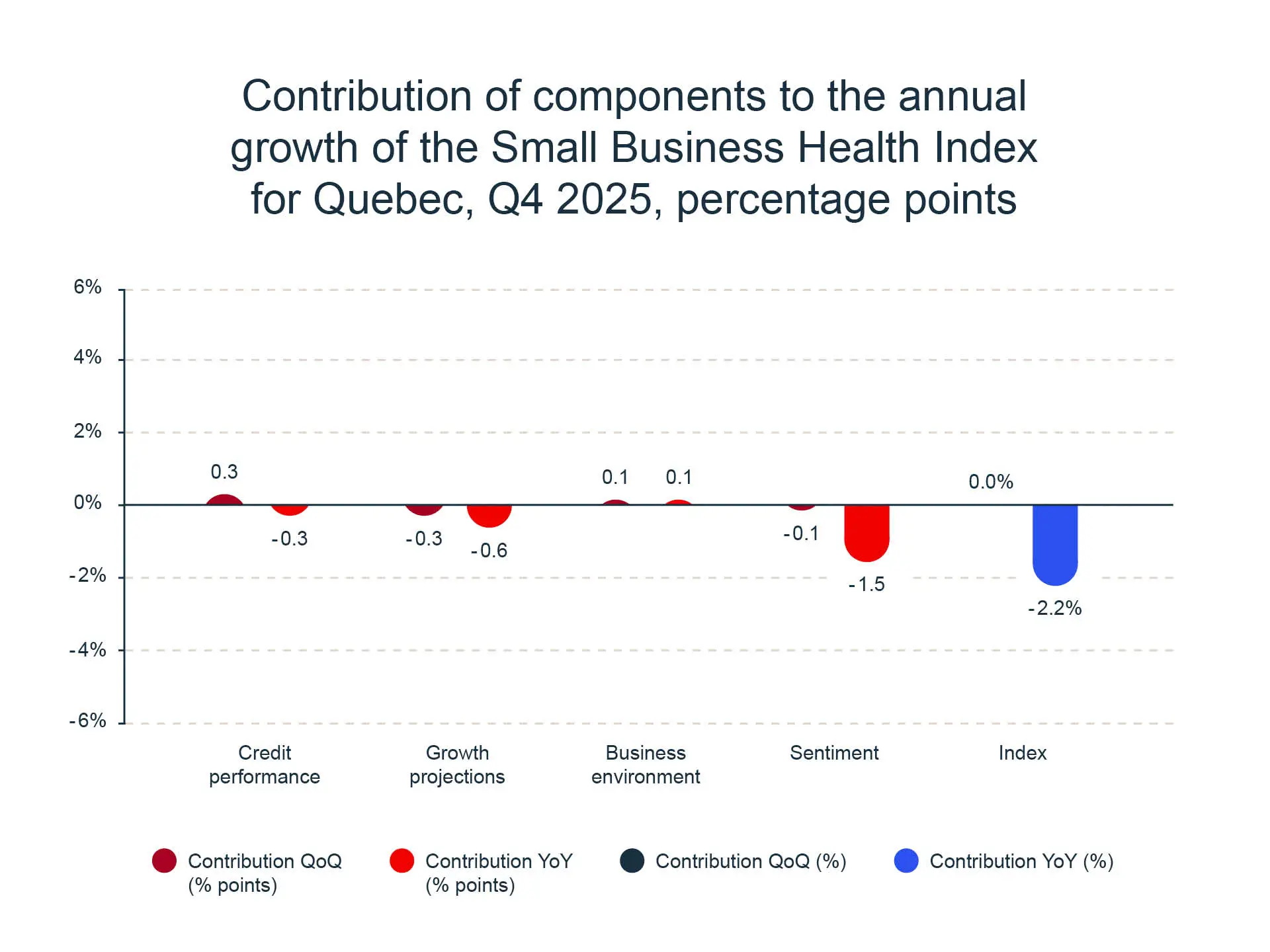
Small businesses in Quebec ended 2025 on stable footing, albeit with growing caution. The index was essentially flat in the fourth quarter and slightly lower than the previous year, as economic conditions softened toward the end of 2025. Ongoing trade uncertainty dampened growth expectations, as shown by a 1.5% drop in the growth projection this quarter and a 3.1% decrease compared to last year. This shows that SMEs are gradually becoming less optimistic about future growth. Despite this cautious environment, employment continued to grow, highlighting the resilience of labour demand across the province. Overall, businesses ended the year in a defensive stance—supported by a slightly firmer business environment but restrained by weaker sentiment—as they prepare for an uncertain 2026.
Ontario: Navigating a year of headwinds
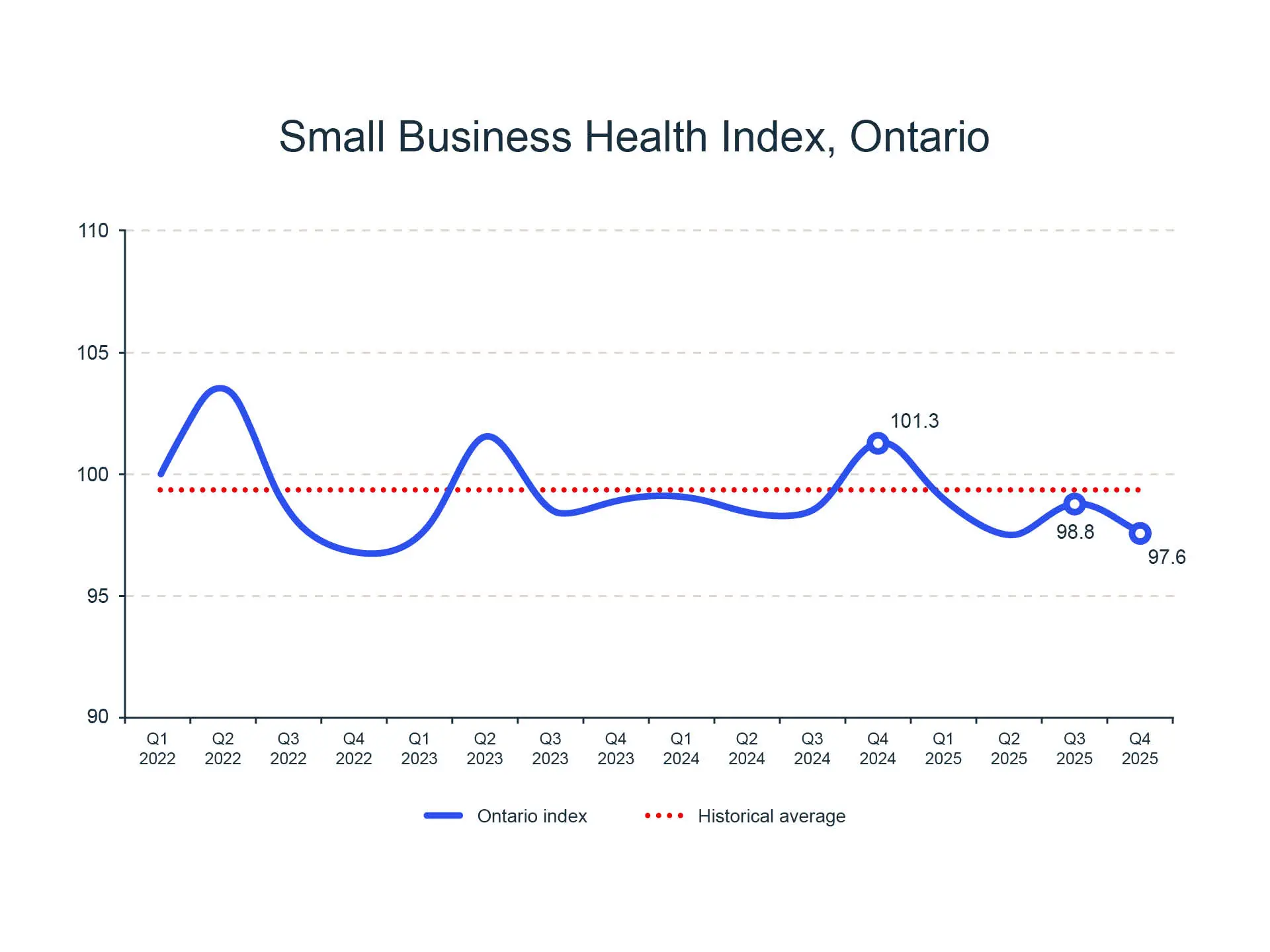
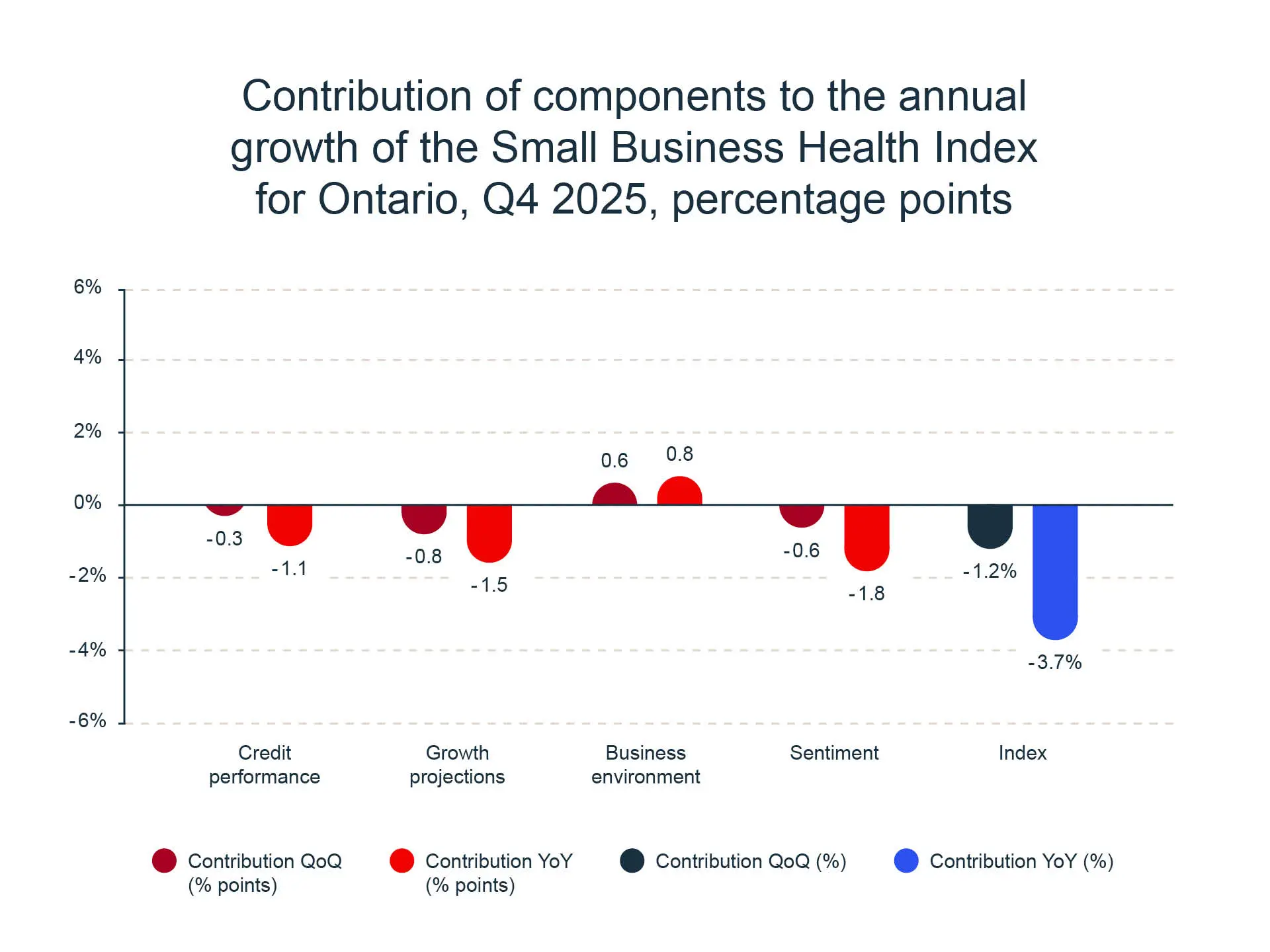
2025 was a difficult year for Ontario SMEs, buffeted by tariffs and persistent economic uncertainty. In Q4 2025, most indicators continued to weaken, with sentiment and growth projection components down 9.2% and 8.0% year-over-year, respectively. This pulled the overall index down 3.7% below its level a year earlier. Credit performance also deteriorated, driven by increases in bankruptcies and a rise in 90‑day past‑due supplier trades, which added further pressure on already fragile operating conditions. Despite this challenging backdrop, employment continued to rise, indicating sustained strength in labour demand even as overall confidence remained subdued. By the year’s end, however, the index had slipped back to 97.6, nearly returning to its Q2 2025 level. SMEs are entering 2026 with weaker sentiment and softer growth expectations weighing on their outlook.
Manitoba and Saskatchewan: Momentum cools as uncertainty lingers
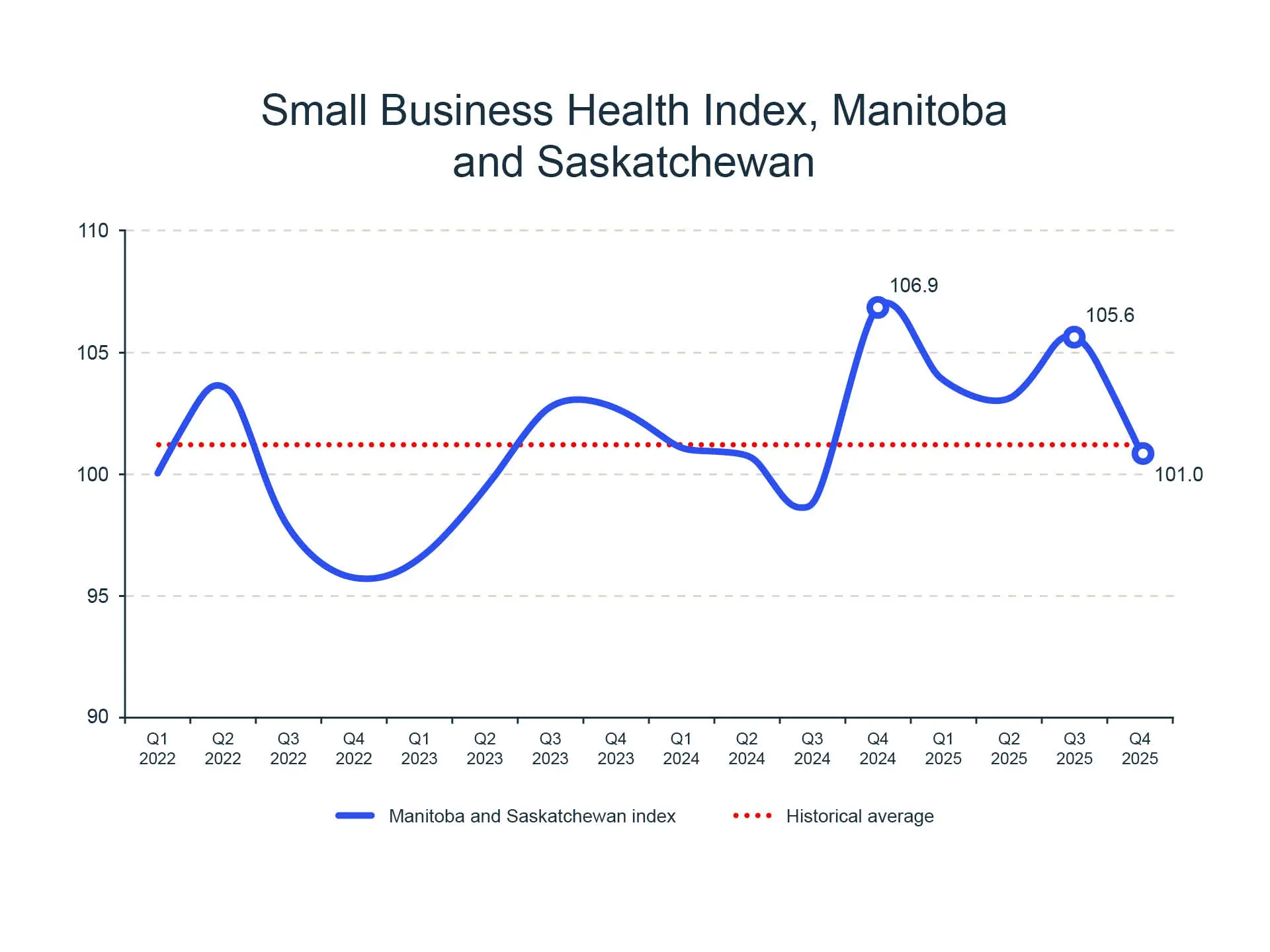
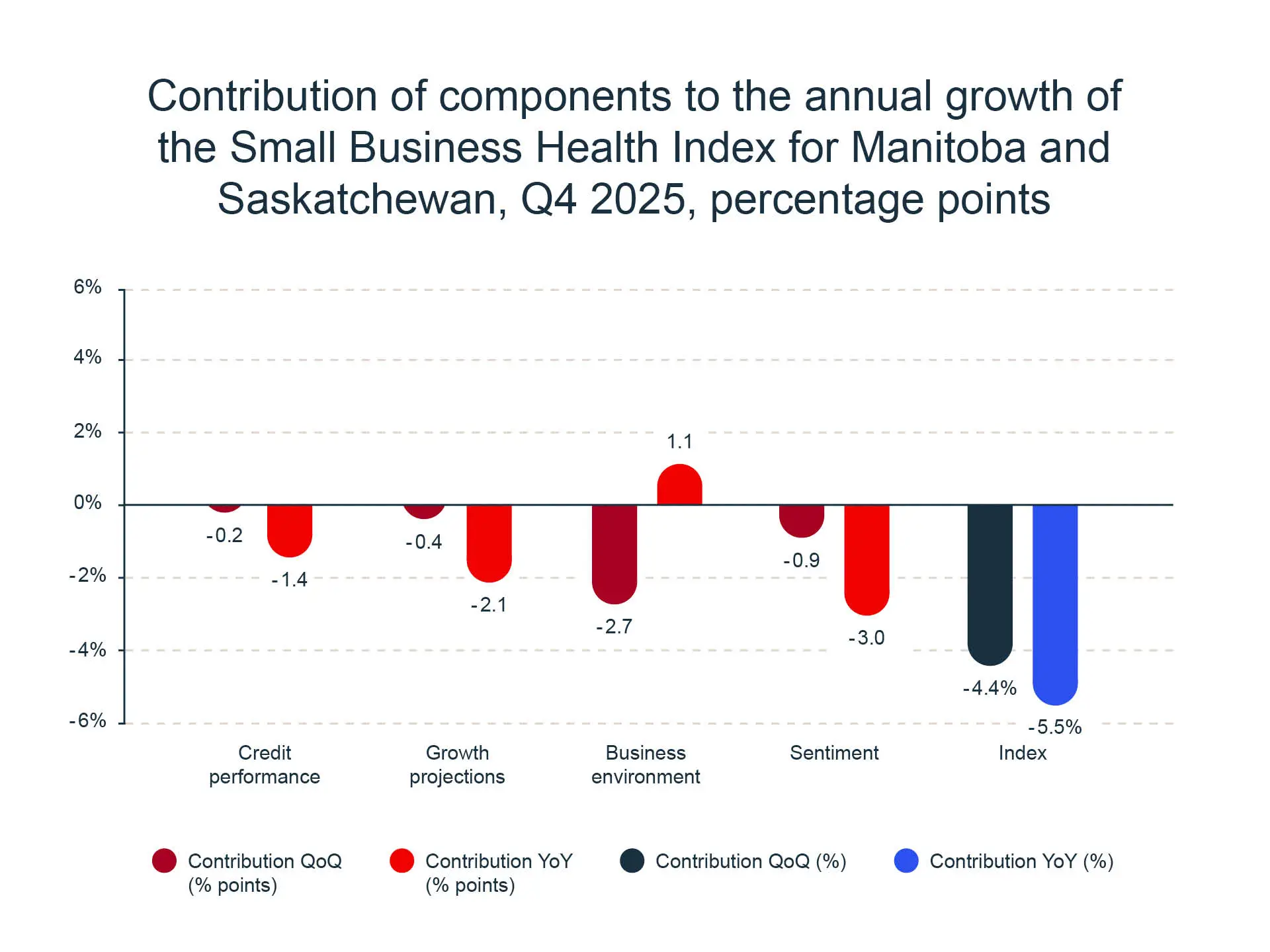
After peaking in Q3 2025, momentum eased in Manitoba and Saskatchewan toward the end of the year, with the index slipping to 101.0, a 4.4% decline from the previous quarter. The drop was driven by weaker sentiment and softer growth expectations, even as the underlying business environment remained supportive, posting a 6.3% year-over-year increase and reflecting resilient employment. Credit performance also worsened: Increases in bankruptcies, rising 90‑day past‑due supplier trades and higher 30‑day past‑due financial trades added pressure to the region’s year‑end conditions. Conditions remained positive overall, though SMEs ended 2025 more cautiously than at the start of the year.
Alberta: Solid fundamentals despite softer sentiment
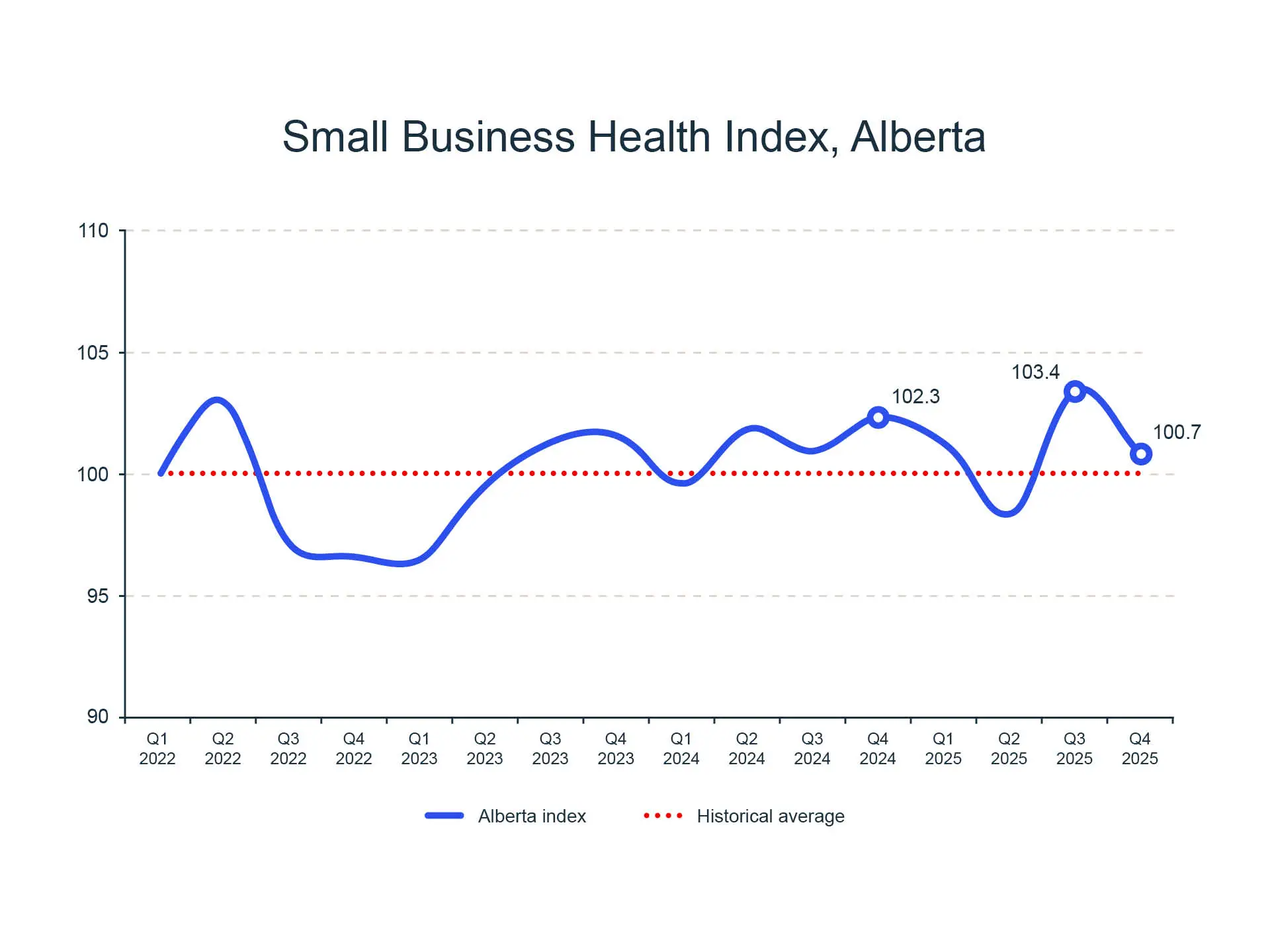
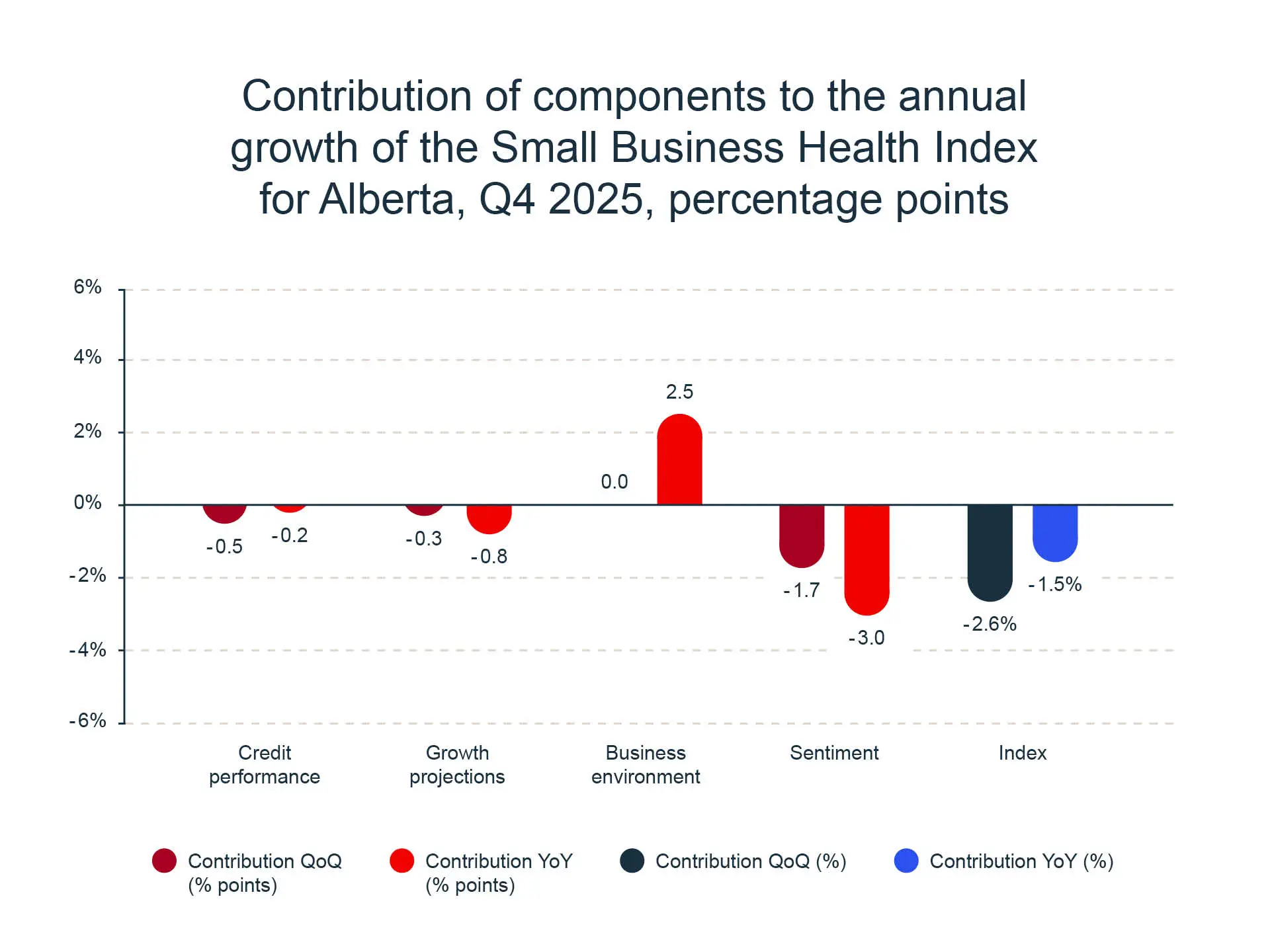
Alberta’s Index eased to 100.7 in Q4 2025, reversing some of the previous quarter’s gains. The decline reflects softer sentiment and more cautious expectations heading into 2026. The pace of growth slowed because business activity declined, leading to fewer inquiries and reduced opportunities for trade and finance. Stable consumer spending wasn’t enough to offset the slowdown. Credit conditions were mixed: small improvements in utilization and overdue amounts were outweighed by rising bankruptcies and more 90‑day past‑due supplier trades.
Despite the pullback, Alberta remains one of the strongest‑positioned provinces. The business environment is still robust, supported by strong employment and population growth. Even with lower oil prices, production remains high, supported by the Trans Mountain pipeline expansion. This combination leaves SMEs comparatively well anchored as they enter 2026.
British Columbia: Sentiment rebounds with improving expectations
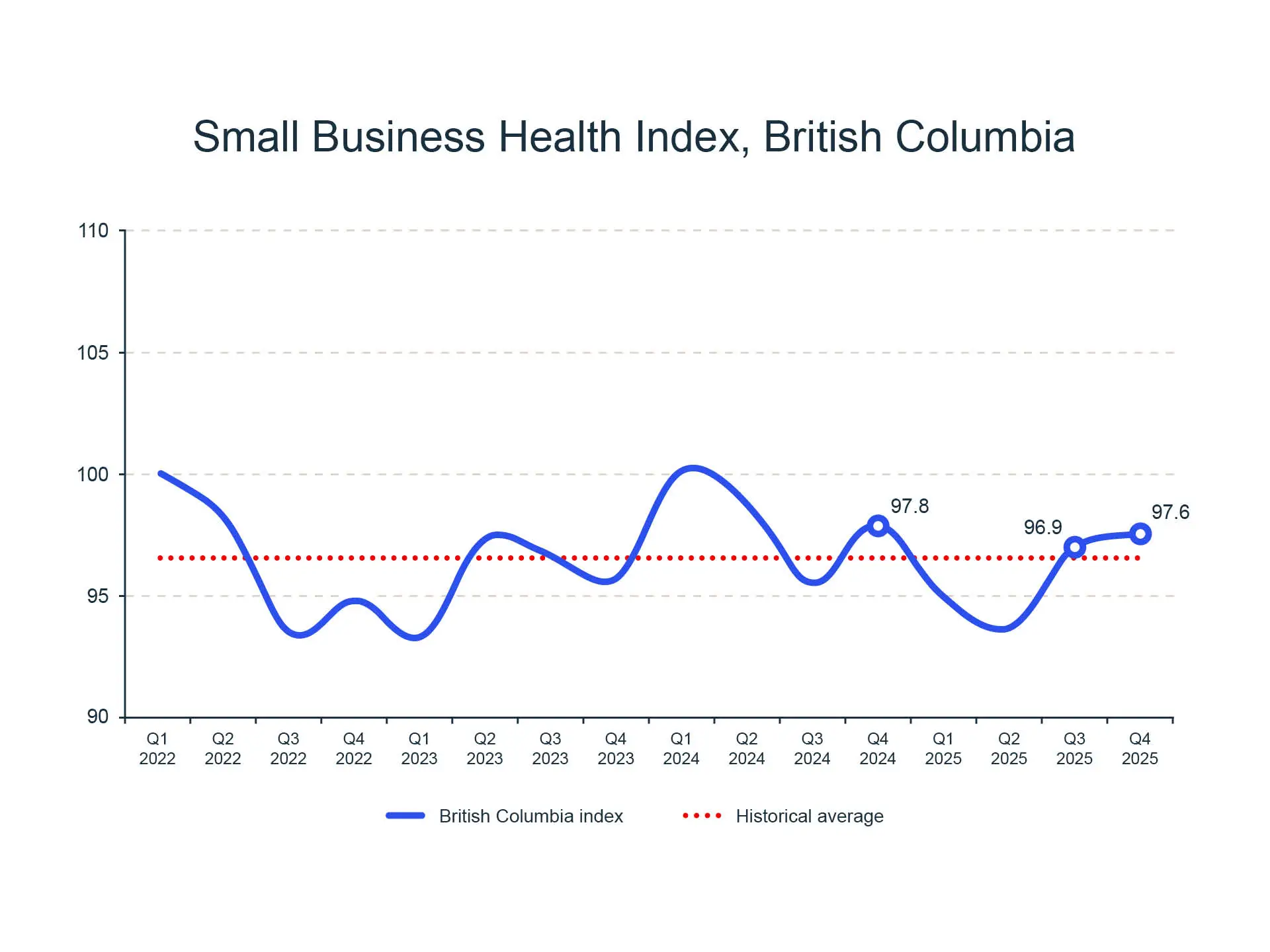
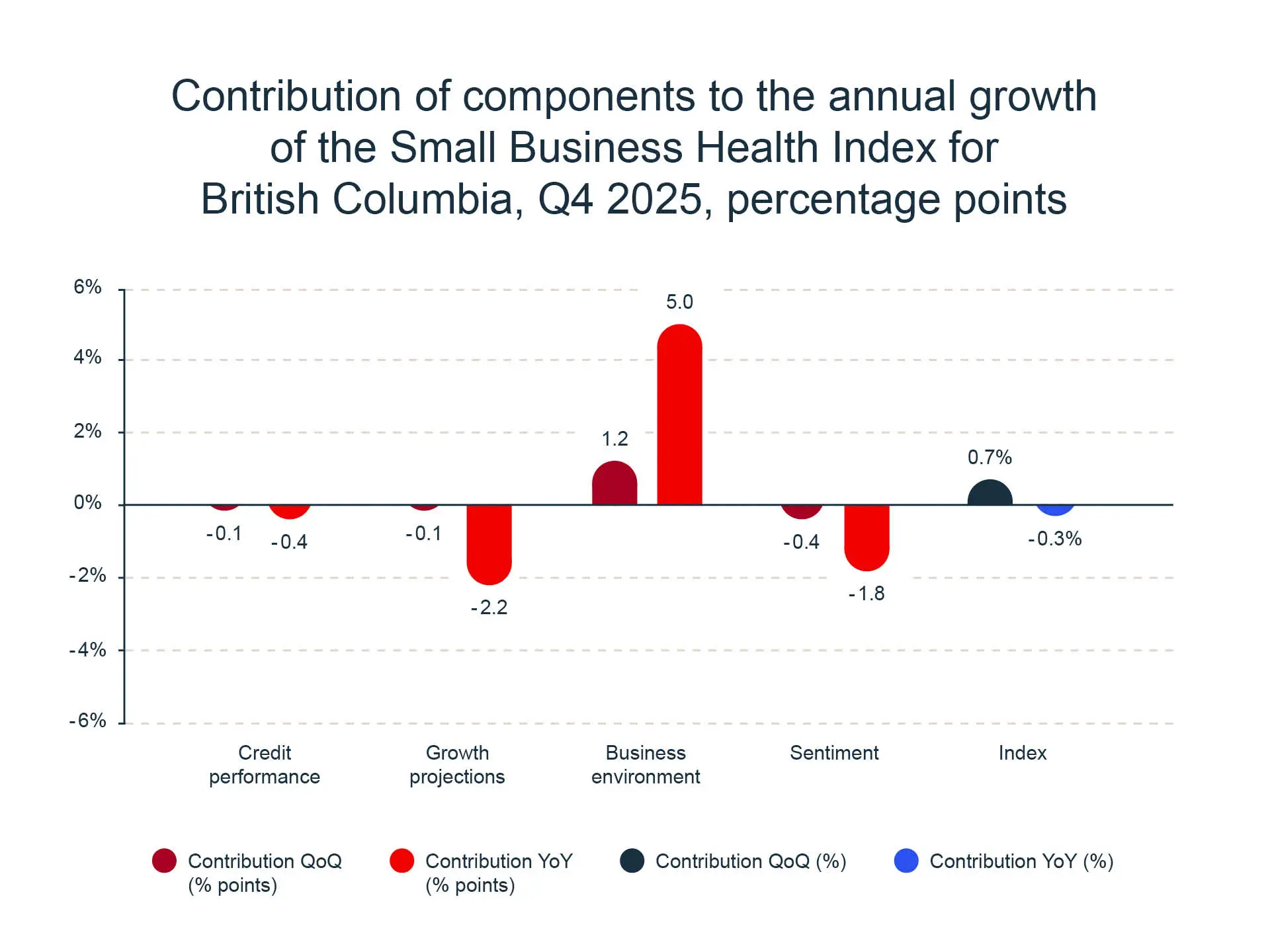
British Columbia’s index rose to 97.6 in Q4 2025, extending the steady recovery that began after its lowest point was reached in Q2 2025. Sentiment strengthened noticeably, with SMEs reporting improved expectations for economic conditions and their cash flow position over the next year. Credit conditions saw slight gains in utilization and overdue amounts, but small increases in bankruptcies and 90‑day past‑due supplier trades partly offset these improvements. While growth indicators remained modest, the continued rebound in confidence suggests B.C. entrepreneurs are entering 2026 on firmer footing and with a more optimistic outlook than earlier in the year.
For additional information on the methodology, please consult this document.