

Canada tourism outlook 2026
Travel demand should remain strong in 2026, with nine in 10 Canadians planning to travel and most expecting to travel as much or more than last year. About half have already booked at least one trip for leisure with at least a one-night stay. This is one of the highlights of a new BDC survey on the travel intentions of 1,000 Canadians between February 25 to March 3, 2026.
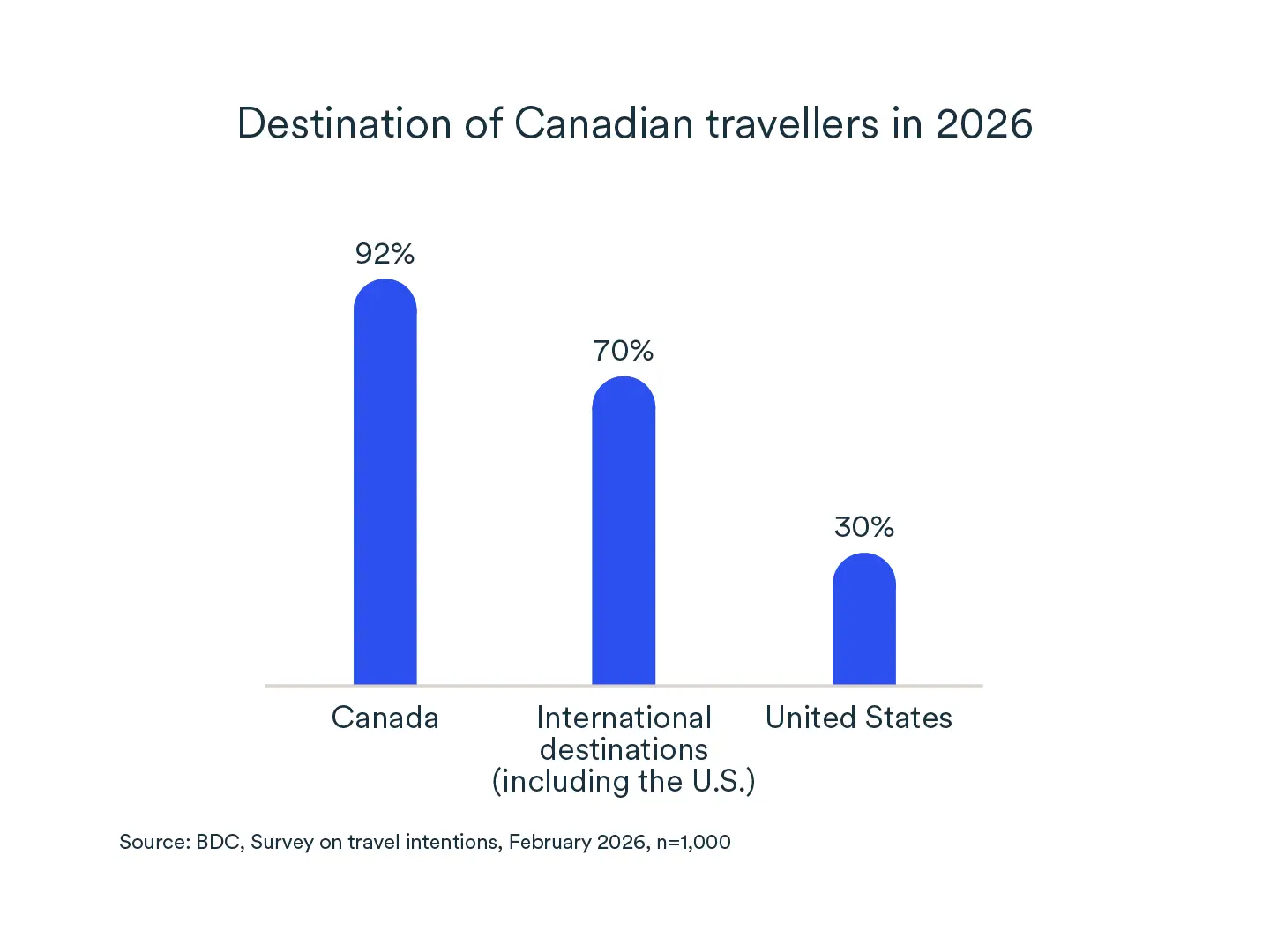
Domestic tourism is at the core of travel plans, as 92% of travellers expect at least one trip within Canada, driven by destination appeal, affordability and support for Canadian businesses. Among those travelling, 84% expect to spend as many or more days travelling than last year. On average, Canadians expect to spend about thirteen days travelling within Canada in 2026.
International travel remains important, but patterns are shifting. While 70% of travellers plan to go abroad, many less expect to travel to the United States. Political and social considerations continue to influence destination choices, pushing travellers domestically, or toward other international destinations. Close to 70% of travellers said they were boycotting the U.S. as a travel destination because of political or ethical reasons.
Destination of Canadian travellers in 2026
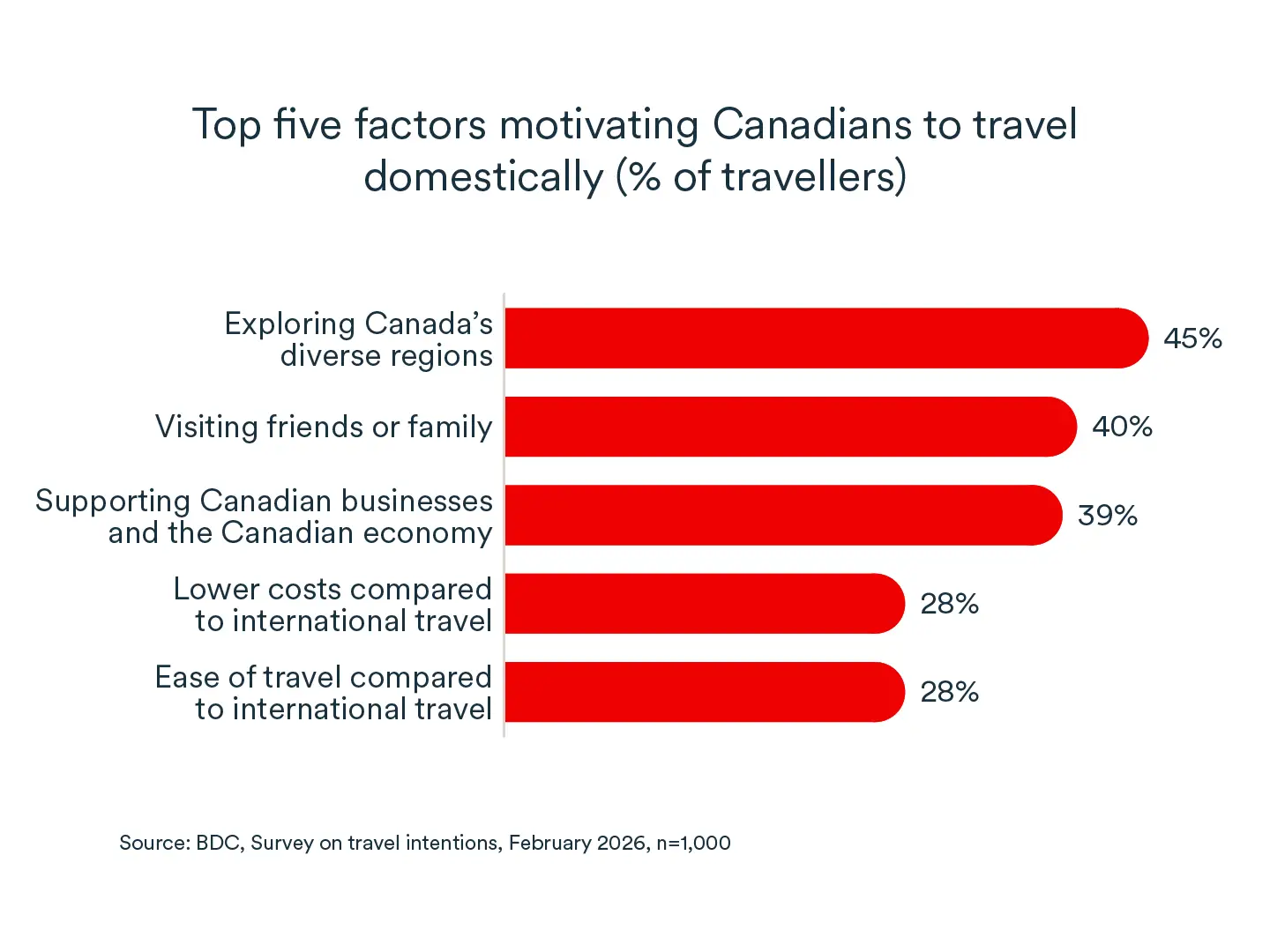
Destination appeal and support for the Canadian economy are key drivers for domestic travellers. The desire to explore Canada’s diverse regions as a major motivation 45% of travellers cited, while 39% also mentioned wanting to support Canadian businesses and economy. Affordability and practicality also play an important role.
Top 5 factors motivating Canadians to travel domestically (% of travellers)
Budgets are rising, but value matters, creating opportunities for tourism SMEs—particularly those offering affordable, flexible and locally focused services.
Carine Bergevin-Chammah
Economist, BDC
Bigger budgets, but value still matters
The survey was conducted before the recent surge in energy prices; nonetheless, tourism momentum is expected to remain positive in 2026, despite some pressure on household budgets.
Nearly half of travellers plan to increase their travel budget in 2026, with households expecting to spend about $7,000 on average. Roughly one-third of that budget is expected to be spent within Canada.
Travel holds an important place in Canadians’ lives, with 58% of respondents describing it as a central or important part of their lifestyle. As a result, many travellers prefer to make compromises rather than give up travel altogether. More than eight in 10 households (81%) report making compromises to afford travel, such as choosing more affordable accommodations, travelling during off-peak periods or being flexible with travel dates. This creates opportunities for tourism businesses that can offer good value and flexibility.
Travelling within Canada also stretches travel dollars further. In 2025, Canadians spent about $43 less per night when travelling domestically than when travelling abroad. As Canadians plan to spend an average of 12 days abroad in 2026, these savings add up.
These shifts in travel choices matter well beyond household budgets. The tourism industry counts an estimated 85,000 SMEs operating across the country.
Canadians who plan to travel abroad could add $4.6 billion to GDP by replacing an international night with a day of Canadian travel, translating into stronger demand for local accommodations, restaurants, attractions and transportation services.
Carine Bergevin-Chammah
Economist, BDC
Cautious economic outlook supports survey results
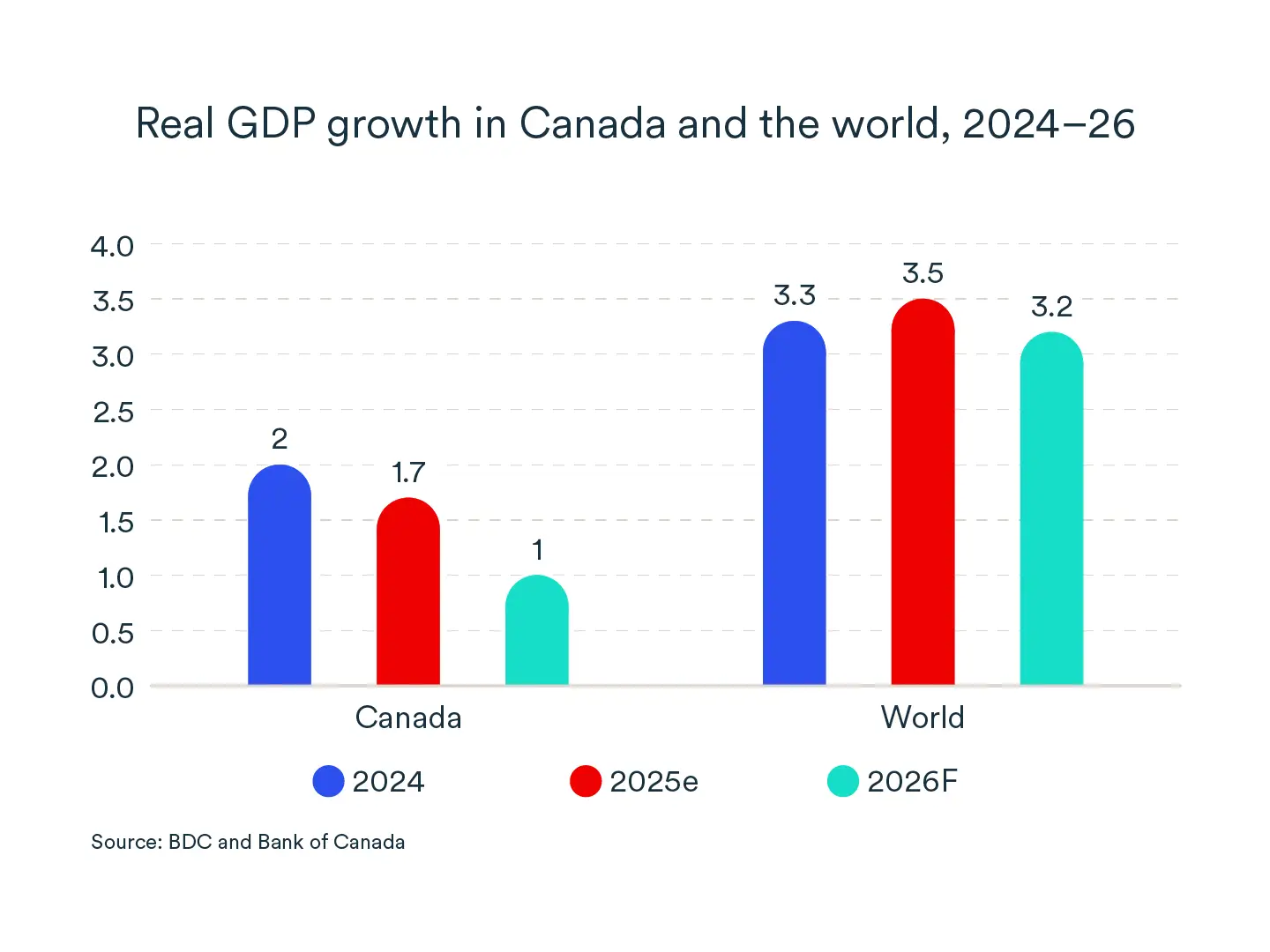
Despite these positive survey results, uncertain economic conditions point to a cautious but positive environment for tourism in 2026. Global growth is expected to slow, with Canada’s GDP forecast to increase by a mere 1.0%, down from 1.7% in 2025. Elevated uncertainty—driven by ongoing trade tensions and heightened geopolitical risks—is weighing on the outlook.
Real GDP growth in Canada and the world, 2024-26
The conflict in the Middle East has pushed energy prices higher, with direct implications for fuel and transportation costs. These are expected to weigh on household budgets and raise travel costs, which could lead many to revisit their travel budget. At the same time, prices for traveller accommodations in Canada have eased over the past year. These opposing forces could encourage Canadians to favour domestic travel over international trips.
The Canadian dollar has remained relatively stable since the start of the year, hovering between USD 0.72 and 0.75. Heightened uncertainty following the escalation of the Middle East conflict and rising energy prices has not strengthened the loonie materially. We expect the Canadian dollar to remain below USD 0.75 in the near term. This exchange rate remains supportive of domestic travel for Canadians, while foreign visitors continue to benefit from a relatively weak Canadian dollar.
Household fundamentals remain relatively solid, but labour market conditions will have an important effect on travel demand. Since the start of the year, employment has trended downward and the unemployment rate has risen. Moreover, risks of a downward shift in financial markets and the fear of recession are growing since the Middle East conflict escalated. This could lower households’ confidence and limit their ability to spend on travel.
Canada will be co‑hosting the FIFA World Cup in 2026. Matches are scheduled in Toronto and Vancouver. The event is expected to draw a significant number of international visitors and generate spillover benefits for nearby destinations. Estimates suggest that the tournament and related activities could generate up to $3.8 billion for Canada between June 2023 and August 2026.
We expect the Canadian dollar to remain below USD 0.75 in the near term. This exchange rate remains supportive of domestic travel for Canadians, while foreign visitors continue to benefit from a relatively weak Canadian dollar.
Carine Bergevin-Chammah
Economist, BDC
Canadians kept the sector moving in 2025
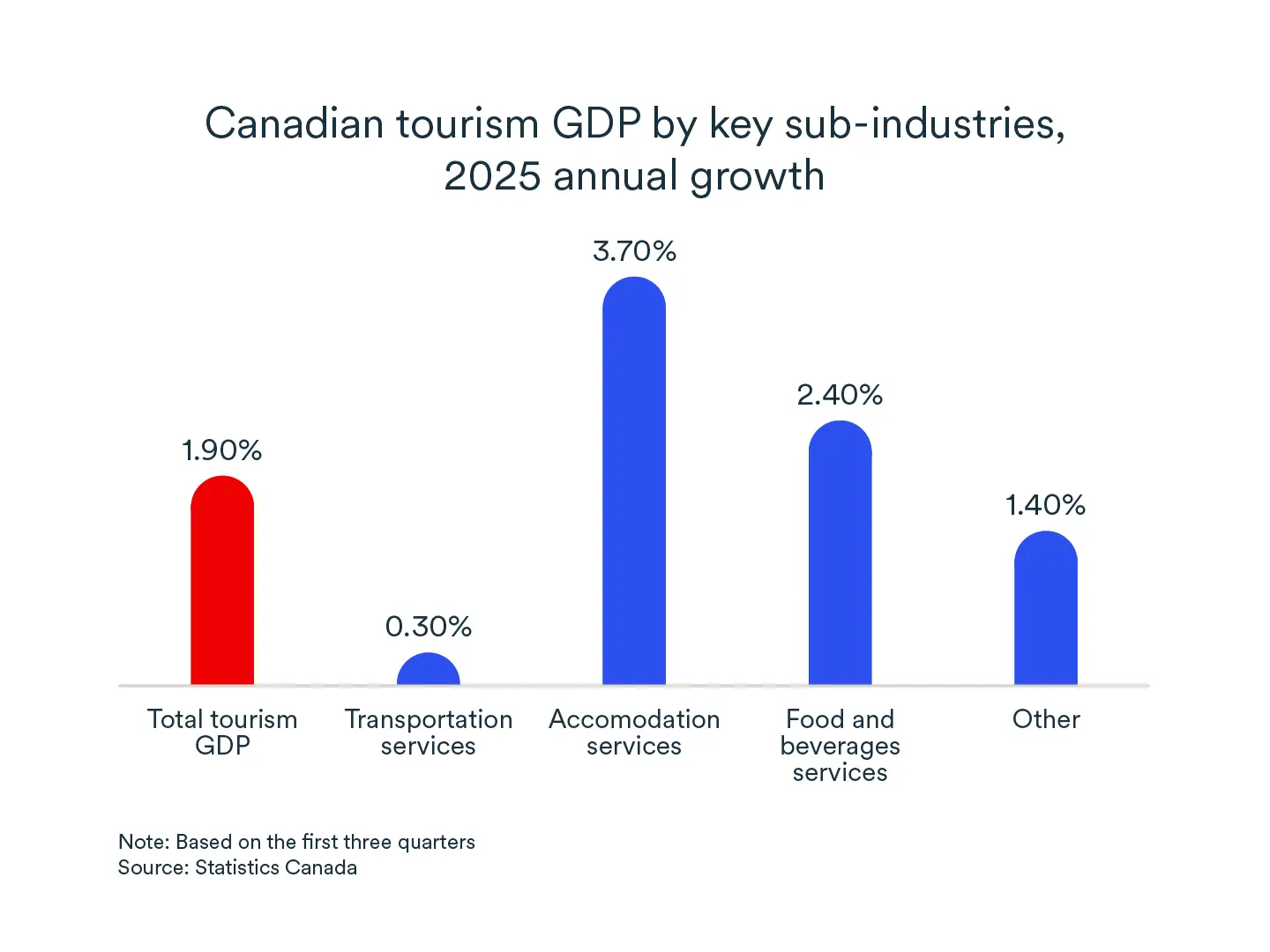
Canada’s tourism sector posted a solid performance in 2025. Tourism-related GDP grew by 2.2% annually in 2025. Canadian travellers drove this growth, increasing their spending by 2.5%, more than offsetting a slight decline in spending by foreign visitors.
Canadian tourism GDP by key sub-industries, 2025 annual growth
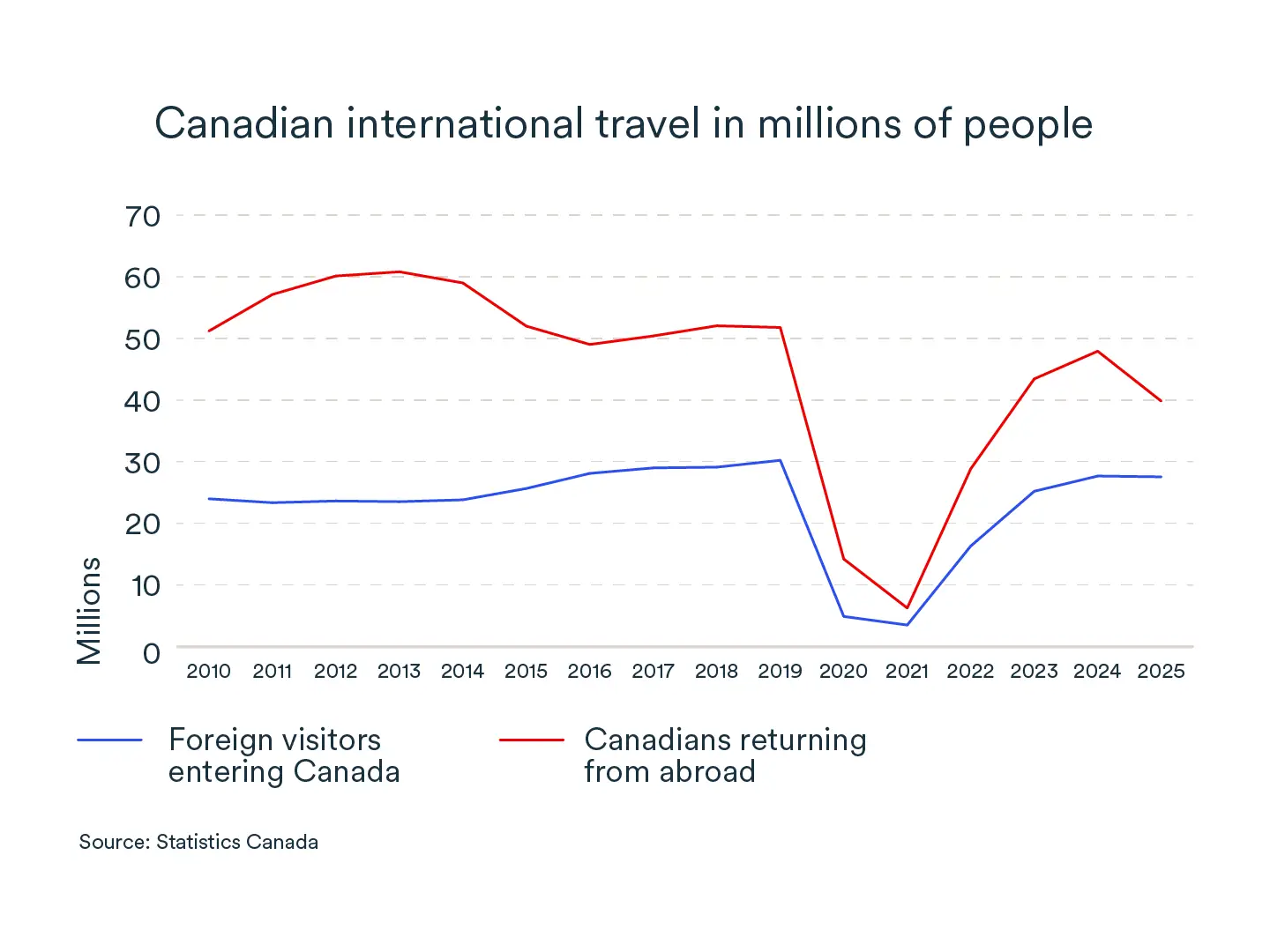
Geopolitical uncertainty and tensions with the United States weighed modestly on international travel. The number of foreign visitors to Canada edged down 0.6% in 2025, reflecting fewer arrivals from the U.S., which were only partly offset by more visitors from other countries.
At the same time, fewer Canadians travelled abroad. The number of Canadians returning from international trips fell nearly 17% compared with 2024, driven by a sharp 25% decline in U.S.-bound travel. The number of Canadians travelling to the U.S. reached the lowest level ever seen outside pandemic years. While trips to other international destinations increased, they were not enough to offset the drop in travel to the United States.
Instead, many Canadians chose to travel at home. Over the first three quarters of 2025, Canadians took 3.6% more domestic trips than a year earlier, including a notable increase in overnight stays. This shift helped support accommodation services, food and beverage establishments, and other tourism businesses across the country.
Canadian international travel in millions of people
Outlook: Resilient domestic travel intentions present opportunities for entrepreneurs
Despite a slower and uncertain economic backdrop, strong travel intentions and continued interest for domestic destinations should support the Canadian tourism in 2026.
For tourism businesses, the message is clear: Canadians are ready to travel and domestic destinations remain top of mind, but affordability will shape decisions. Businesses that emphasize value, flexibility and their local appeal will be well positioned to capture this demand in 2026.
Discover how BDC can help your tourism business
BDC offers tailored financing and advice to help manage seasonal demand, fierce competition and exchange rate fluctuations. Learn more.