

How consumers feel about buying Canadian
It’s no secret that in these inflationary times, Canadian consumers are watching their spending. But they’re also willing to pay more for products and services that offer real value, especially if they’re made in Canada.
The results of a recent BDC survey of nearly 1,500 Canadian consumers show that while price is the dominant factor in people’s purchasing decisions, value perceptions and country of origin also strongly influence what Canadians choose to buy. For entrepreneurs, these insights offer practical information about how to position, price and market what they sell.
|
66% |
57% |
32% |
| of Canadians base most purchasing decisions mainly on price. Quality, durability, special offers and reviews are the other most-mentioned criteria. | say they’re willing to pay more for Canadian-made goods. 37% say it is difficult to identify Canadian products. | make most of their purchases online. This is especially true for Ontarians, people aged 35 to 44 years, urban residents, and those with household incomes of $150,000 or more |
Businesses that clearly communicate durability, craftsmanship or performance can justify higher prices—even with cost-sensitive customers.
Zelina Frigan
Senior Analyst, Research, BDC
Price still drives most decisions
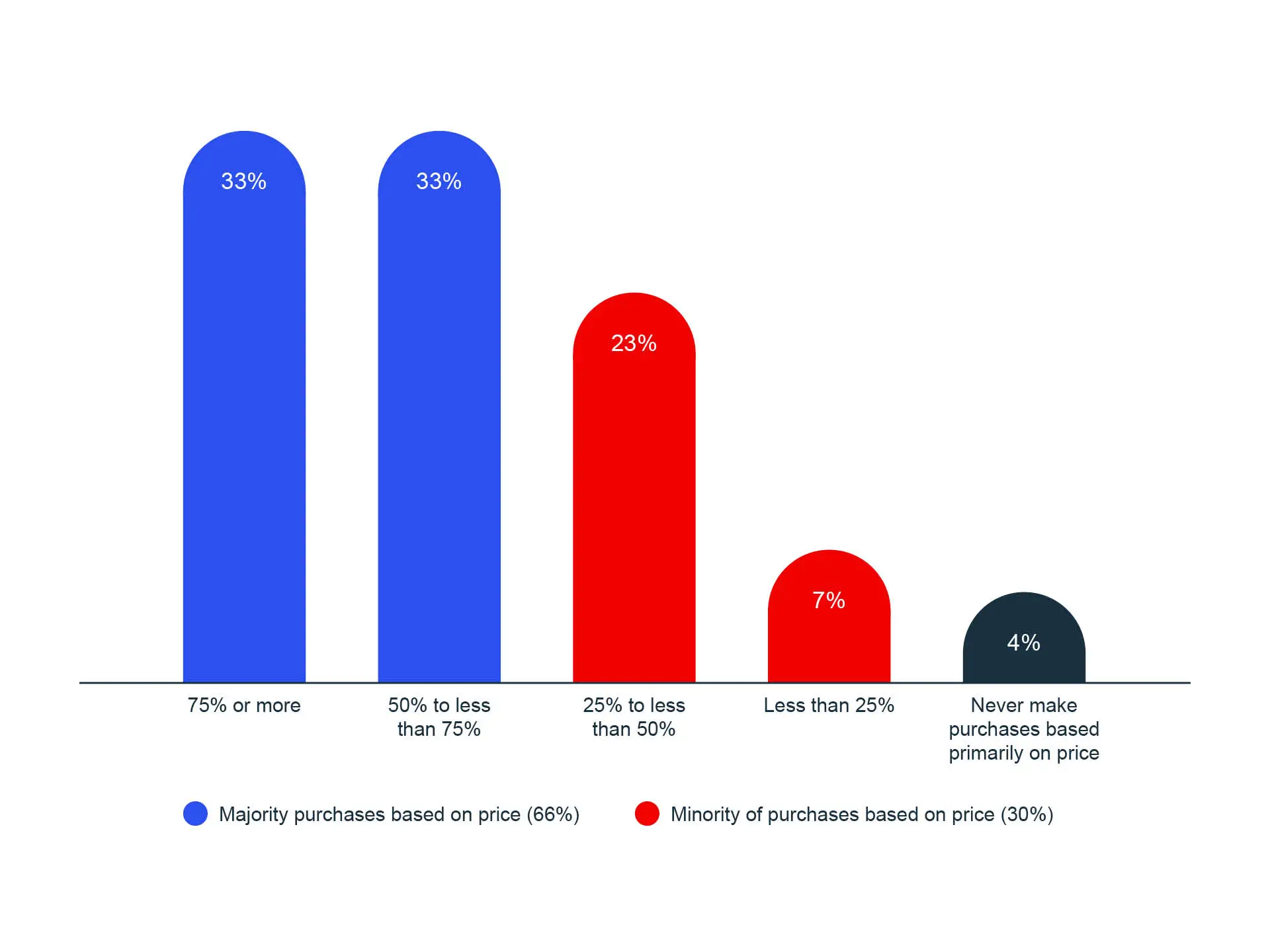
Two-thirds of Canadians surveyed said they base most of their buying decisions primarily on price, with more than three-quarters comparing prices at least occasionally before a purchase. This confirms what many entrepreneurs have likely already sensed: consumers are cautious and looking for deals.
But the findings also show that price is rarely the only consideration. Nearly two-thirds of consumers also prioritize quality and durability (followed by discounts and positive reviews). Most shop online regularly and use online channels to compare prices and features, read reviews, or verify a product’s origins.
Takeaways for entrepreneurs
- Businesses that clearly communicate durability, craftsmanship or performance can justify higher prices, even with cost-sensitive customers.
- Consumers actively compare prices: You can benefit from helping customers understand what they are comparing—for example, by explaining differences in quality, materials or service.
- Having an online presence with detailed information and reviews is essential.
Price is the primary purchase driver for Canadian consumers
What proportion of their purchases do Canadians make based primarily on price?
More than half of Canadians surveyed said they would likely pay more for Canadian-made products and services.
Zelina Frigan
Senior Analyst, Research, BDC
Consumers will pay more for Canadian products—but they need help finding them
More than half of Canadians surveyed said they would likely pay more for Canadian-made products and services, with an average premium of 23%. Yet only two in five say it’s easy to identify Canadian products, and more than a third find it difficult.
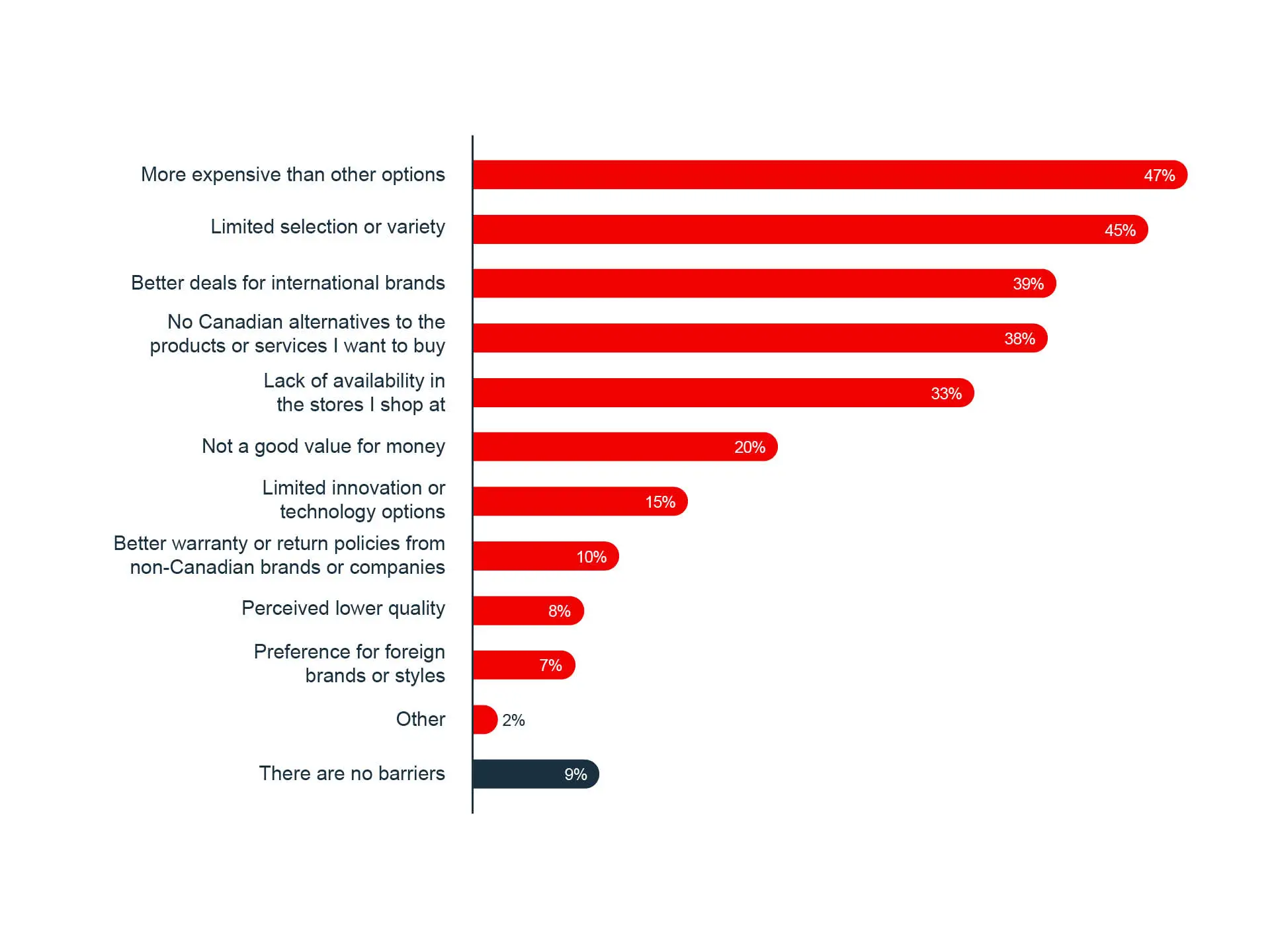
These respondents told us that barriers include unclear or inconsistent labelling, small print, and confusion about what qualifies as Canadian. Complicating things further, consumers themselves don’t always agree on what makes a product “Canadian.” Some focus on where it is manufactured, others on company ownership or sourcing.
This gap between intent and action is one of the study’s most actionable findings for entrepreneurs.
Takeaways for entrepreneurs
- Visibility of origin matters. Make your Canadian identity easy to spot—on packaging, websites, product descriptions and marketing materials.
- Still, visibility alone isn't enough: Credibility matters too. In open-ended responses, about 15% of consumers complained about misleading or deceptive practices by brands exploiting the current buy-Canadian sentiment—a phenomenon that has become known as “maple washing.” Clear, consistent and honest origin claims can help you stand apart from brands that trade on patriotic optics without backing them up.
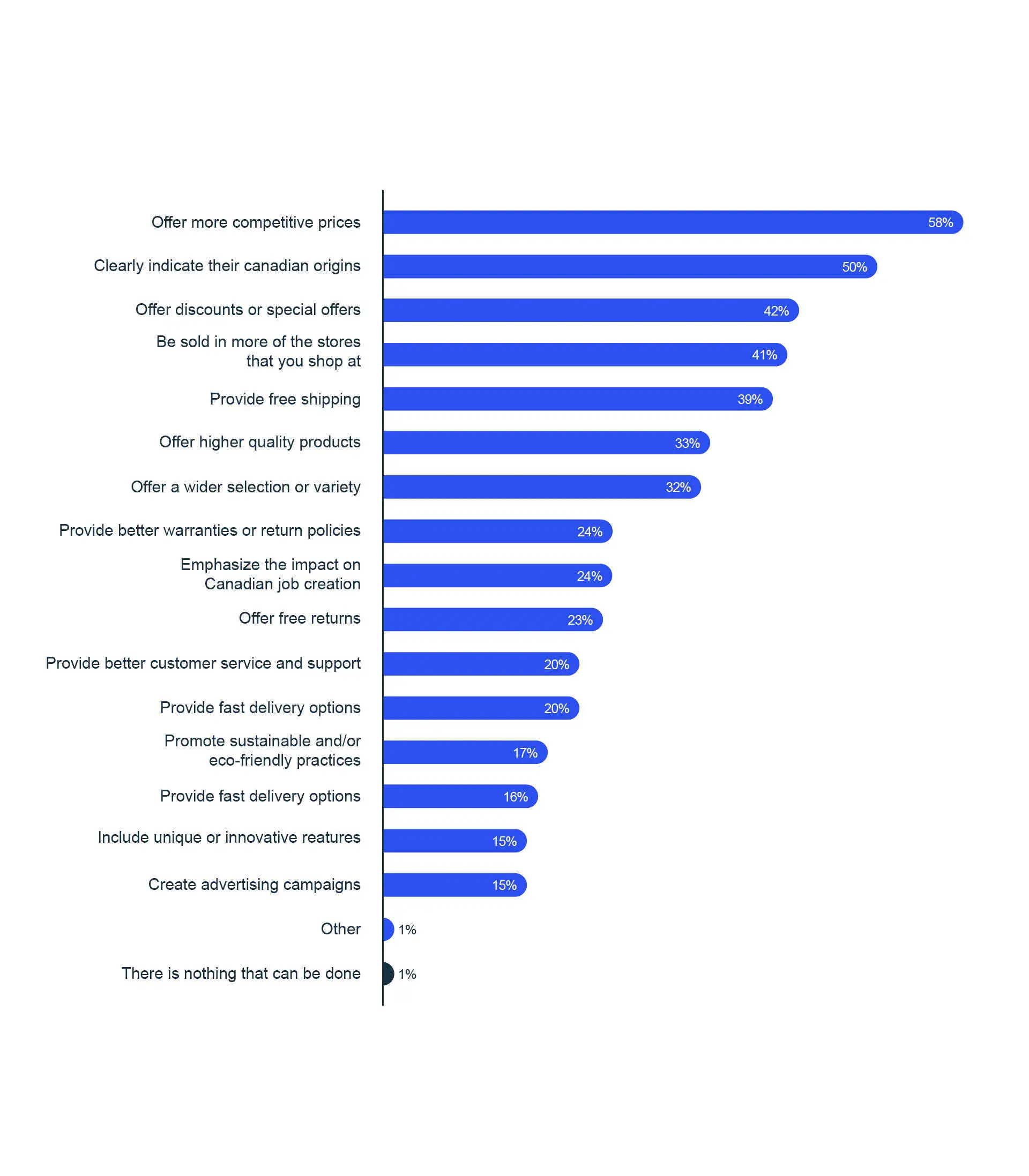
- When asked what Canadian businesses could do to earn more of their business, consumers' top answers were straightforward: offer more competitive prices and clearly indicate Canadian origins.
- Consider boosting your visibility by partnering with retailers or distributors to create Canadian-made sections or signage.
What holds consumers back from buying Canadian-made goods products?
Are there barriers for you to purchase Canadian-made goods and services?
Value perception goes beyond price
When judging whether something is worth the money, consumers told us they prioritize durability, quality and how well a product meets their needs—often ahead of price alone.
These perceptions of value are critical for smaller businesses competing against large retailers and lower-cost imports.
The research also suggests that Canadian brands are often perceived as higher-priced, but are not always recognized for the value drivers that justify that price.
Value perceptions are not just functional. For many consumers, buying Canadian also signals trust, pride and support for the local economy. These emotional factors can reinforce their willingness to pay more.
Takeaways for entrepreneurs
- Link your prices to the value attributes that consumers already care about: longevity and durability, craftsmanship and materials, performance and reliability, and ethical or local production. This can help customers understand why a product may cost more—and why the price is still worth it.
- Reviews and recommendations play an important role in how consumers judge value. Particularly for smaller businesses without strong brand recognition, visible customer feedback can add credibility and justify price.
Emphasize what larger competitors can’t easily replicate, such as local identity, specialized expertise, unique materials or products, quality positioning, or Canadian sourcing or manufacturing.
Zelina Frigan
Senior Analyst, Research, BDC
Large retailers dominate, so differentiation is essential
About two-thirds of consumers say they shop regularly at large Canadian or U.S. retailers. Fewer than half shop regularly at local independent businesses.
But the findings also suggest that consumers are open to alternatives when they perceive added value or alignment with their priorities.
Takeaways for entrepreneurs
Smaller businesses are not at a disadvantage if they can clearly signal value and origin. When these attributes are visible and credible, consumers are willing to consider alternatives to large retailers. This means you can compete not only on price, but on distinctiveness and relevance. Emphasize what larger competitors can’t easily replicate, such as:
- local identity
- specialized expertise
- unique materials or products
- quality positioning
- Canadian sourcing or manufacturing
These differentiators matter in crowded markets dominated by major brands.
What could local, provincial and Canadian brands and companies do to encourage consumers to buy their products or services?
Buying Canadian from coast to coast
Attitudes toward buying Canadian are not the same across every region in the country. Consumers in Atlantic Canada are more likely to favour local and Canadian products, while those in Quebec and the Prairies tend to give more weight to other factors. Ontario and British Columbia consumers are very interested in Canadian products, but many of them report difficulty identifying them.
Download the full regional analysis
What it all means for entrepreneurs
As the above graph suggests, survey respondents had plenty of ideas for how Canadian businesses could do better. But among them, three priorities emerge most clearly:
1. Make your value more visible
Clearly communicate your product's durability, quality and performance. These are the top three criteria consumers use to judge whether something is worth the money—and they are attributes Canadian businesses are well positioned to deliver.
2. Make your Canadian origins more obvious
Use clear labelling, messaging and storytelling. The survey found that a standard “Product of Canada” label and a maple leaf symbol on packaging were by far the most effective signals that would help potential customers identify and choose Canadian products.
3. Justify price through differentiation
Explain why your offering costs more—and why it's worth it. Consumers who shop at large retailers cite price as their primary driver, but are open to alternatives when value and origin are made clear.
These insights are especially relevant in today’s economic context, where inflation and uncertainty continue to feed heightened price sensitivity. Consumers are watching their spending more closely—but they haven’t abandoned quality, and they still care where products are made. They do struggle to identify these attributes when they shop, and that’s where the opportunities lie for smaller businesses.
Our survey found a real appetite among consumers to support Canadian businesses. You can capitalize on that by making your products easier to recognize and clearly communicating the value they offer.
Next step
Read about the seven steps to setting the right price for your products or services or how to create a compelling value proposition for your customers.