

Housing affordability and SMEs: Turning a challenge into an opportunity
Housing affordability is a nationwide concern. It affects a wide range of groups and is an issue that all levels of government are tackling.
How does unaffordable housing impact businesses? What about the rise in commercial rents? What solutions could increase the housing supply and improve the situation?
Affordability remains an issue
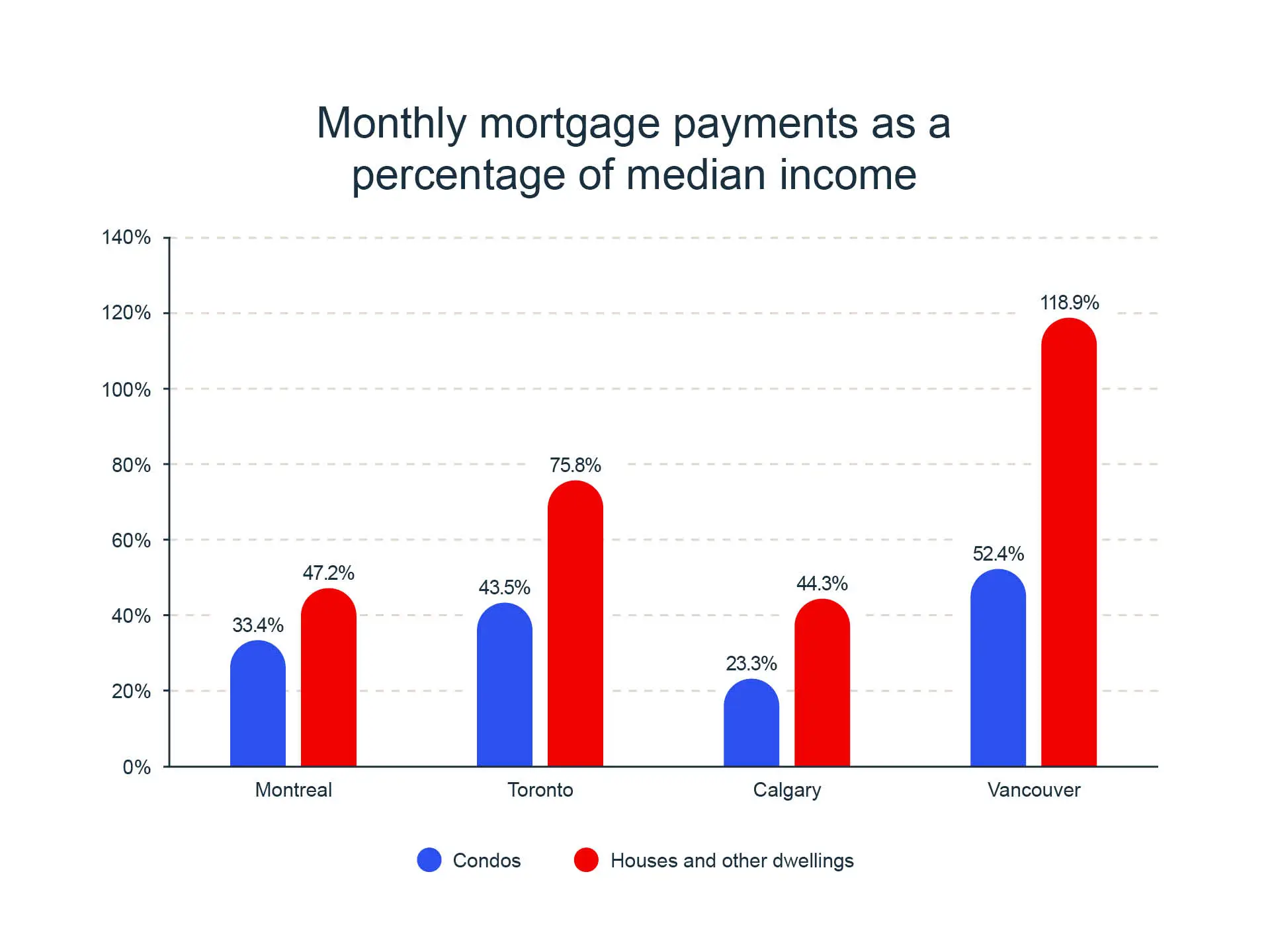
The most common definition of affordable housing is when a family spends less than 30% of its before-tax income on housing costs, whether for a house or an apartment. Although the situation has improved somewhat since 2022, households in many cities spend well over 30% of their income on housing. This is even tougher for households below the average income.
This graph illustrates the percentage of average income allocated to mortgage payments in four major Canadian cities.
Many urban households still spend over 30% of their income on housing
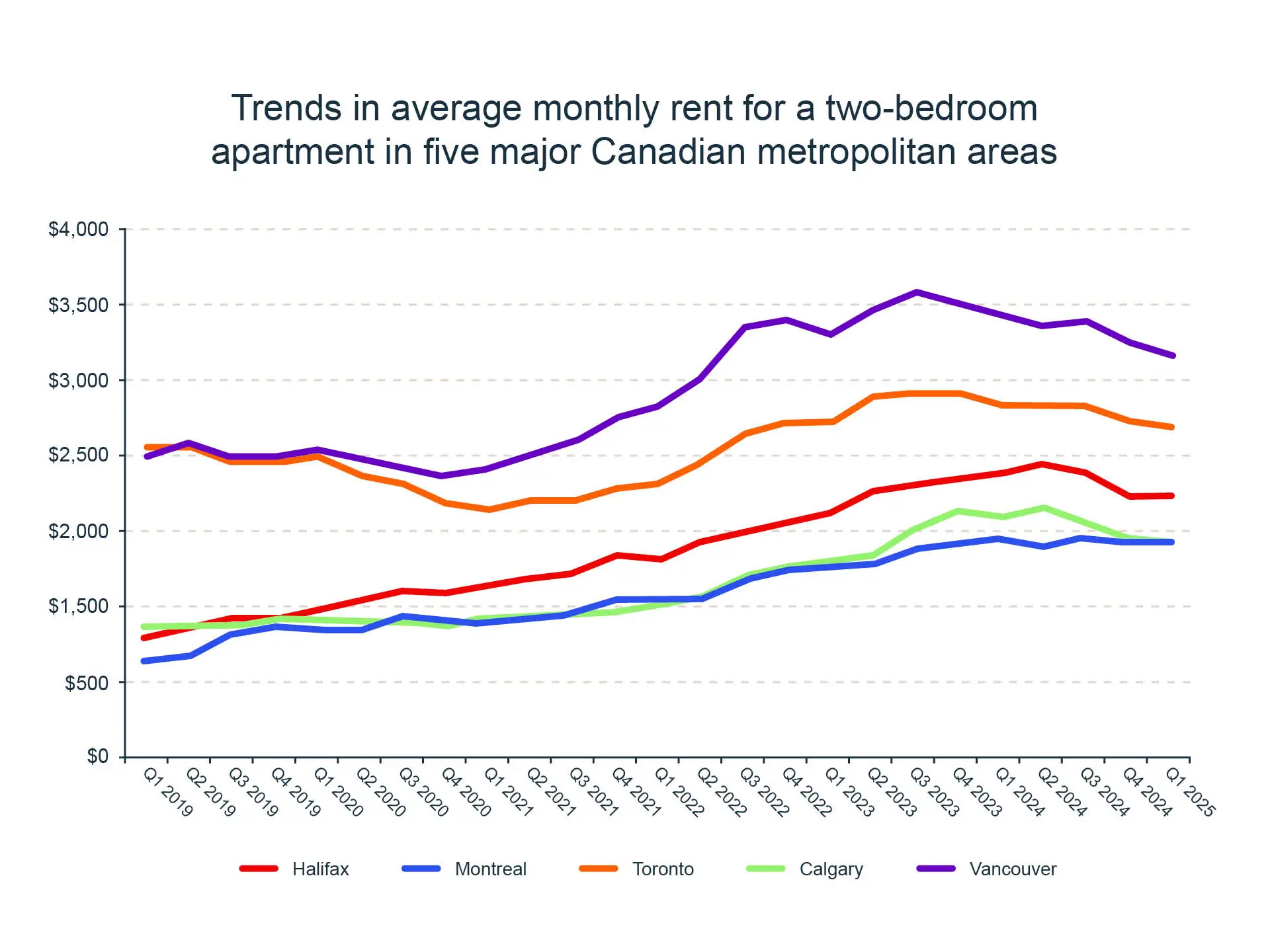
Tenants are in a similar situation as homeowners. Since 2019, the average monthly rent for a two-bedroom apartment has increased by 43% in five major metropolitan areas: Halifax, Montreal, Toronto, Calgary and Vancouver. Fortunately, the situation has stabilized somewhat since the second half of 2023, when the Bank of Canada’s policy rate hit 5.0% to curb inflation. On average, the price of standard housing fell by 8% between the third quarter of 2023 and the second quarter of 2024.
There was a drop in standard housing prices over the past year
Housing affordability is also affecting businesses
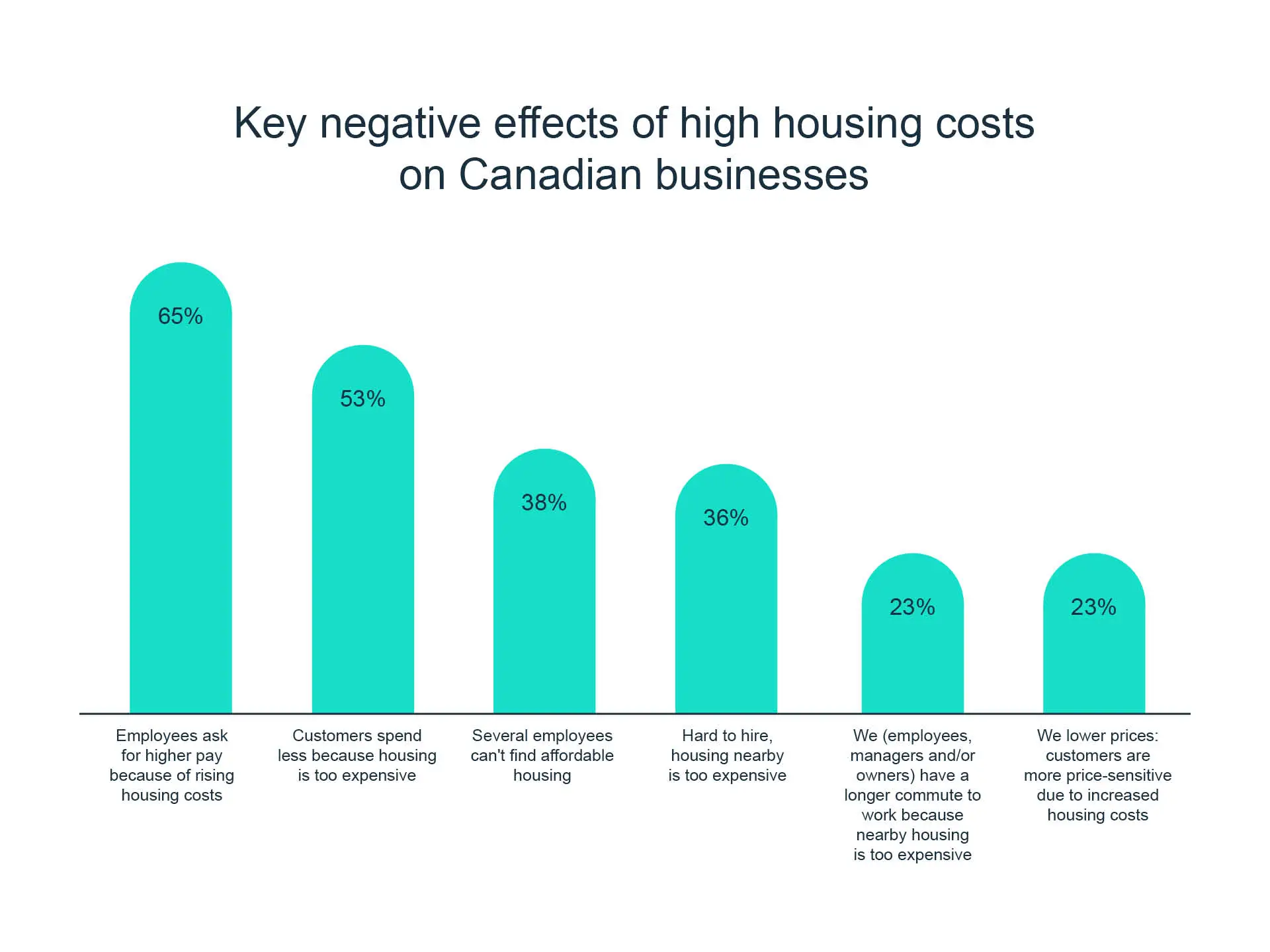
High housing costs reduce household purchasing power, which in turn affects businesses. According to a BDC survey conducted in November 2025, 50% of business owners report feeling the negative effects of high housing prices. For example, salaries are going up, while customers are spending less. Nearly a quarter of businesses even reported lowering their prices due to the high cost of housing.
However, there are significant regional disparities. While 63% of small and medium-sized businesses in British Columbia and the territories say they are negatively affected by the lack of affordability, this figure drops to 35% in Quebec.
High housing prices are taking a toll on business owners
High rents are barriers to hiring
Additionally, nearly 40% of surveyed entrepreneurs believe that their staff have a hard time finding affordable housing near their workplace. Over one-third (36%) say this hinders their ability to hire new employees.
Moreover, 20% of surveyed business owners reported offering remote work to allow employees to live further away from the office. Some (12%) see this as a competitive advantage for attracting and retaining talent.
According to estimates from the Canada Mortgage and Housing Corporation (CMHC), a 1% increase in housing prices in an urban centre can lead to an equivalent drop in the number of people moving there. As such, deteriorating affordability affects labour mobility, particularly towards urban centres. Yet, the growth and expansion of major centres drive innovation and productivity.
Businesses also feel the pinch of rising commercial rents
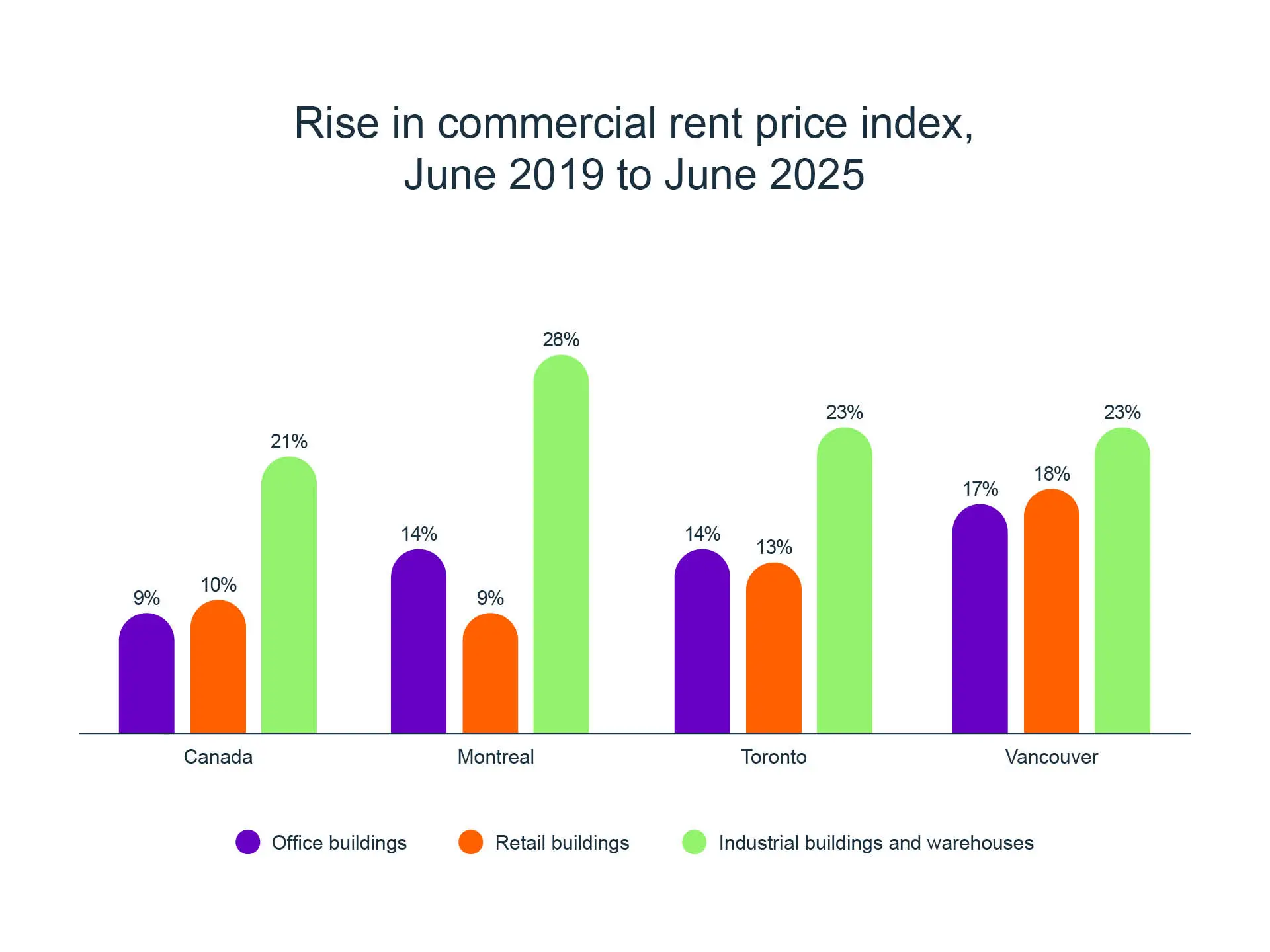
Similar to housing, the cost of commercial rent has increased significantly in several regions of the country since 2019, particularly for industrial and warehousing spaces. On average, this type of rent grew by 21% between 2019 and 2025, while rents in the retail sector increased by 10% and office rents by 9%. However, there are big disparities across the country.
Nearly half of all businesses lease the locations used for their own operations. According to a recent BDC survey, 68% of businesses that lease their commercial space report feeling the pinch of high rents.
Commercial rents have climbed sharply in many regions since 2019
Canada needs more housing
The Parliamentary Budget Officer estimates that Canada must build 290,000 units annually to close the housing supply gap and improve affordability.
For its part, the CMHC estimates that we will need to build nearly double that amount—namely, between 430,000 and 480,000 units—over the next decade to restore housing affordability to 2019 levels.
One thing is certain: the number of housing starts, which stood at nearly 269,000 units in October 2025, must increase.
Low productivity
To build more homes, however, the construction industry must modernize and become more productive. Unfortunately, it has instead taken a step backward in recent years.
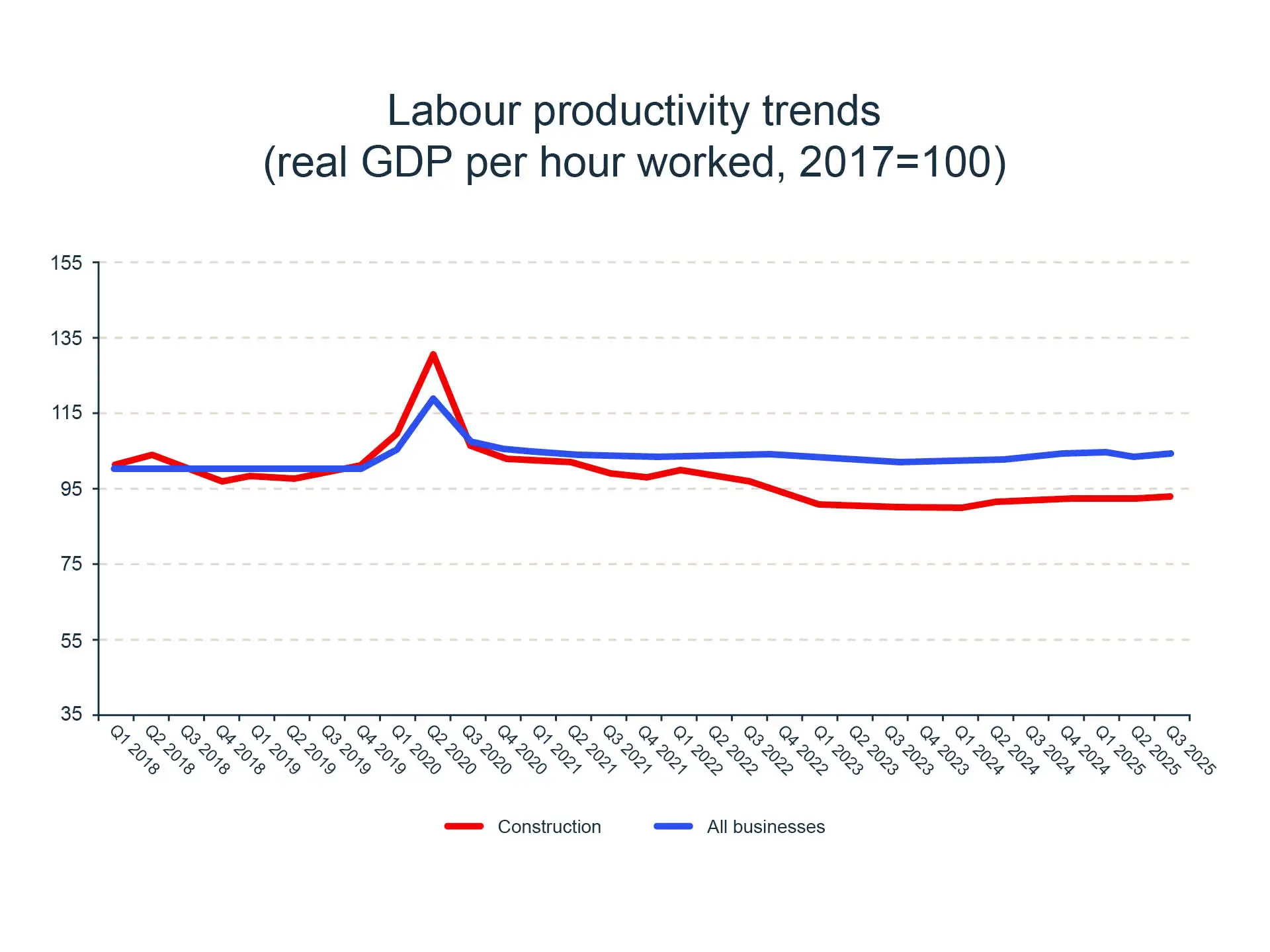
The residential construction industry in Canada faces a significant productivity challenge. Since the pandemic, productivity growth in the construction sector has lagged behind the private sector as a whole. As a reminder, labour productivity represents the value added per hour worked.
Construction productivity still trails the private sector
Possible solutions
One of the reasons for the dip in productivity for residential construction businesses is the long wait times for permits. According to 65% of the residential construction business owners surveyed, streamlining and simplifying the permit process, relaxing zoning by-laws, and facilitating approvals would help speed up home construction.
There are also significant delays in adopting effective management practices and new technologies. Addressing these delays is another solution to the problem.
In fact, 32% of residential construction business owners feel that improving productivity on construction sites could improve housing affordability.
Focusing on improving efficiency and innovation is critical to reversing this trend and enhancing the construction sector’s performance, which will positively impact affordability.
Effective management practices supported by technology
In construction, good project management and a well-organized team are essential to a project’s success.
Business owners often wonder where to begin. A good first step is to evaluate your current processes and document your work methods. If nothing is formalized, now is the time to create clear procedures that will serve as a foundation for all initiatives.
In construction, you might think the only tools you need are on the worksite. However, digital tools, such as project management software, can help you track timelines, identify gaps, and make informed decisions. There are several free or low-cost options that can help streamline day-to-day management.
Build Canada Homes: More housing, faster
The federal government recently launched Build Canada Homes, a new agency tasked with building more affordable housing in collaboration with the provinces, municipalities and Indigenous communities. It will have a $13 billion fund. Half of those consulted in our survey see long-term, low-cost financing as one of the key solutions for accelerating construction.
Construction companies are central to the solution
The construction sector is vital to the Canadian economy. Every year, it generates some $150 billion, or 7% of the country’s GDP. Small and medium-sized businesses, which are central to this sector, play a key role in developing concrete solutions.
Our survey indicates that efficiency gains in the sector would have a positive impact on the rest of the economy by easing wage pressure and enhancing household spending capacity. With well-defined strategies and effective management, business owners can turn challenges into opportunities and help make homes more affordable across Canada.