

The best marketing channels for SMEs in 2026
Making sure customers can find your business online is not as straightforward as it used to be. That’s one of the takeaways of a recent survey we conducted with Canadian business owners and consumers to compare where businesses invest in marketing and where customers actually look.
We found that people now discover products, services and suppliers in a more fragmented, more digital and more demanding way. Customers are increasingly cross-checking information across multiple channels, including search engines, social platforms, reviews, recommendations and now, AI tools, before they make a decision.
So how can this apply to your marketing strategy? Instead of chasing the next new platform or trend, consider:
- Investing where people are looking, not just where attention is loudest.
- Treating websites and content as decision tools, not promotional assets.
- Preparing for AI-assisted discovery by prioritizing clarity and structure.
Customers discover businesses across multiple channels
If you’re looking for the one channel that matters most, you won’t find it.
One of the strongest signals from our survey is that no single marketing channel dominates, whether you sell to consumers or to other businesses. Modern customers move seamlessly between online and offline channels, often verifying what they find in one place against another. For example, a search that starts on social media may lead to a search engine, then to reviews, a website visit or even an AI-generated summary before someone decides whether to choose your business.
Since there is no longer a linear path to purchase, businesses need to think in terms of journeys, not tactics.
Relationships still lead the way for B2B sales
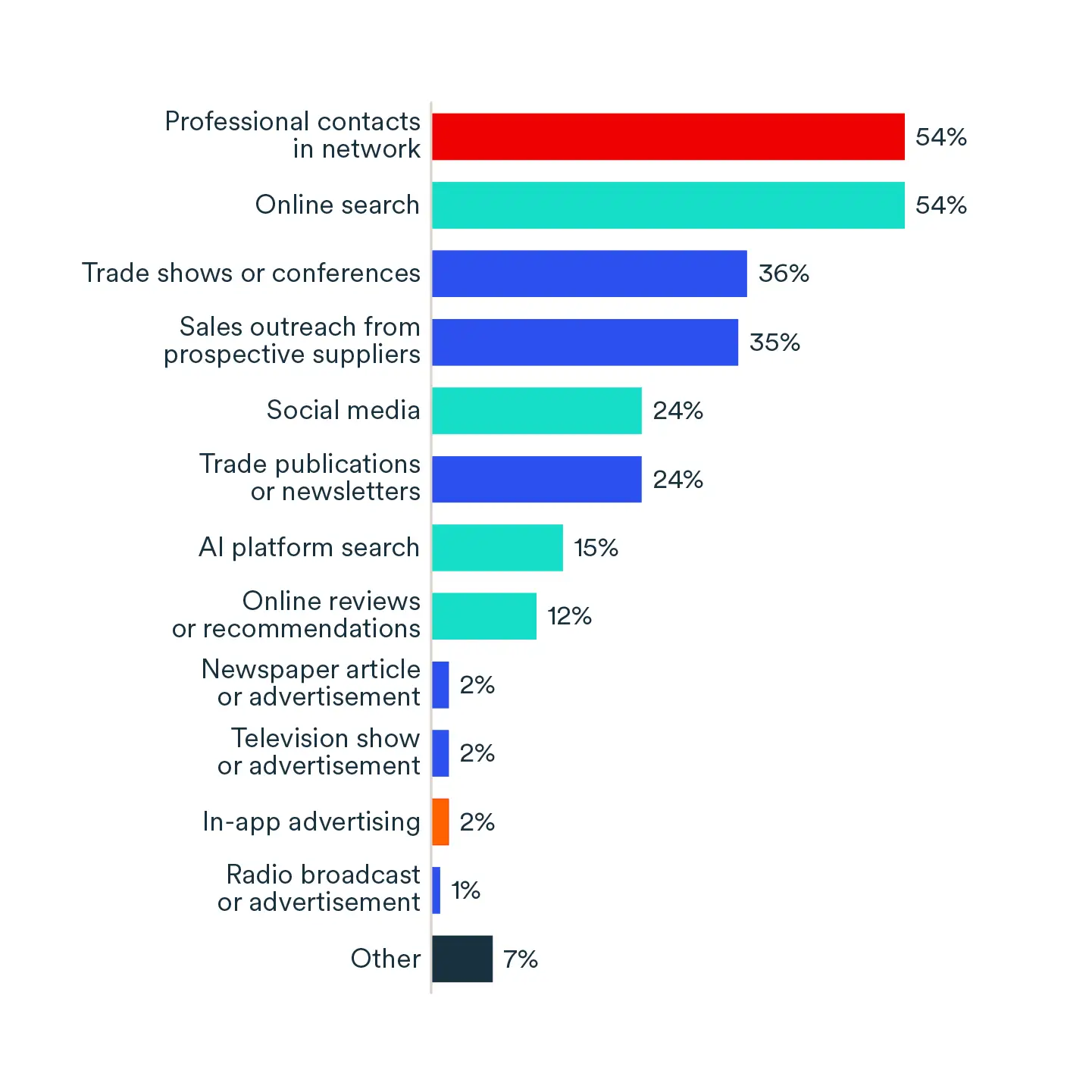
When Canadian businesses search for new suppliers, they rely almost equally on digital and traditional channels (74% vs. 73%). Professional networks and online search remain the most common entry points, but relationships and reputation are still what can close the deal.
In practice, this means that customers may start out by looking on digital channels, but what convinces them to buy are other people, reputation and credibility, so it’s important to focus on being visible online and offline.
Where do businesses learn about new suppliers? (B2B)
Online search, trade publications and AI-powered search are underused B2B marketing channels
One of the most striking insights from the study is where businesses aren’t showing up.
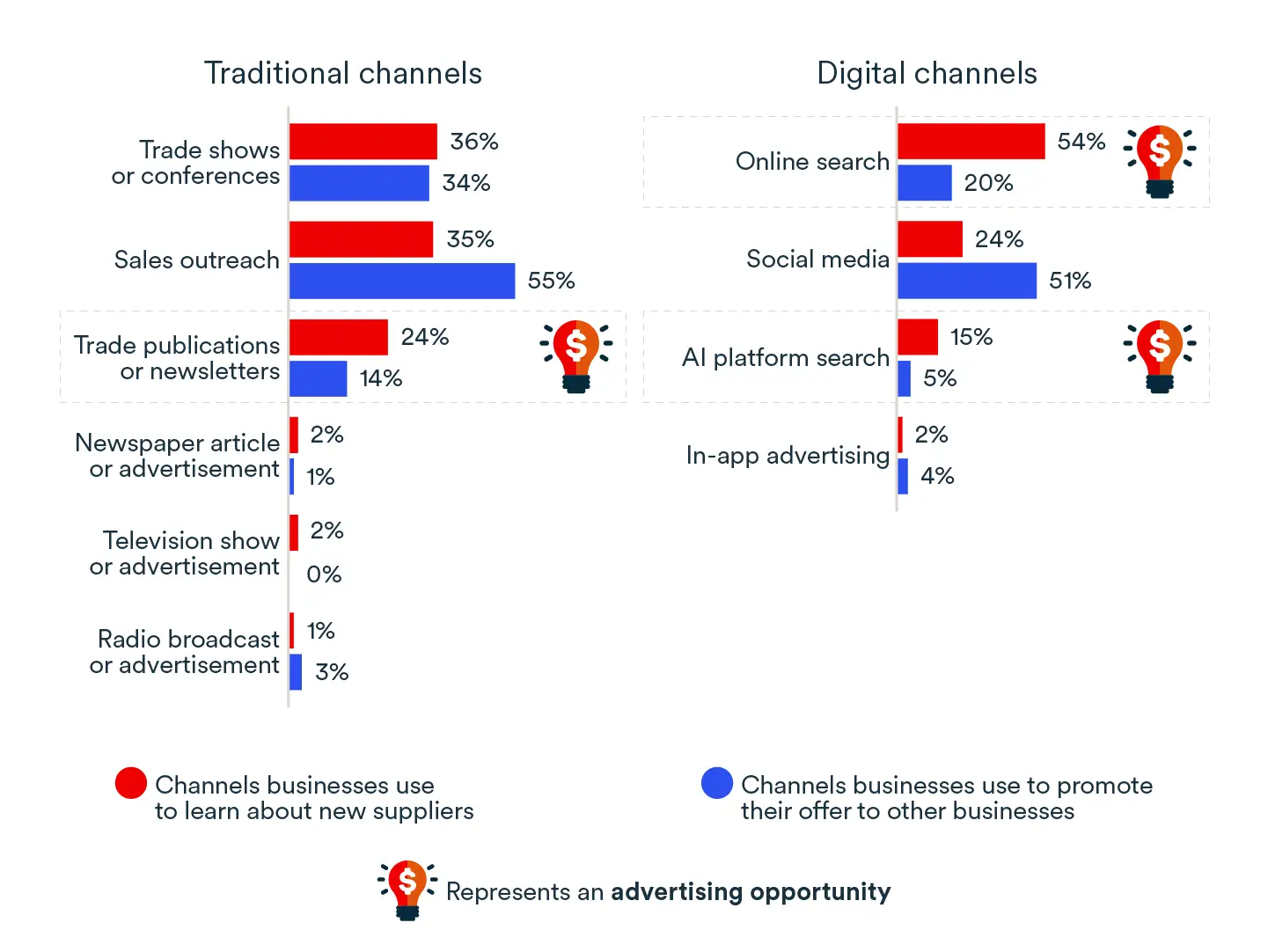
Businesses looking for suppliers rely heavily on online search, trade publications and emerging AI-powered search tools, yet companies doing B2B sales often underuse these channels. More than half of businesses use online search to find suppliers, but only about one in five advertise there.
Few businesses promote themselves using AI today
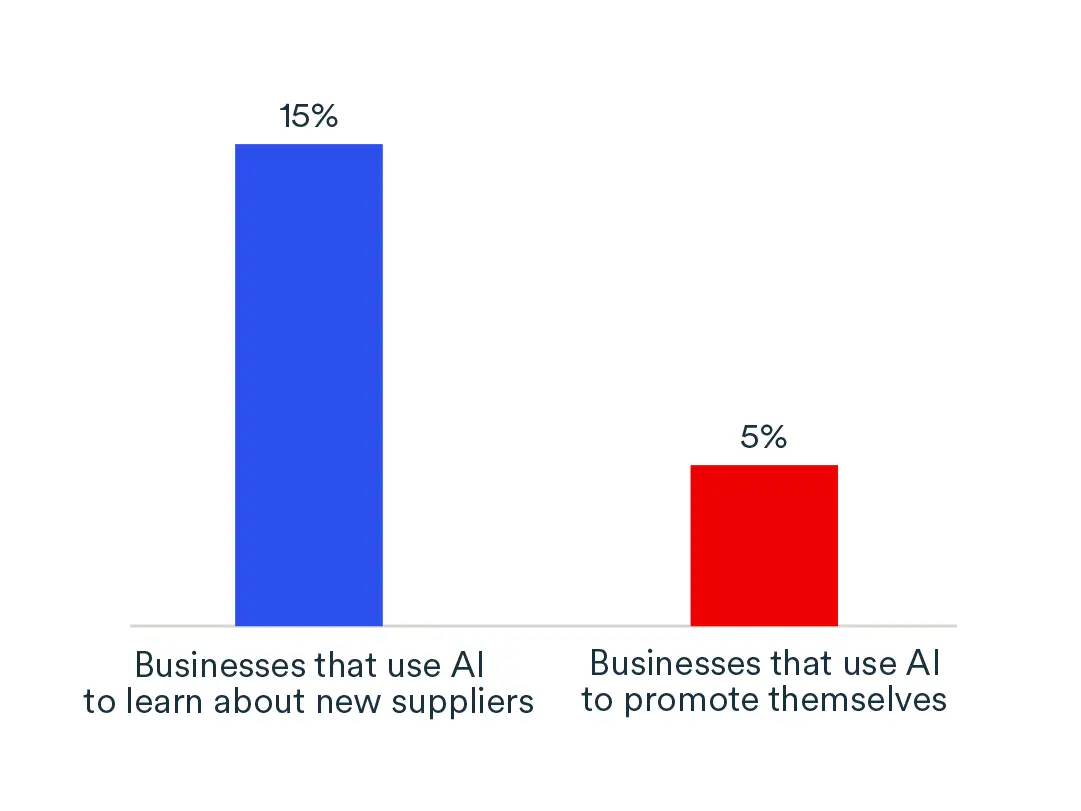
The same mismatch appears in AI-powered search and in trade publications or newsletters: buyers are looking there, but comparatively fewer businesses are present. That creates a real opportunity for entrepreneurs willing to shift budget toward channels with less noise and less competition.
Underinvested channels are often where the biggest returns are hiding. When demand exceeds competition, even small investments can deliver strong results.
Zelina Frigan
Manager, Research and Information Centre
Relying too heavily on some channels may also be stopping customers from finding you. In B2B, for example, businesses report advertising heavily on social media and through sales outreach, even though fewer buyers rely on these channels as primary ways to find new suppliers.
Before adding more channels, take a closer look at fit. Are you investing where your customers actually search, or just where it’s easiest to post?
Where businesses search for suppliers vs. where businesses promote their products and services
Consumers use digital channels for discovery, but word-of-mouth still drives decisions
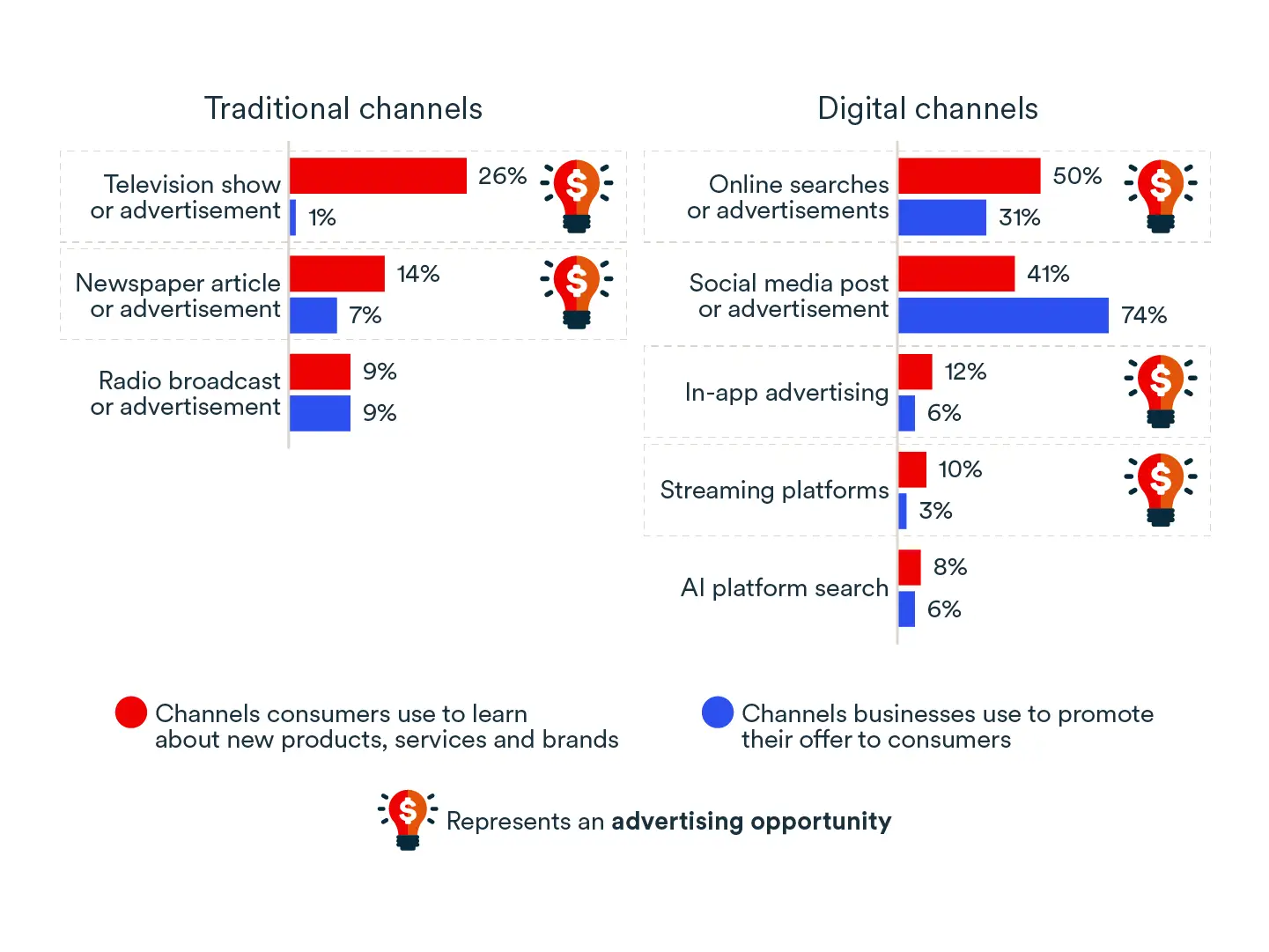
For consumers, digital discovery is now the default. Nearly all Canadians (89%) use digital channels to discover new brands. Despite this, word-of-mouth remains the most influential driver.
Consumers don’t just click and buy. They compare and verify. They cross-check reviews, social content, websites and recommendations before deciding.
Younger consumers between the ages of 18 and 44 lean even more heavily on digital channels, while older audiences still engage with traditional media. But across all age groups, trust is built through consistency across touchpoints.
Where consumers search for businesses vs. where businesses promote their products and services
Social media: storytelling beats advertising
Social platforms like Instagram, Facebook and YouTube continue to be important tools, but the rules have changed.
Over 70% of consumers believe useful, authentic content matters more than seeing an ad. They want to understand how a product works, what problem it solves and whether it fits their reality.
Interestingly, consumers don’t just want influencer content, they also want to hear directly from brands. Brand-created content can help build familiarity and credibility, even when it doesn’t immediately drive a sale.
When people understand your value, they’re far more likely to choose you when deciding to buy.
Short videos, demonstrations and clear explanations outperform polished sales messages, especially when supported by paid ads.
Types of social media content consumers find most helpful when learning about new products, services and brands

Reviews are no longer optional
Reviews have moved from nice-to-have to non-negotiable.
Most consumers (87%) now check reviews before buying something new. Platforms like Google and Amazon play an outsized role in this process. For younger and more digitally savvy customers especially, reviews are the final confidence check.
In many cases, they’re also the starting point. Younger customers will visit review sites and recommendations as a first step when looking to make a purchase. If you have a transactional website, consider adding a customer review function. Even better, make sure you engage with reviews, no matter where you sell. Replying to user reviews, even the bad ones, shows that you are committed to your customers and stand behind your product or service.
The growing role of AI for marketing and sales
Trust in AI-generated information is rising, meaning that more people are using AI to find new brands and suppliers.
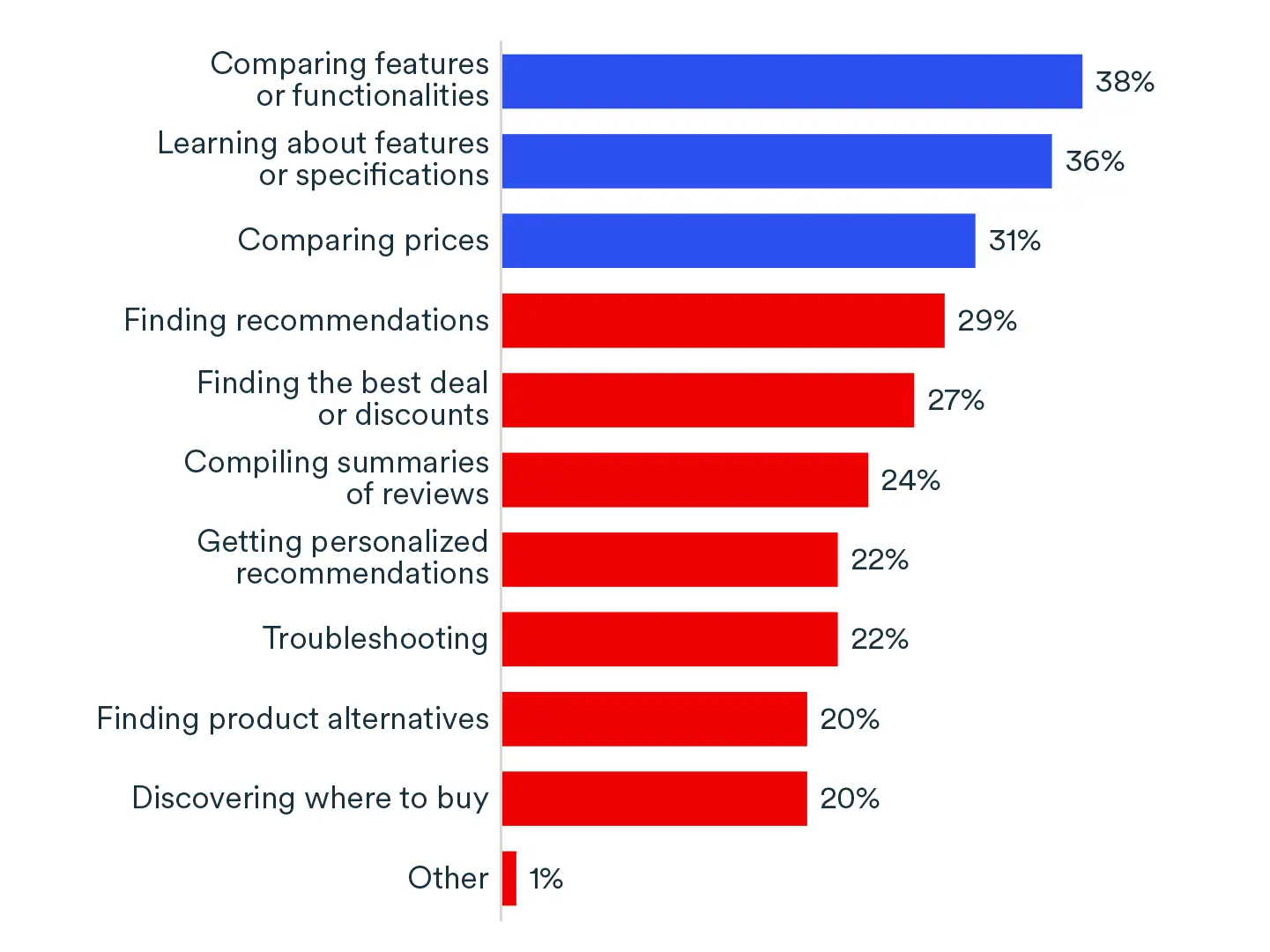
This includes both standalone AI tools, and AI features embedded in search engines. Consumers and business buyers may now ask a chatbot for recommendations, compare suppliers through AI-assisted summaries or use AI-generated answers as part of their research process.
Trust in AI is especially high among people who already use generative AI at work (50% of surveyed consumers). These consumers are more likely to turn to AI tools to research products and businesses. One in three reported successfully discovering a new business this way, marking a big opportunity for small and local businesses.
Businesses that clearly structure their information and make it easy to interpret are more likely to show up and be recommended by AI.
How consumers use AI when researching or shopping
E-commerce has become about reassurance
Websites have become research tools as well as sales tools. Roughly nine out of 10 consumers regularly compare prices or characteristics of alternatives, search for reviews and recommendations online and visit company websites when shopping for new products, services or brands. If your website leaves questions unanswered, customers won’t ask, they’ll just move on.
Shipping is a not-so hidden deal breaker
Price still matters, but convenience is playing a larger role in the outcome of a buyer’s decision.
High shipping costs are the number one barrier to completing an online transaction, according to 54% of surveyed consumers, especially when choosing between large platforms and smaller or local businesses. If you sell online, be clear about shipping costs and conditions upfront, or offer free-shipping thresholds or free in-store pickup to reduce cart abandonment.
Key takeaway for Canadian businesses
For many entrepreneurs, the challenge isn’t doing more, it’s focusing better. By aligning your efforts with how customers actually search and decide, you’ll stand out where it matters most.
Next step
Learn more on how to adapt your business to sales cycles with our free on-demand webinar, Boosting sales when cash is tight. You’ll discover practical strategies to increase your sales without overspending.