
How to use one-on-one meetings to better delegate and free up your time
It's no secret that owning a business goes beyond the nine-to-five. In a recent BDC report, nearly three quarters of business owners surveyed said they work more than 40 hours per week, with owners of larger businesses clocking in at 52 hours per week, on average.
Working long hours is closely linked to increased stress and burnout. If that's not bad enough, excessive work also limits productivity and business growth.
One of the keys to working fewer hours is delegation; a common problem for many entrepreneurs.
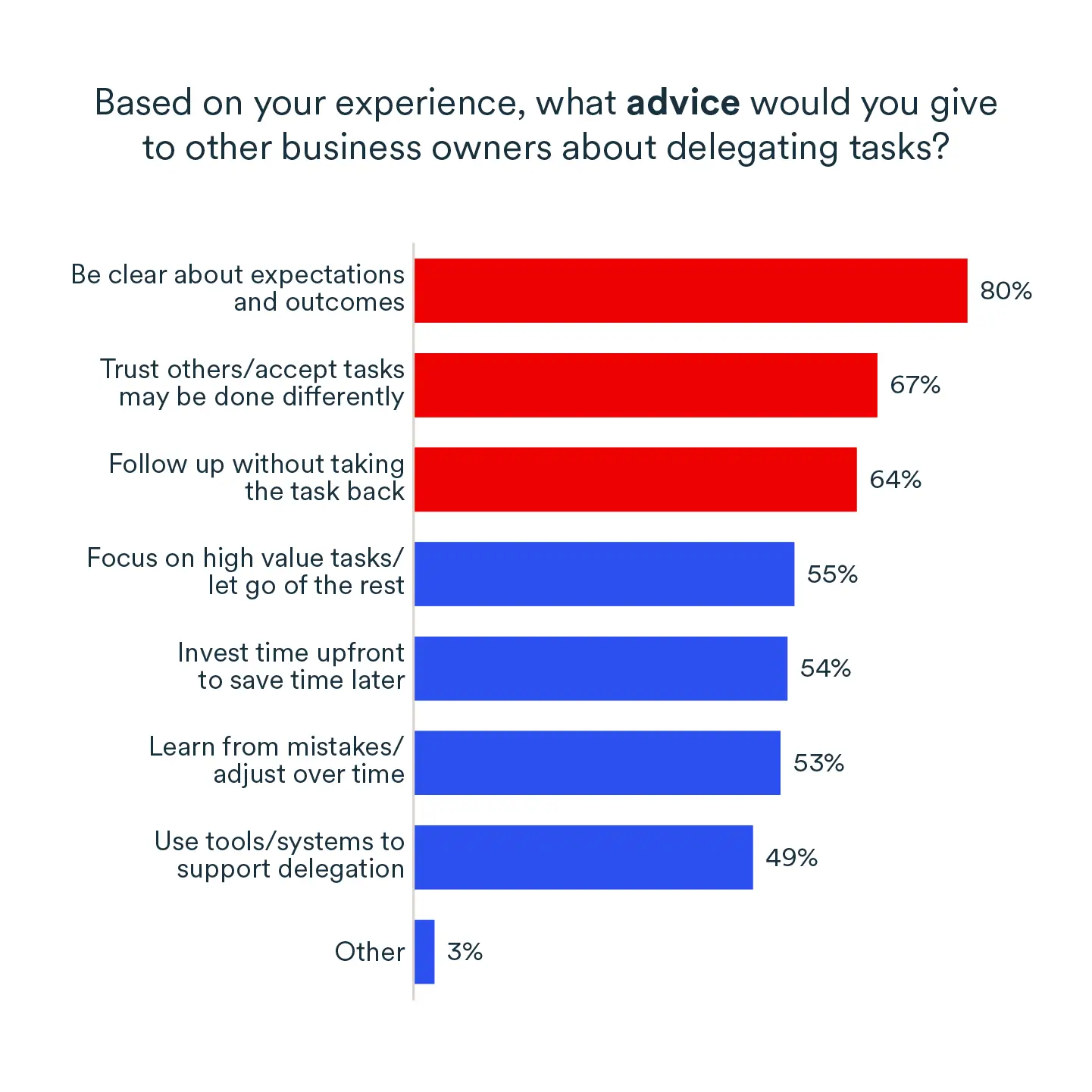
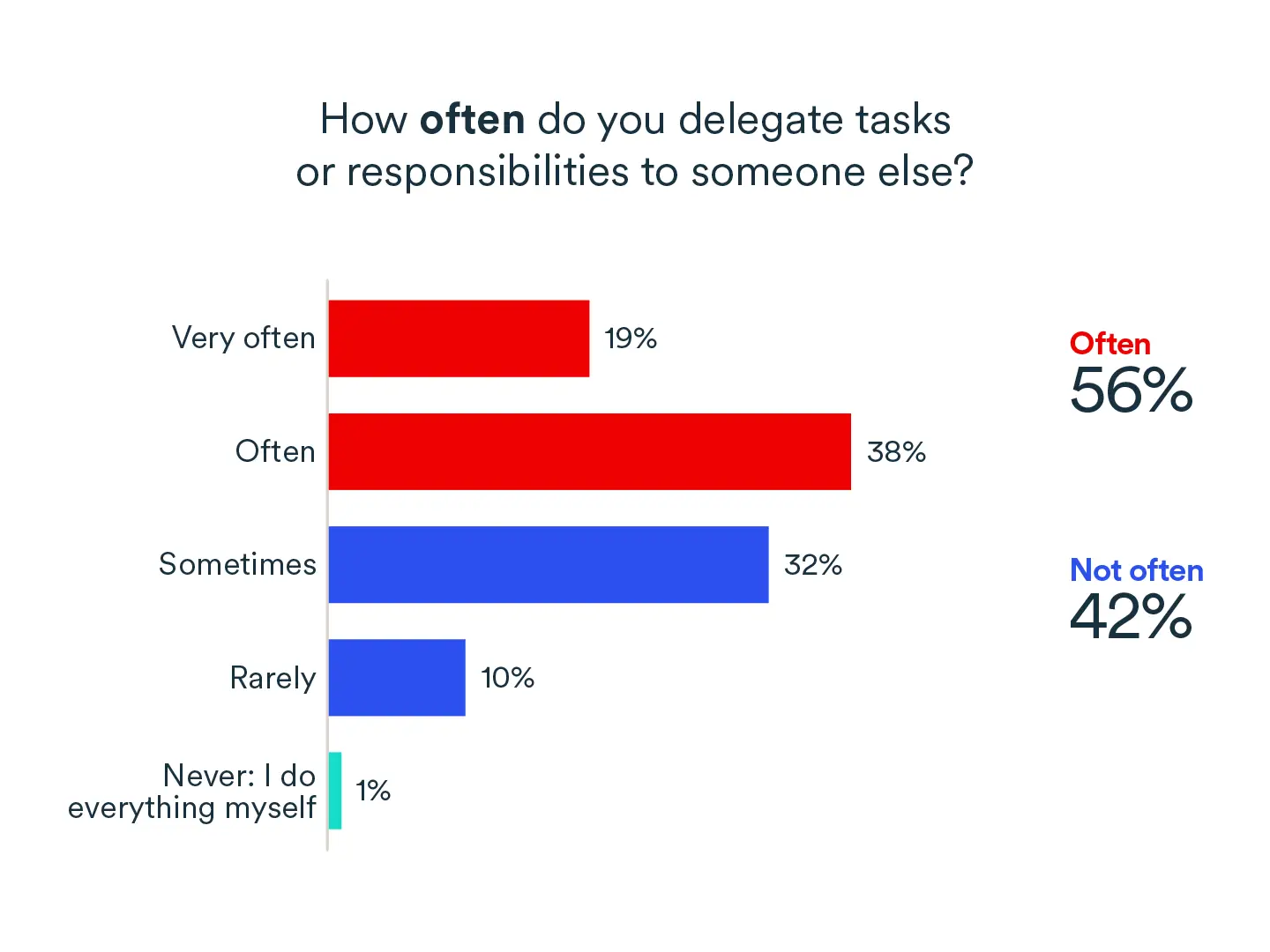
The business owners we spoke to agreed that delegation can support business growth, improve work-life balance, reduce stress, and even improve customer experience. Yet over two in five say they only delegate tasks sometimes or rarely. These are also the entrepreneurs who report higher work-related stress. So what's holding them back?
Delegating tasks or responsibilities can help unlock bottlenecks caused by entrepreneurs taking on everything themselves.
Alexandra Fioriello
Senior Analyst, Research and Market Intelligence, BDC
What’s behind the reluctance to delegate
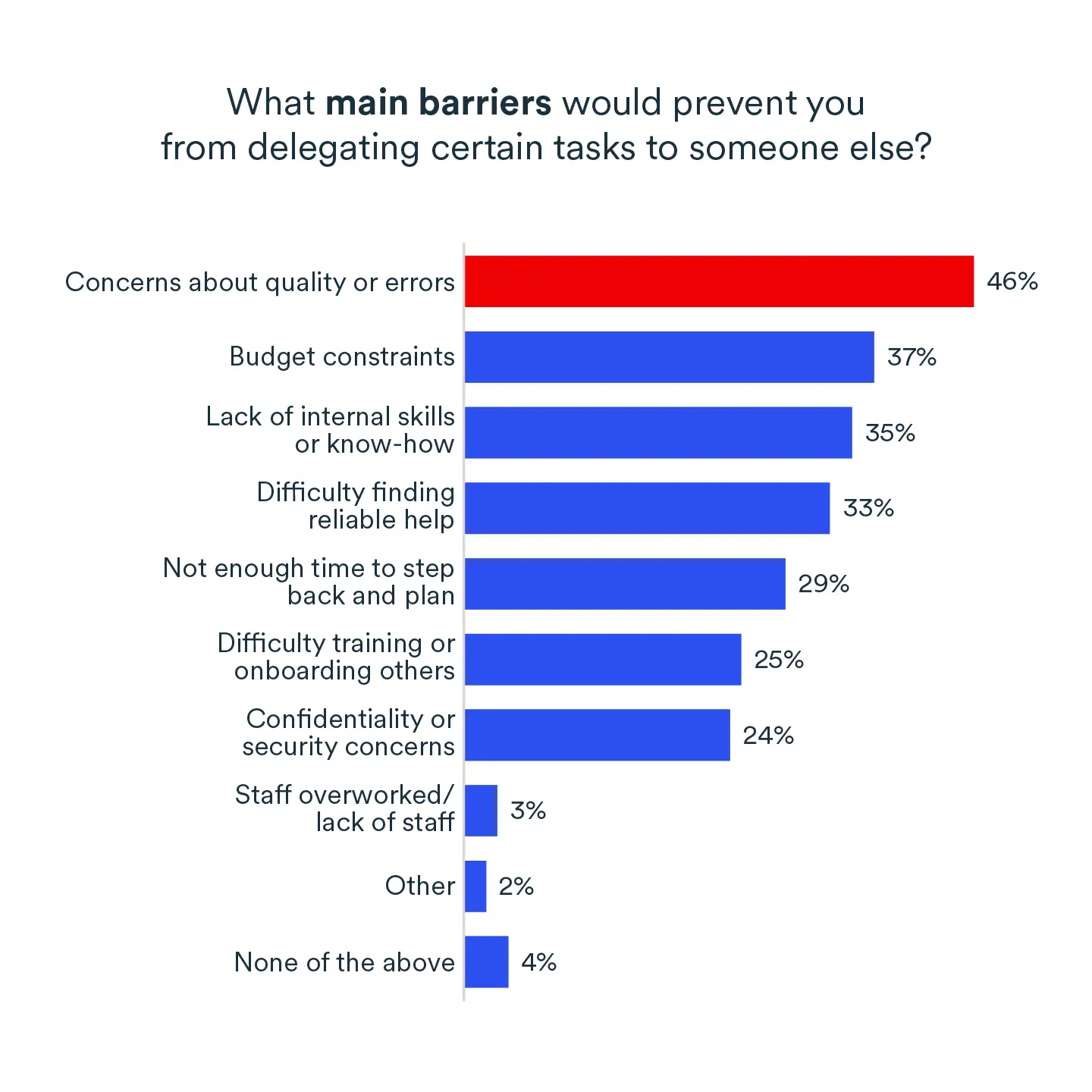
Entrepreneurs take great pride in their business, so it's no surprise that the biggest barriers to delegation are concerns around quality or errors.
Many owners worry that if they hand off work, it will not be done to their standards or could lead to mistakes that can affect the business’s reputation. On top of that, they also report practical constraints:
- limited budgets to hire help
- lack of internal skills
- not enough time to train employees
As a leader, your work is to tackle complex problems. You need time to work in the 'grey zones' where there is no right answer. You need to free up the capacity to focus, so you can make decisions that have a lasting impact on your company. If you have employees, you should really consider delegating anything that doesn’t fall into this category to them.
It might not be resources you're lacking
While most respondents cited budget constraints, part of the solution may lie in developing better processes with the resources already in place.
Many entrepreneurs don't have regular, structured touchpoints with their teams. They often just pop their heads out of their offices occasionally and ask how things are going. Others take any and all employee questions, which just breaks their focus and keeps them in firefighting mode.
How to use one-on-one meetings to delegate
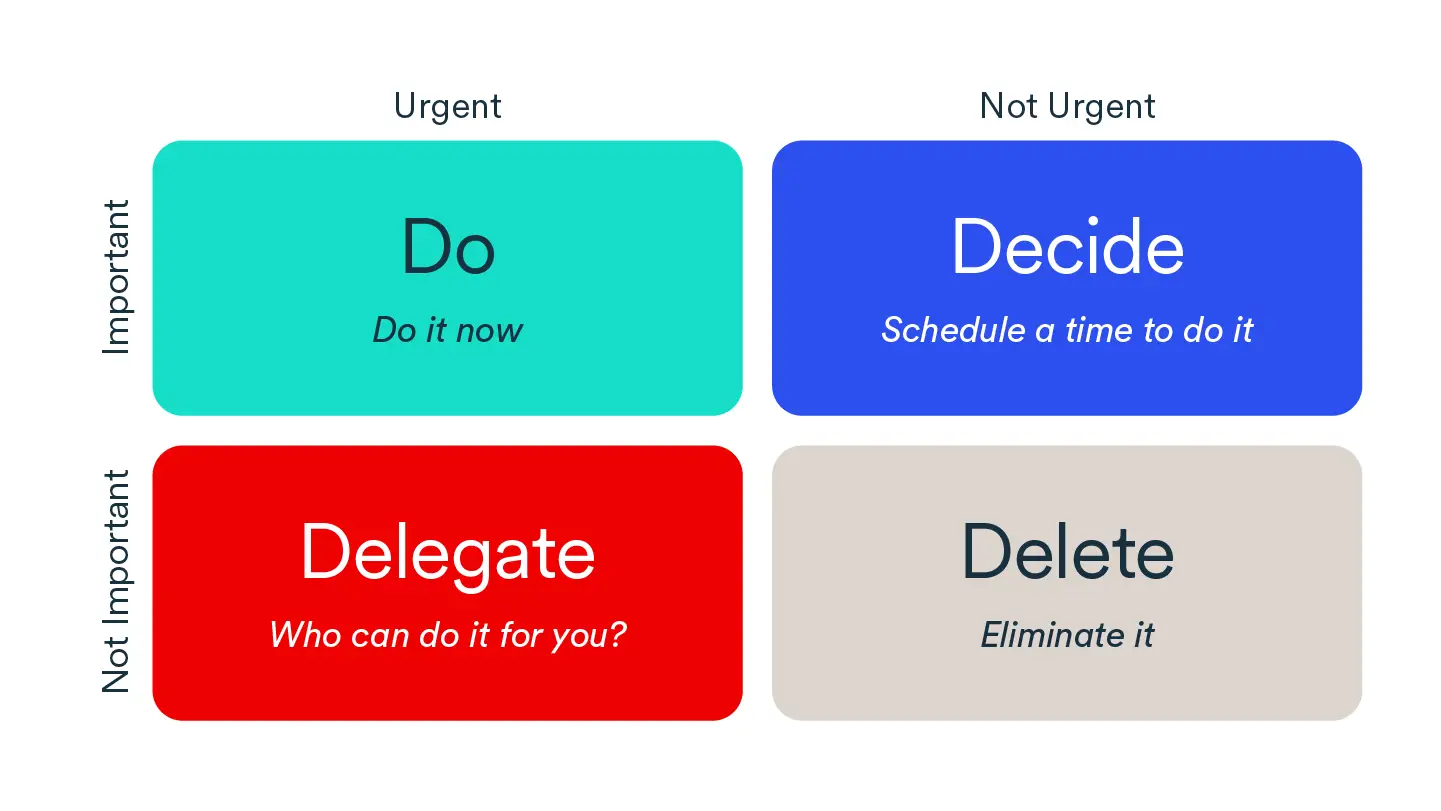
To start, it's important to identify what can be delegated. You can use a tool like the Eisenhower Matrix (see image, below), to map your different tasks, so you can pinpoint the most important ones for you to tackle:
- keep matters that are critical to your business, that allow you to move forward and keep growing.
- delegate the rest
Here are some tips to help you delegate effectively:
- Simple tasks with clear steps are the easiest to delegate.
- More complicated activities can also be delegated, but you need to provide the right environment, resources and oversight. Just because something is more challenging doesn’t mean someone else can’t do it.
- Find the right person to delegate to. They might not be 100% ready, and they may do things differently than you would, but it’s a great way to help them grow in their role or develop complementary skills.
Delegation develops your people, your processes and ultimately, your organization.
Alexandre Hamelin
Senior Consultant, Growth Driver Program, BDC
Case study
Anne, who owns a manufacturing company, was spending hours each week responding to recurring client inquiries and managing order tracking.
During a one-on-one meeting, she learned that her operations coordinator, Rebecca, wanted to develop client management skills.
Together, they defined a clear scope: Rebecca would take over client communications for specific accounts, create response templates and document key processes. They agreed on expected response times and quality standards, and reviewed progress weekly.
Within three months, Rebecca was independently managing client communications, improving response times and freeing up Anne to focus on supplier negotiations and business development.
When done right, one-on-one meetings help with delegation by providing focussed time to delve into what your teams are working on. They encourage two-way discussion, which can uncover issues or inefficiencies you may not have noticed. They can also help develop your team's skills by allowing you to share knowledge and answer questions.
Delegation develops your people, your processes and ultimately, your organization.
How to structure one-on-one meetings for effective delegation
- Make it a regular occurrence
Set aside a recurring date and time and add it to you and your employee’s calendars. You can decide how often you need to meet, depending on the nature of their work. - Never cancel
You can shuffle dates around as needed, but a one-on-one should be a priority. Even if you don’t think you have anything new to discuss, keep it on the calendar. This will help shape a culture of respect for time and priorities, and channel questions that risk spilling over into day-to-day work and breaking your focus. - Use a shared agenda to track delegation topics and follow-ups
Use a shared tool (Excel, OneNote, work tracking tools like Monday, etc.) and set out an agenda of items to discuss, so everyone knows the goal of the meeting. - Document delegated tasks, deadlines and ownership
Document your discussions to keep track of what employees are working on, any issues they have and to help prepare an agenda for the next meeting. - Make sure priorities and expectations are clear
Make sure employees clearly understand what needs to be done and by when. Use your one-on-ones to help answer their questions and guide them. They may feel embarrassed to admit they have questions so try to build an environment where they feel comfortable asking questions. - Follow up at the next meeting
To keep projects moving forward, make sure to review delegated tasks first in every one-on-one and probe for any issues or roadblocks.
How delegation helps build stronger teams and businesses
- Reduces bottlenecks and speeds up decisions
Delegating tasks or responsibilities can help unlock bottlenecks caused by entrepreneurs taking on everything themselves. It can also accelerate decision-making by assigning projects or tasks to someone else, leaving leaders with time to properly guide their teams and focus on strengthening the business. - Develops stronger, more autonomous employees
Empowering your employees to take on new assignments adds to their professional skillsets, which can improve morale and job satisfaction. - Focuses your time on high-value strategic work
The resulting improvements in processes and productivity can free up your time to focus on more complex, high-value tasks.
Levels of delegation
- Execute
This is where you tell an employee, “Here’s what I need” and give them clear instructions on what to do, how to do it, why it needs to be done and when to do it for. - Research
You can delegate research, asking an employee to do some of the legwork that you can evaluate afterwards. For example, evaluate two potential suppliers and list the pros and cons of each. - Recommend
This takes research a step further and asks the employee to provide a recommendation based on what they’ve done. It also plants the seed of accountability and ownership. - Decide and inform
Beyond making recommendations, the employee is empowered to make a choice, keeping you updated along the way. - Act independently
The highest form of delegation, this empowers the employee to handle the assignment independently from A to Z and is ideal for responsibilities for which they are well-adapted and don’t need any supervision.