

Monthly Economic Letter
Keep abreast of key economic indicators.
Read moreThe challenge for businesses heading into 2027: staying competitive
As the final quarter of 2026 begins, Canadian businesses remain ambitious despite a more challenging environment. In 2026, 68% of SMEs have growth in mind, up from 55% in 2025, while roughly one in ten are looking to radically change their business. Their priorities reflect that ambition: expansion now tops the list, followed by improving profitability and attracting new customers, while retaining existing clients and controlling costs remain important.
But growth will be harder won. Rising input costs remain the most frequently cited challenge, affecting 33% of SMEs, closely followed by increased competition at 31%. Tariffs are another important challenge, cited by 25% of businesses.
The economic backdrop adds to the challenge. The spring rebound did not lead to a sustained acceleration. Real GDP grew at an annualized rate of 3.3% in the second quarter, following 0.3% in the first, although some of that strength reflected offsetting movements in trade and inventories. Monthly GDP was then unchanged in July. Economic activity is holding up, but growth remains uneven and below potential. BDC forecasts real GDP growth of only 0.9% in 2026 and 1.3% in 2027.
For businesses looking to grow in this environment, staying competitive will require more than ambition. It will require adapting to more selective customers while finding ways to protect margins. Here is what your business needs to know to adapt and thrive.
Consumers are cautious, not paralyzed
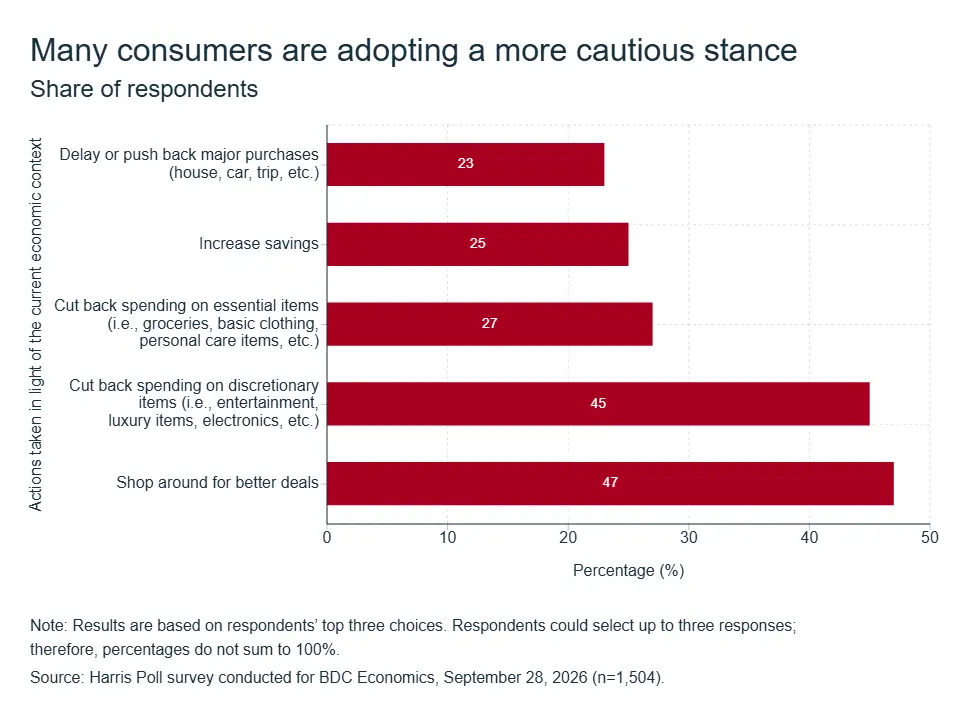
Consumer spending continues to support the economy, but households are becoming more selective. A Harris Poll conducted for BDC Economics among 1,500 Canadians in late September found that, over the next 12 months, 47% plan to compare prices more often, 45% intend to reduce discretionary purchases and 27% expect to cut some essential spending. One in four Canadians also plans to save more.
For businesses, the main vulnerability lies in sales volumes. Nearly half of respondents intend to reduce the quantity of goods and services they purchase over the next year. Higher prices could therefore support the dollar value of sales while masking weaker demand. Stable revenues may not translate into stable sales volumes or margins.
Costs are becoming harder to pass on
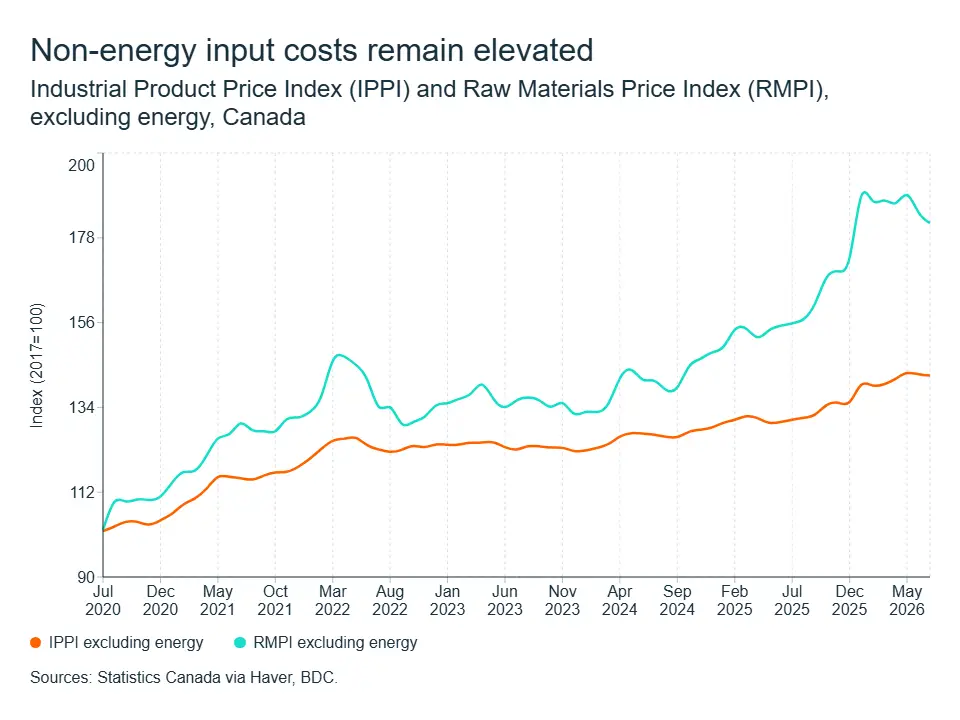
Cost pressures are as real as ever. Industrial product prices and non-energy raw material prices continued to rise in 2026. Tariffs and shifting supply chains are also increasing the cost of certain equipment, components and intermediate goods. A Canadian dollar near 70 U.S. cents adds to these pressures and will likely remain weak in the coming weeks, if not months.
But increasingly price-sensitive customers are limiting businesses' ability to pass these costs on. Unlike during the cost surge of 2021 and 2022, businesses can no longer raise prices as readily without risking lost sales. A greater share of cost pressures may therefore have to be absorbed through margins.
Inflation is contained, but pressure is mounting for businesses
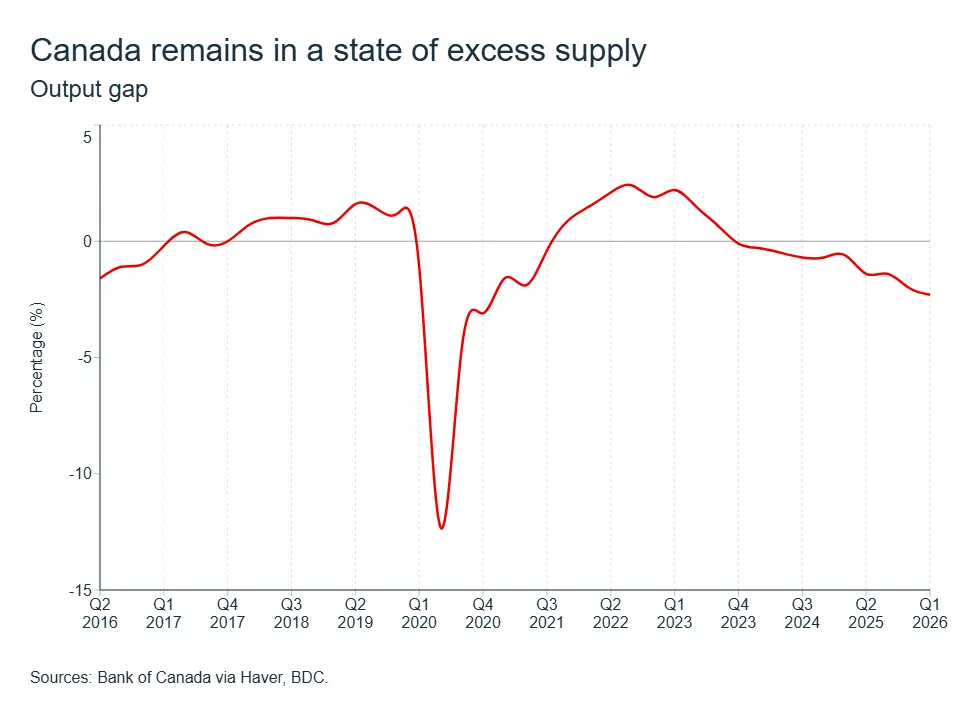
Headline inflation held at 3.0% in August for a second consecutive month, despite gasoline prices rising 22.8% year over year. For now, cost pressures are not spreading fully through the broader economy. Moderate demand and excess supply continue to limit second-round effects, while businesses are reluctant to raise prices if doing so could cost them sales. Slower population growth reinforces this dynamic. With Canada's population essentially flat in 2026, demand is not contracting, but it is growing more slowly, particularly for housing, furniture, vehicles and several locally delivered services.
Therefore, higher costs are being distributed across, not only prices, but margins and sales volumes as well, making profitability more vulnerable.
What it means for your business
- Look beyond revenues. In a modest-growth economy, protecting margins through broad-based price increases is becoming risky. Instead, track the value and volume of sales separately, and invest in productivity improvements that sustainably reduce unit costs.
- Adjust inventories carefully. Adapt to more cautious demand while keeping an eye on tariffs and exchange rates, which can also affect your costs.
- Compete on value, not just price. Differentiation, customer loyalty and a clear value proposition are becoming increasingly important. With nearly one in two consumers planning to compare prices more often, businesses that clearly demonstrate the value behind their prices will be better positioned to retain customers
The economy is slowing, not sliding
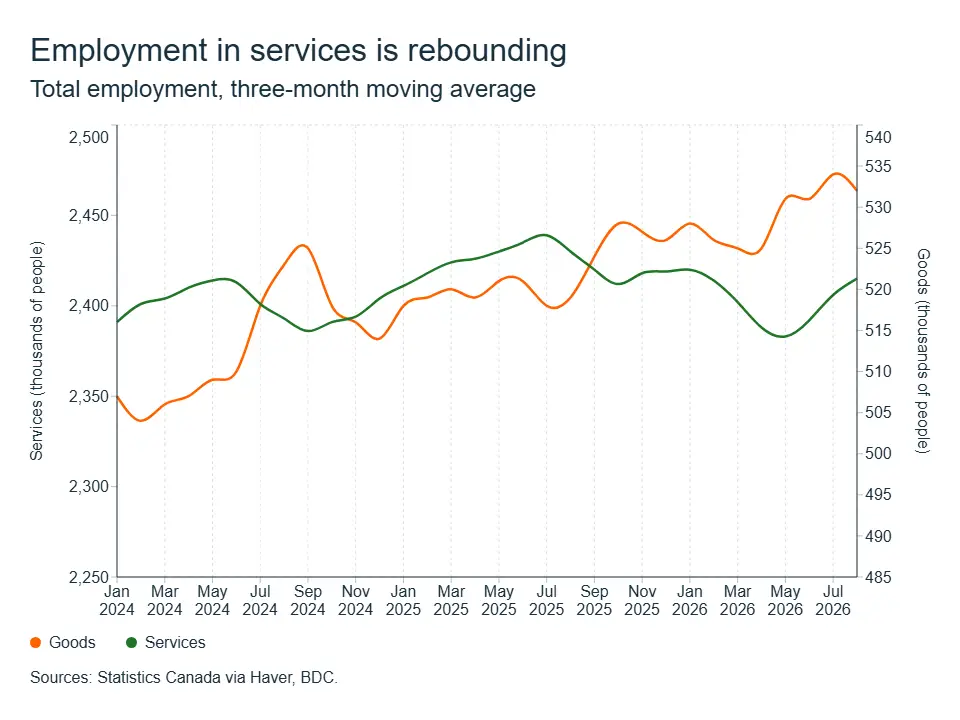
Flat July output, a tariff-related export rebound, and a sharp September employment decline all point to the same conclusion. Canada remains in a modest expansion, but the pressure is increasingly concentrated in particular communities, sectors and businesses.
Flat growth does not mean the economy is contracting
Real GDP was unchanged in July after a strong second quarter. That flat reading was a loss of momentum, not a reversal, as economic activity remained above its level a year earlier and the economy had already expanded at a 3.3% annualized pace in the second quarter.
The July data nevertheless call for caution. The second-quarter acceleration did not carry cleanly into the summer, and trade-exposed industries continued to lag the rest of the economy. The national picture is therefore better described as a modest expansion than a renewed acceleration.
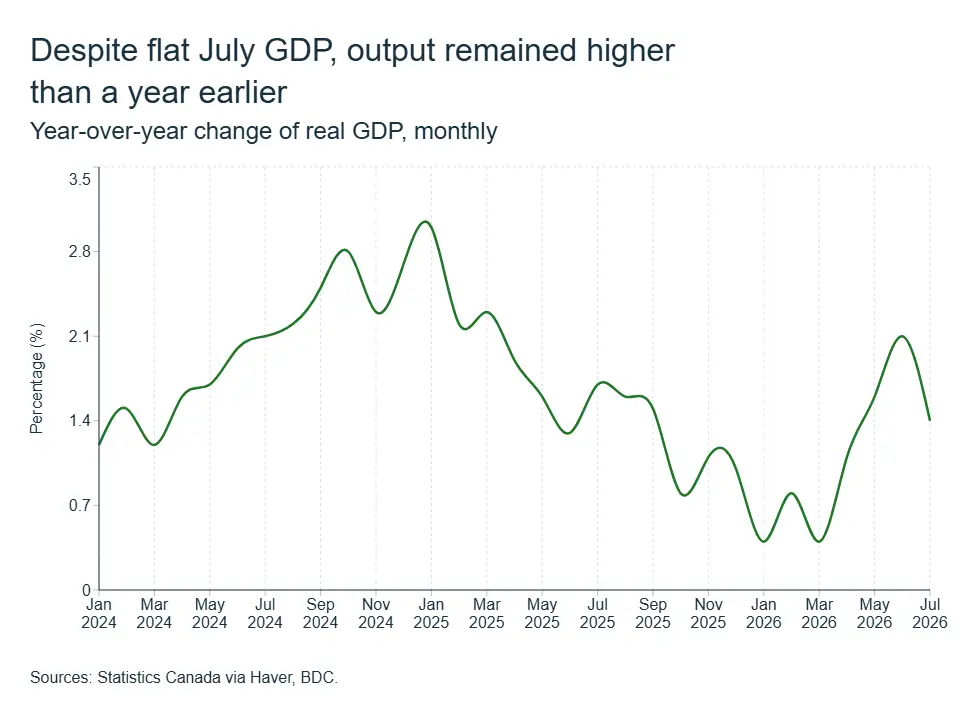
Overall, the outlook continues to call for growth, but below potential and vulnerable to further trade shocks which remains consistent with forecast real GDP growth of 0.9% in 2026 and 1.3% in 2027. The challenge is that resilience at the national level can coexist with acute stress on the ground.
Bond-market pressure has yet to produce a credit shock
Amid persistent inflation, fiscal and geopolitical uncertainty, investors have demanded greater compensation for holding long-term bonds. The effect on Canadian borrowing costs has been visible but limited so far. The Bank of Canada’s policy rate has remained at 2.25% since October 2025, while the average posted five-year conventional mortgage rate reported by the Canada Mortgage and Housing Corporation (CMHC) edged up by 0.10 percentage points.
The transmission to borrowing costs has become more nuanced, as five-year Government of Canada bond yields increased by almost one full percentage point over the same period. Higher bond yields are no longer allowing fixed borrowing rates to decline, but they have not produced a broad credit shock either.
For households, the pressure will arrive unevenly through new borrowing and renewals, while the five-year fixed-rate mortgage, long the preferred option for Canadians, has been losing market share to shorter-term and variable-rate mortgages.
For businesses, effective rates on new loans have also moved within a relatively narrow range, although capital-intensive and rate-sensitive sectors remain more exposed.
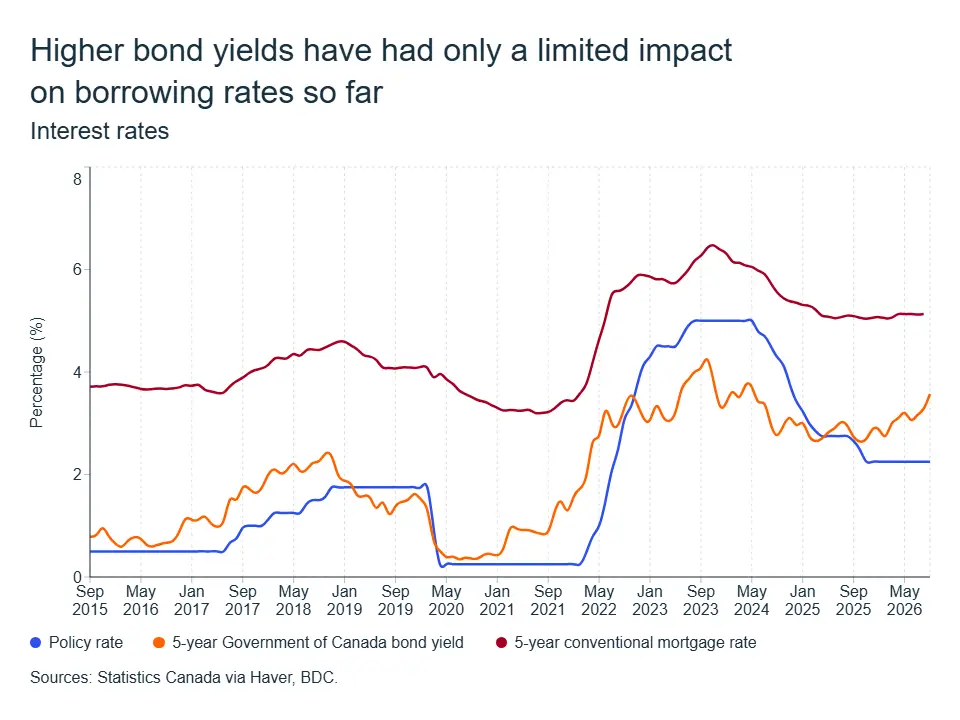
A stable policy rate therefore does not guarantee stable financing conditions, but the adjustment to date is closer to a mild headwind than a sudden stop. Therefore, concerns about the transmission of higher yields should not be overstated. The impact is unlikely to be broad-based, but it will add another headwind for the economy.
The export rebound may prove temporary
Canadian merchandise trade recovered in August after July’s setback. The trade surplus widened to $4.2 billion from $787 million, marking a sixth consecutive monthly surplus. Export volumes rebounded ahead of the new U.S. tariffs, reversing part of the July decline when export volumes fell and import volumes rose.
The timing is important. Some exporters accelerated shipments before the new measures took effect, so part of the August strength likely reflected activity brought forward from subsequent months rather than a durable improvement in foreign demand.
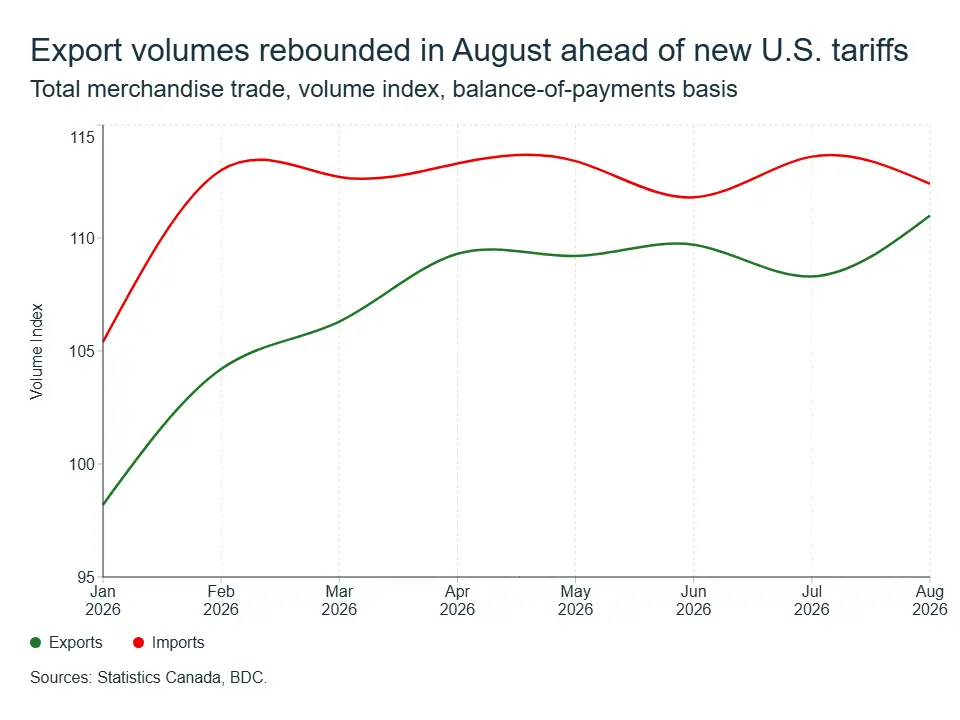
The new U.S. tariffs cover a targeted share of Canadian exports, which limits the impact on national GDP but raises the stakes considerably for affected firms in machinery, electrical equipment, plastics, beverages, paper products and furniture. The same logic applies to imports, as Canada announced a series of retaliatory tariffs on U.S. imports to be implemented in early September. Therefore trade could against reverse coursed in the third-quarter.
This is the clearest example of why the macro picture can look manageable while the business reality is much harder. Most Canadian exports and imports remain outside the new measures, and domestic demand still provides a floor under growth. Yet an exporter facing a 50% tariff, or a supplier tied to that exporter, cannot diversify contracts or rebuild margins overnight. Trade will therefore continue to generate volatility in economic activity, heighten uncertainty and create challenges for businesses.
The labour market has lost momentum again
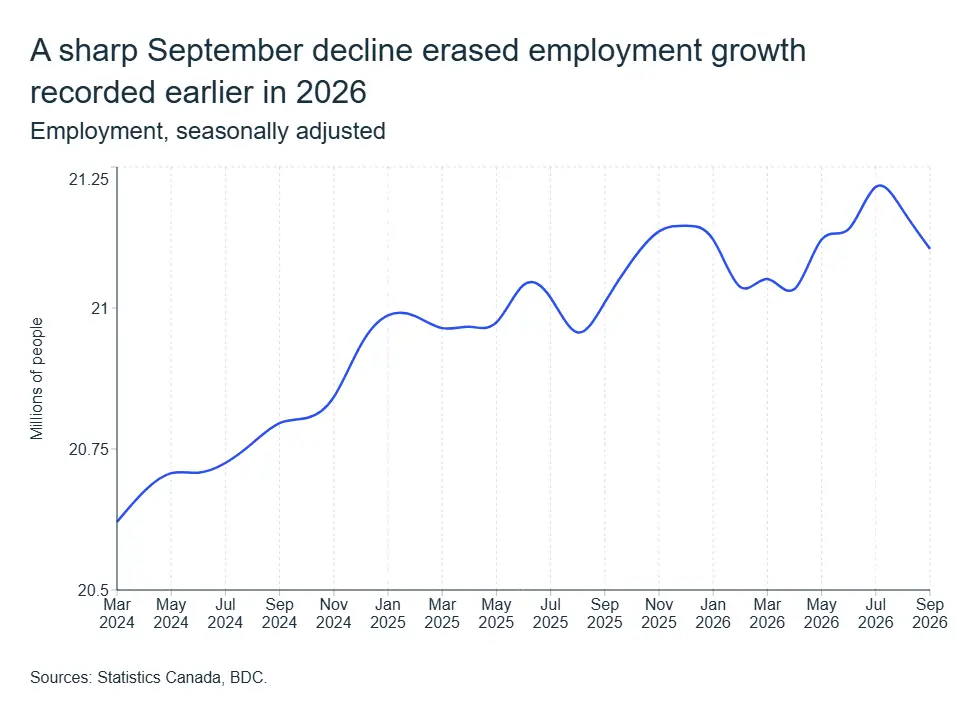
Employment fell by 68,000 in September after a decline of 42,000 in August. The latest pullback erased the gains accumulated earlier in 2026 and left employment about 41,000 below its level at the end of 2025. The unemployment rate edged up to 6.5% from 6.4%, while the participation rate declined. The decline in the labour force helped limit the increase in the unemployment rate.
The September composition offers some reassurance, but not enough to dismiss the result. Losses were concentrated among younger workers and in education and health care, while private-sector employment increased. The unemployment rate also remained below its level a year earlier. However, total hours worked fell sharply, and manufacturing employment declined in a month when tariff uncertainty intensified.
The labour market has lost momentum again. Slower population and labour-force growth mean Canada now requires fewer monthly job gains to keep unemployment stable. Even so, two consecutive employment declines point to cautious hiring and weaker momentum heading into the fourth quarter. Businesses may find recruitment somewhat easier in some occupations, but structural skill shortages and an aging workforce have not disappeared.
What it means for your business
- Economic growth is becoming increasingly uneven across sectors and regions. Do not confuse slow national growth with uniformly weak demand. Review conditions in your own region, sector and customer base before changing investment or staffing plans.
- Build financing scenarios around a stable policy rate but somewhat higher fixed borrowing rates. Test the impact that higher renewal and refinancing costs could have on your margins and investment projects.
- Treat the August export rebound cautiously. If your business is trade-exposed, distinguish orders brought forward ahead of tariffs from sustainable demand.
- Protect liquidity without automatically shelving productive investment. BDC’s forecast still points to growth, but the benefits will be uneven. Businesses under the greatest pressure may need greater flexibility in working capital, pricing and market diversification.
British Columbia
The economy in British Columbia continues to face a challenging environment, but growth should remain largely in line with the national average in 2026. The shift in population growth from positive to negative, as well as intensifying pressures from tariffs are headwinds to current economic growth.
The labour market softened further in September as employment fell by approximately 20,000, led by losses in construction and manufacturing. Despite weaker hiring conditions, the unemployment rate edged down slightly to 6.4% from 6.5% in August, reflecting a decline in labour force participation rather than stronger job creation.
Household spending also lost momentum over the summer. Retail sales declined 1.4% in July, underperforming the national average. Inflation-adjusted retail volumes were likely more negative, suggesting consumers are becoming increasingly cautious amid softer labour market conditions and heightened economic uncertainty.
External risks remain elevated. B.C. continues to be among the provinces most exposed to recent U.S. tariff measures, particularly through its forestry sector. While major LNG, utility and infrastructure projects continue to support investment activity, trade uncertainty is expected to weigh on exports, business confidence and hiring decisions in affected industries.
Housing market conditions remain subdued. Provincial home sales fell 4.7% year-over-year in August, while average home prices slipped 1% over the same period. While sales have improved gradually since the start of the year, affordability challenges, slower population growth and rising long-term interest rates continue to constrain demand.
Overall, British Columbia's economy appears more resilient than it did earlier in 2026, but growth is expected to remain below trend. Soft labour market conditions, weak housing activity and ongoing trade risks are likely to constrain economic growth, while major energy and infrastructure projects provide an important source of support. BDC currently forecasts provincial growth of roughly 1% in 2026.
Alberta
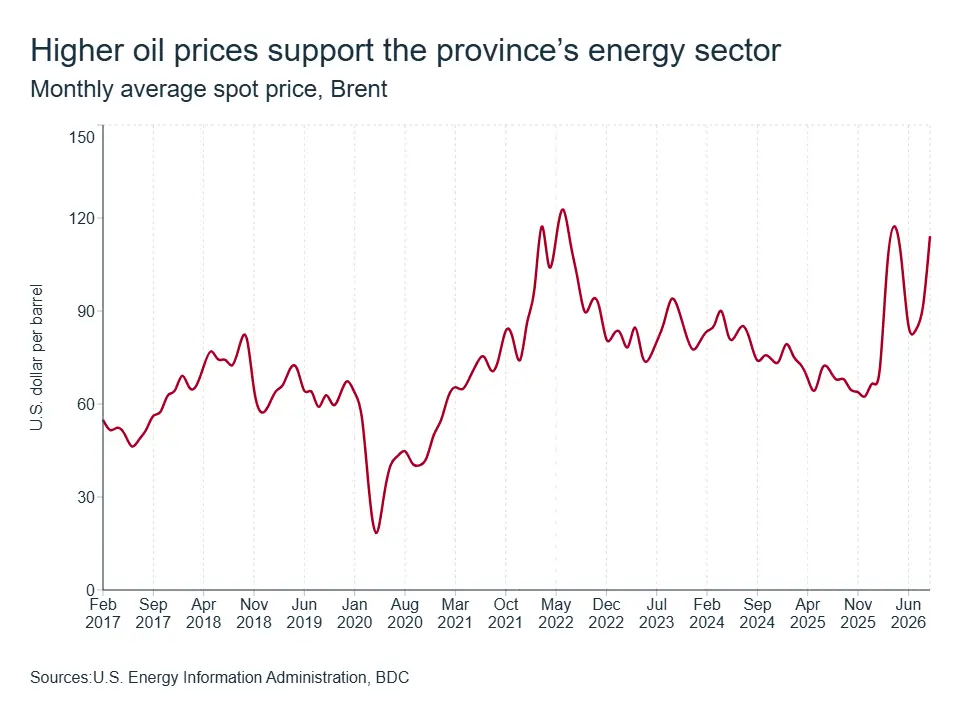
Alberta remains one of Canada’s strongest provincial economies in 2026, supported by high oil prices, rising production and resilient domestic activity. Oil prices strengthened again this fall, with WTI returning to around US$100 per barrel in September, providing a significant tailwind to energy-sector incomes, profits and provincial revenues. Drilling activity also remains robust, pointing to continued strength in production.
The labour market bounced back in September, adding 23,000 jobs after declining in August. Employment stood 2.9% above its year-earlier level, while the unemployment rate fell from 6.8% to 6.4%. Alberta also continues to have the highest labour-force participation rate among the provinces.
Consumer activity remains supportive. Retail sales rose 1.4% in July, reversing the previous month’s decline and signalling an improvement in household spending. The main counterweight is inflation. Consumer prices increased 3.8% year-over-year in August, with energy prices up 16.1%. While higher energy prices benefit Alberta’s resource sector, they are also putting additional pressure on household purchasing power.
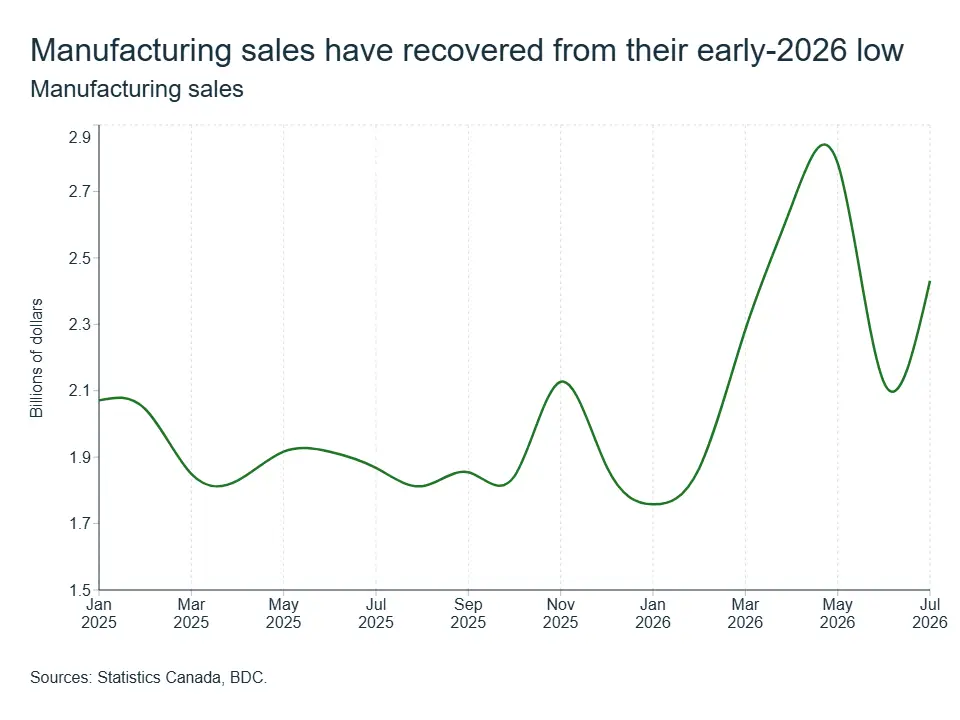
Manufacturing shipments have also recovered from their lows earlier this year.
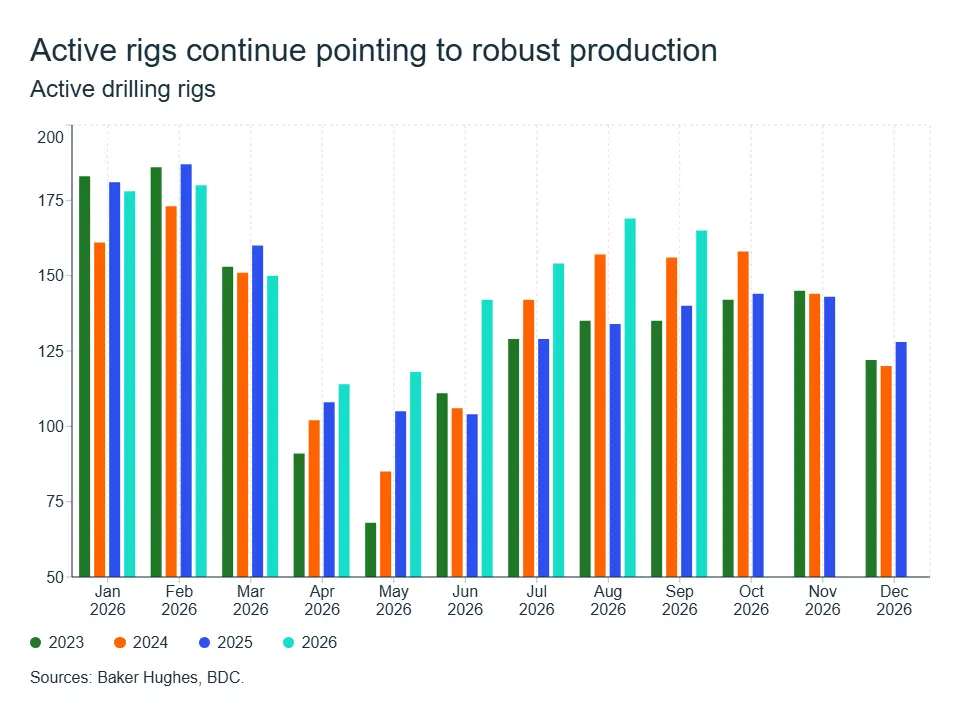
Overall, strong energy conditions and the rebound in employment should keep Alberta’s economy on solid footing. BDC forecasts real GDP growth of 2.4% in 2026 and 2.0% in 2027.
Saskatchewan
Saskatchewan remains among the stronger provincial economies in 2026, supported by favourable commodity markets and continued investment in the resource sector. Mining remains a key growth engine. Potash production has continued to increase, while uranium and other mining projects support investment despite some volatility in production. Higher oil prices this fall are providing an additional tailwind to the province’s energy sector.
The labour market remains resilient. Employment reached about 625,000 in September, while the unemployment rate stood at 5.4%. Employment was slightly above its year-earlier level, with gains in manufacturing, construction and health care helping support the labour market.
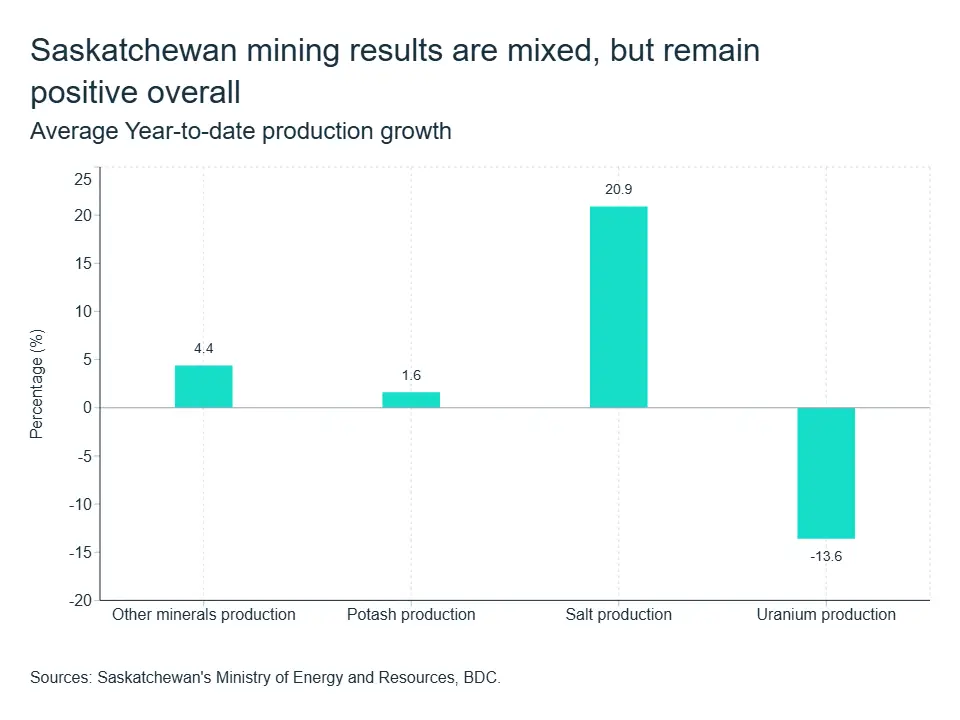
Consumer activity has also improved. Retail sales increased 2.9% month-over-month in the latest available data, providing a welcome pickup after weaker spending earlier in the year. Inflation remains a headwind, although price pressures eased somewhat in August. Consumer prices rose 3.5% year-over-year, down from 4.1% in July, with transportation costs boosted by sharply higher gasoline prices.
Manufacturing conditions remain uneven. Sales recovered earlier this year but fell to $2.38 billion in July from $2.58 billion in June, highlighting some volatility outside the resource sector.
Overall, Saskatchewan’s resource base, investment and resilient labour market should keep growth solid. BDC forecasts real GDP growth of 1.8% in 2026 and 1.7% in 2027.
Manitoba
Manitoba’s economy is expected to post moderate growth in 2026. Its diversified industrial base and relatively tight labour market continue to provide support, but slower employment momentum, elevated inflation and trade uncertainty are weighing on the outlook more so than earlier analysis suggested.
The labour market softened again in September. Employment declined by 4,400 jobs, or 0.6%, following August’s decline. At the same time, the unemployment rate held at a relatively low 5.0%, suggesting that labour-market conditions remain fairly tight despite weaker hiring.
Consumer conditions have become more challenging. Retail sales declined 0.4% month-over-month in the latest available provincial data. Inflation is adding to the pressure: consumer prices were 4.4% higher year-over-year in August, while prices edged down only 0.1% from July. Higher living costs are therefore likely to constrain household purchasing power.
Manufacturing has also lost some momentum recently. After recovering from weakness earlier in the year, the latest manufacturing shipments fell to their lowest level in six months, suggesting that the improvement through the spring has not been sustained. This is an important development for Manitoba given the role of manufacturing in the provincial economy. Renewed trade tensions remain an additional risk, while higher energy prices are raising costs for transportation-intensive businesses.
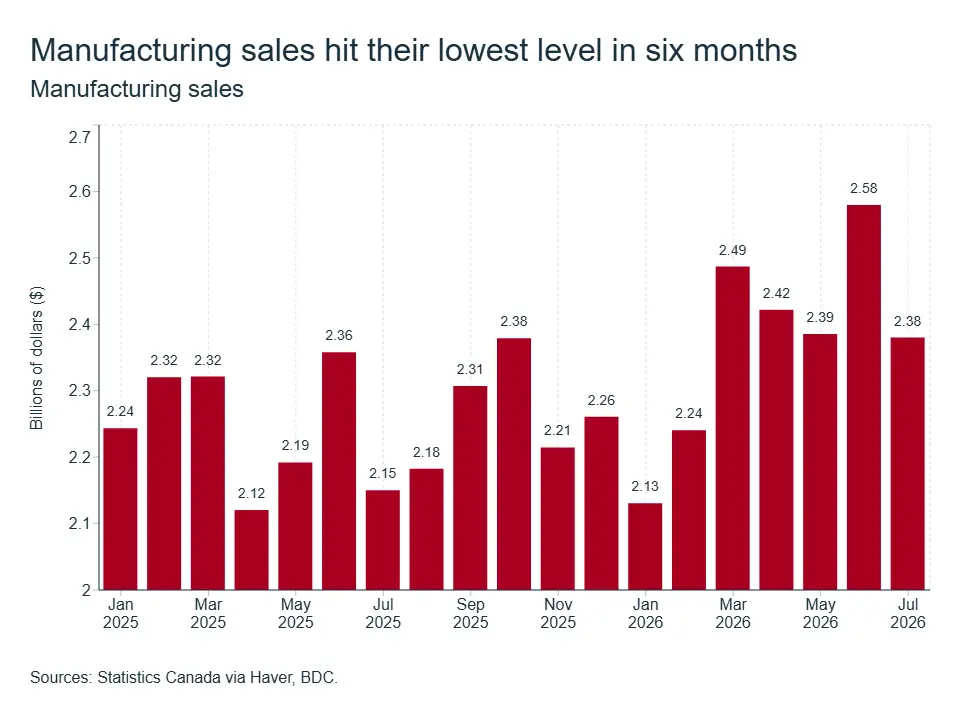
Overall, Manitoba enters the final months of 2026 with relatively tight labour-market conditions but weakening momentum elsewhere. Employment declined again in September, retail spending has softened and the latest manufacturing data were disappointing, while elevated inflation continues to pressure household purchasing power. BDC currently forecasts real GDP growth of 1.2% in 2026 and 1.4% in 2027.
Ontario
Employment in the manufacturing sector has declined for the first time since January.
Labour market data for September shows a decline in employment of 68,000 in Canada and 20,000 in Ontario. In Ontario, job losses were concentrated in the manufacturing, retail, accommodation, and professional services sectors.
Employment in the manufacturing sector fell by 5,900 in September. This decline is not surprising, given the new tariffs imposed by the United States on Canada. Nonetheless, it is a reversal of the trend, as the manufacturing sector had been experiencing solid growth since January. A recovery in activity and exports has led to the creation of 26,000 jobs since then. The new tariffs are proving difficult for many companies in the manufacturing sector and further job losses are expected.
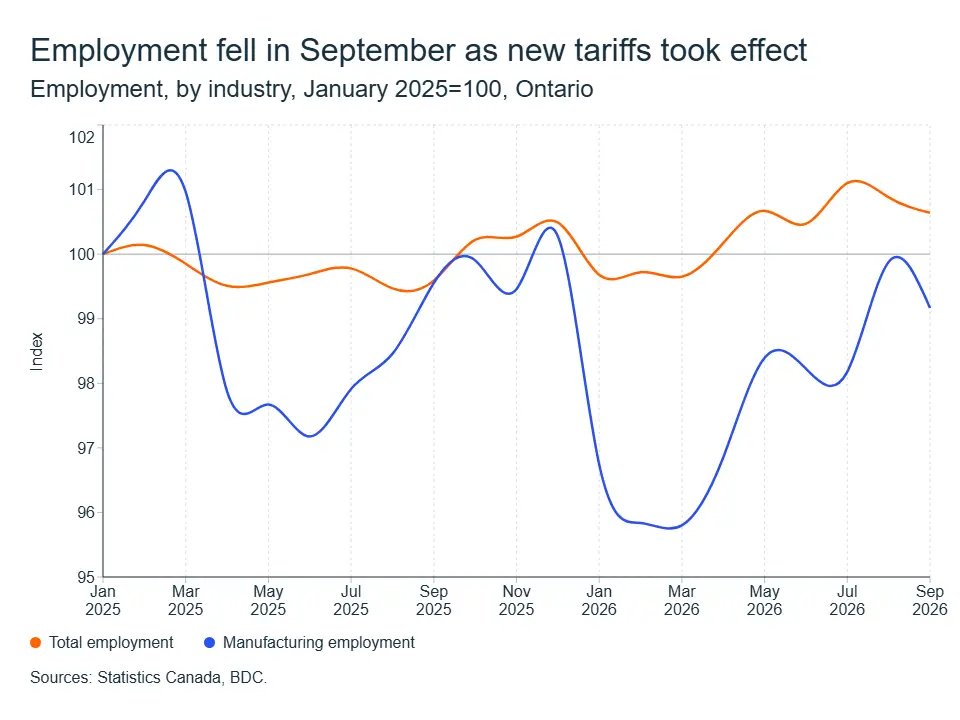
On a more positive note, employment in the construction sector continues to rise, with 10,800 new jobs created in September alone. Non-residential construction continues to grow, supported by the Ontario government's accelerated infrastructure investment. The construction of a new hospital in Toronto, among other projects, is having a positive impact on employment.
Quebec
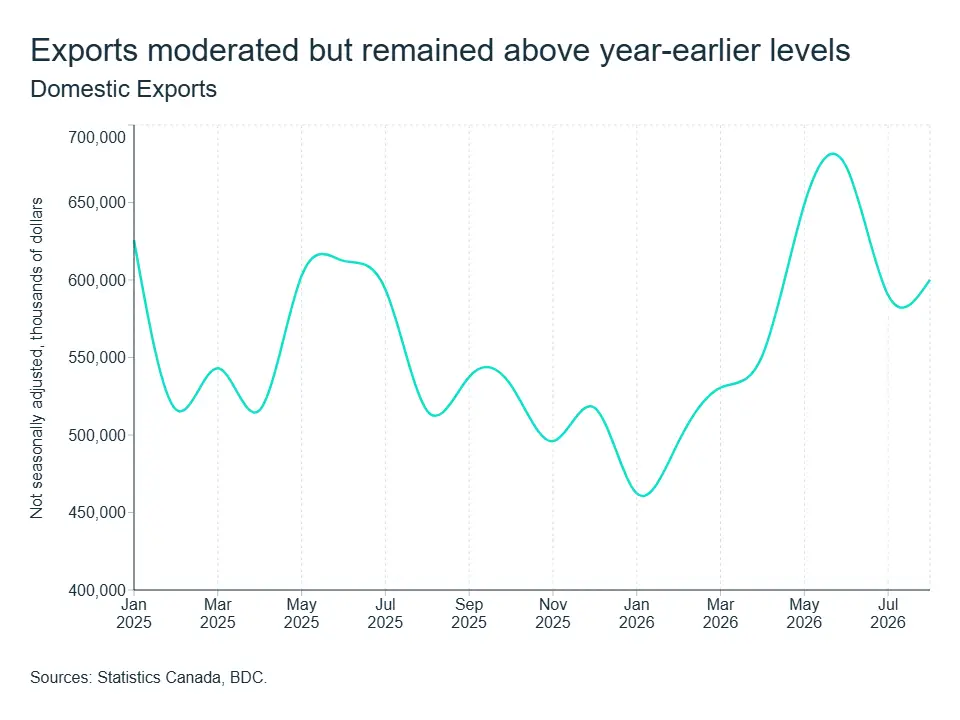
Quebec faces a difficult year as trade tensions intensify weighing further on exports and business decisions, and slower population growth limiting housing demand and consumer spending. Trade remains a central risk. Exports rose in the second quarter of 2026, but 11% of Quebec’s goods exports are now affected by new tariffs. The first round of trade data in August pointed to a weakening, exports then fell 2%. The impact of persistent trade tensions extends beyond export volumes: uncertainty can delay business investment and hiring.
The labour market weakened sharply in September, shedding 49,000 jobs and lifting the unemployment rate to 6.0%, from 5.6% in August. Losses were broad-based, with gains limited to accommodation and food services (+4,900) and professional, scientific and technical services (+1,800). Employment has now fallen by about 127,000 since the beginning of the year. Sustained job losses could further restrain consumption and residential demand.
Home sales are down 5% year-to-date, even as prices continue to rise. Higher borrowing costs, slower employment will be a drag on real estate activity and should cool down home price growth. Softer non-residential investment adds another drag on the economy.
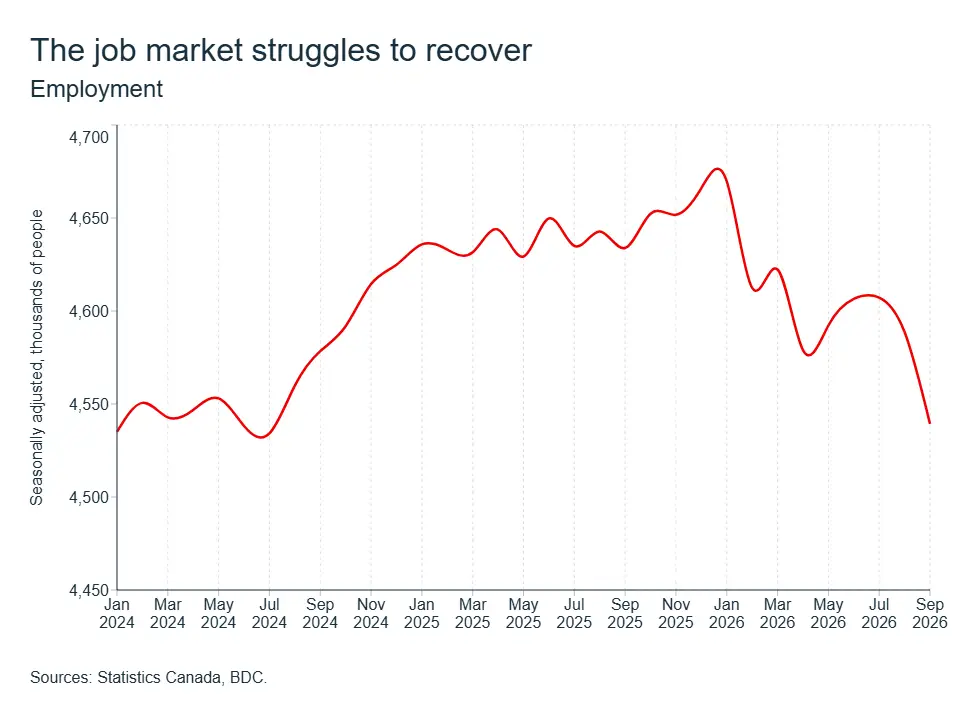
Targeted government measures should cushion part of the tariff impact on affected businesses and households, but the balance of risks remains tilted to the downside. Growth is forecast at 0.6% this year.
Nova Scotia
Nova Scotia’s economy continues to benefit from an improving trade picture, but domestic factors are mixed. Trade improved in August. Goods exports rose 16.4% from a year earlier, bringing year-to-date growth to 0.6%. Exports to the United States increased 2.4% year-to-date, although new tariffs continue to pose a risk to sectors exposed to the U.S. market.
The domestic picture is more mixed: Labour-market conditions are softening. Employment was flat in September post gains in August and July. The unemployment rate rose slightly to 6.3% in September, from 6.1% in August.
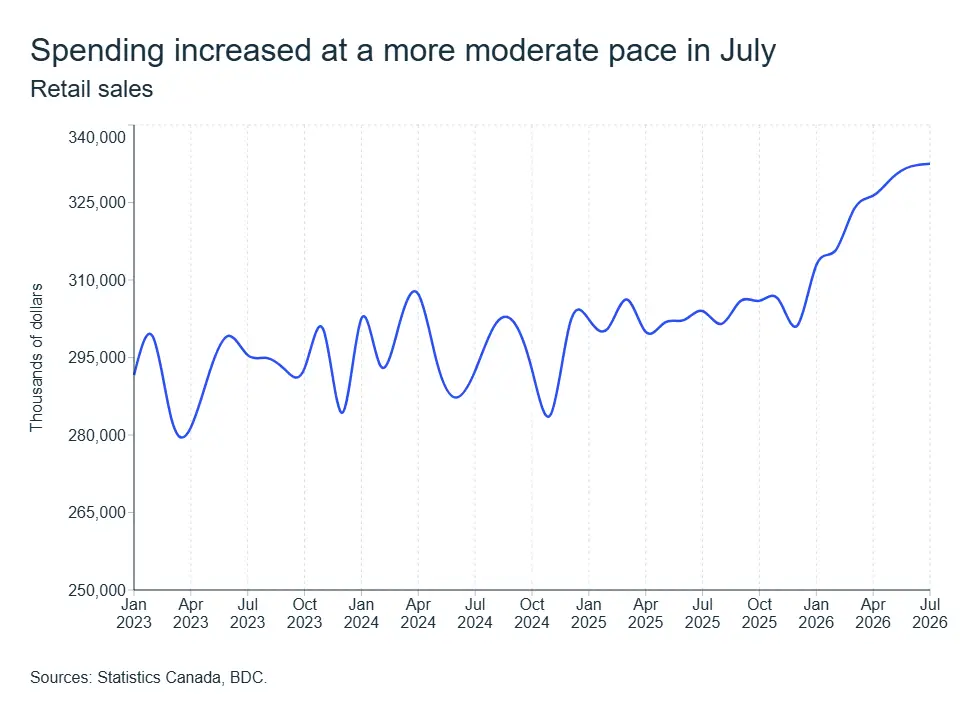
While retail sales rose 5.3% year-to-date through July, outpacing the national increase, average weekly earnings rose 4.4% year-over-year in August, below the 5.7% inflation excluding food. This points towards some pressure in purchasing power of households in the province and a potential weaker picture for consumer demand.
Tourism is offering support to the economy. Related revenues reached $1.4 billion in the first half of 2026, up 2.4% from a year earlier, and accommodation room nights increased 6% through July.
Long term support is expected to come from defence and shipbuilding. Our forecast is unchanged for the year, with real GDP expected to expand by roughly 1.3% in 2026.
New Brunswick
New Brunswick’s economy remains on track for moderate growth this year. Our 2026 real GDP growth forecast is unchanged at 1.2%. Labour-market conditions remain uneven. Employment fell in September and the unemployment rate edged up to 7.4%.
Consumer spending held up despite the mixed labour market, likely supported by population growth. Retail sales were 4.9% higher year-to-date through July, supporting growth but also leaving household demand vulnerable if employment weakens further. However, population growth is still adding to demand, with the population reaching about 883,500 in July.
Manufacturing shipments have risen sharply since early 2026, but the headline increase overstates the sector’s underlying strength. New Brunswick manufacturing is concentrated in refined petroleum, food processing and forest products, making monthly results highly sensitive to commodity prices, refinery operations and U.S. demand.
Refined petroleum has been a key source of strength. However, Irving Oil’s Operation Osprey at the Saint John refinery began in early September and is expected to last till mid November. The $235-million maintenance will temporarily weigh on manufacturing shipments and exports through much of the fourth quarter. Beyond the temporary shutdown, the investment should improve refinery reliability and productive capacity, over the longer term.
Exports remain an important growth driver, led by energy and seafood. The latest U.S. measures directly affect about 2% of New Brunswick exports. The immediate exposure is therefore limited, but the high concentration of shipments going to the U.S. means further tariff changes could have a much larger impact.
Prince Edward Island
PEI’s economy is moderating as population growth eases. Population growth was up only 0.2% from a year earlier and down for a third consecutive quarter. This shift should in turn moderate growth in consumer spending and other sensitive sectors. Household spending remains resilient, although recent increases have been moderate as population growth has slowed. Retail sales were up 9.4% from a year earlier but only 0.2% from June.
The trade outlook remains uncertain. PEI’s economy is concentrated in food processing, agriculture, fisheries and other export-oriented industries, leaving its trade sector highly sensitive to foreign trade policies. So far, trade performed well, total exports increased by 7%. But weaker growth in recent months point towards a loss in momentum.
Overall, consumer spending and residential construction are cushioning the slowdown, while weaker demographics, uneven labour conditions and export uncertainty constrain the outlook. Sustaining the 1.5% growth forecast will depend increasingly on productivity and export performance rather than the rapid population gains that drove growth in recent years.
Newfoundland and Labrador
Newfoundland and Labrador is expected to lead provincial growth in 2026. We expect GDP growth of 3.0%, driven mainly by stronger oil and mineral production.
The resource sector remains the main growth engine. Offshore oil production reached 8.2 million barrels in August, up 4.4% from a year earlier, while elevated oil prices continue to support producer revenues. Brent crude was trading near US$100 per barrel in early October, and the latest forecasts point to continued strength amid persistent Middle East supply disruptions. Mineral shipments totalled $4.6 billion in 2025, up 9.0%, while the seafood industry reached a record $2.1 billion in market value.
Consumer spending remains supportive: retail sales increased 4.0% year-to-date through July, despite a 1.5% monthly decline. Housing construction has also strengthened, with starts up 17% year-to-date through August, although home sales activity remains uneven.
Overall, strong commodity prices, robust exports and continued investment in resource projects are driving growth this year.