

Finding your match when buying or selling a business
A 2026 BDC study found that nearly 1 in 5 Canadian entrepreneurs plan to exit their business within the next 5 years—and over a third of them want to sell to a Canadian buyer or investor. This wave of business transitions creates exciting opportunities, but also big challenges.
A successful business transfer isn’t just about signing a deal. It’s about finding the right match, planning ahead and securing financing that supports a smooth integration. In this guide, we’ll walk you through the essential steps buyers and sellers must take before closing the deal to make the transition a success.
Know what you want to achieve before starting the process. Clear objectives make it easier to find the right match and plan effectively.
Devesh Dwivedi
Senior Consultant, BDC Advisory Services
Plan enough time for your business transition
One of the most common misconceptions is that buying or selling a business is a quick transaction. In reality, the transaction itself is just one step of a much longer journey—the transition—which includes planning, negotiations and integration. It takes years to complete a business transition successfully.
Differences between a transaction and a transition
| Transaction | Transition |
|---|---|
| One step of a business transition | Every step of a business transition |
| The sale or purchase transaction | The planning, transaction and integration |
| Takes up to 18 months | Takes 3-5 years, including the transaction |
Bottom line: give yourself time. Rushing through a transition often leads to missed details, poor integration and deals that fail to deliver the expected results.
Steps of a business sale or acquisition
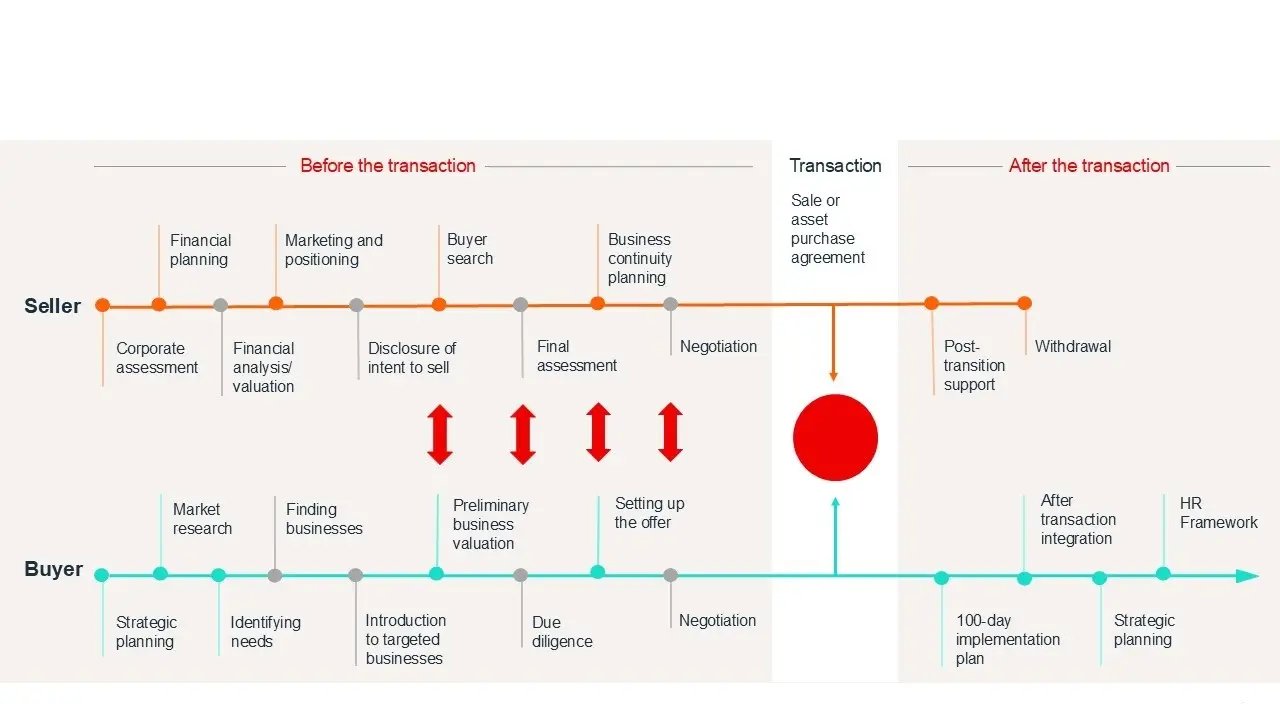
This timeline highlights the key steps that buyers and sellers must take before and after the transaction (shown by the red circle). Both sides have important tasks to complete before the sale, followed by an integration phase afterwards. While a solid integration plan is essential, what you do before the deal is finalized is just as important.
Understand buyer and seller perspectives
Buyers and sellers often have very different priorities. Sellers want to maximize value and exit smoothly, while buyers focus on finding the right price and ensuring the business fits their growth strategy.
Recognizing these differences early helps both sides manage expectations and avoid misunderstandings.
Perspectives of buyers and sellers
| Seller | Buyer |
|---|---|
| Sell at the highest value | Buy at the right price |
| Exit the business | Acquire the business |
| Ensure the business is worth selling | Find a business worth buying |
Understanding these perspectives is the first step toward building trust and negotiating a deal that works for everyone.
Build your team of experts
Business transitions are complex. Trying to handle everything alone can lead to costly mistakes. That’s why assembling a team of professionals is essential.
For sellers, these experts help present your business in the best light and protect your interests. For buyers, they provide critical insights to avoid overpaying and ensure a smooth integration. Here’s who you need and why.
- Accountant: Sellers need accurate financial statements because buyers will examine them to assess the health and stability of the business. Buyers rely on accountants to analyze those statements and flag any financial risk.
- Lawyer: Both sides need legal protection. Lawyers draft and review agreements, ensure compliance and prevent costly disputes.
- Business valuator: Sellers want a fair price; buyers want to avoid overpaying. A valuator provides an objective assessment and reduces negotiation friction.
- Banker: Financing is often the key to making a deal work. Bankers help structure financing so both sides can move forward and keep enough cash for day-to-day needs.
- Strategic advisor:Transitions involve many steps. Advisors keep the process organized, make sure decisions match your goals and help you plan for challenges.
To find these experts, start with referrals from trusted business owners or professionals you already work with, or use directories like LinkedIn and the Exit Planning Institute.
Assess your business
Before you start looking for a buyer or a company to acquire, take a close look at your own business. This step helps you identify potential roadblocks and make improvements that increase your chances of success.
For sellers, the goal is to make your business attractive and ready for sale. Ask yourself:
- Are your financial statements and strategic plan ready?
- Any legal or regulatory issues to fix?
- Is your business model strong and competitive?
- What is your growth potential?
- Any operational risks that could lower value?
For buyers, the focus is on readiness to acquire and integrate another business. Consider:
- Do you have a clear vision for your company and the acquisition?
- Do you understand your market and its growth potential?
- Do you have enough capital for purchase and integration?
- Does your team have the skills to handle an integration, or will you need new talent?
- Are your systems ready to absorb another business?
Answering these questions early helps you avoid surprises and build confidence in the process.
Start your assessment with strategic planning
If answering the questions above felt difficult, you’re not alone—many entrepreneurs discover gaps in their knowledge when faced with such questions.
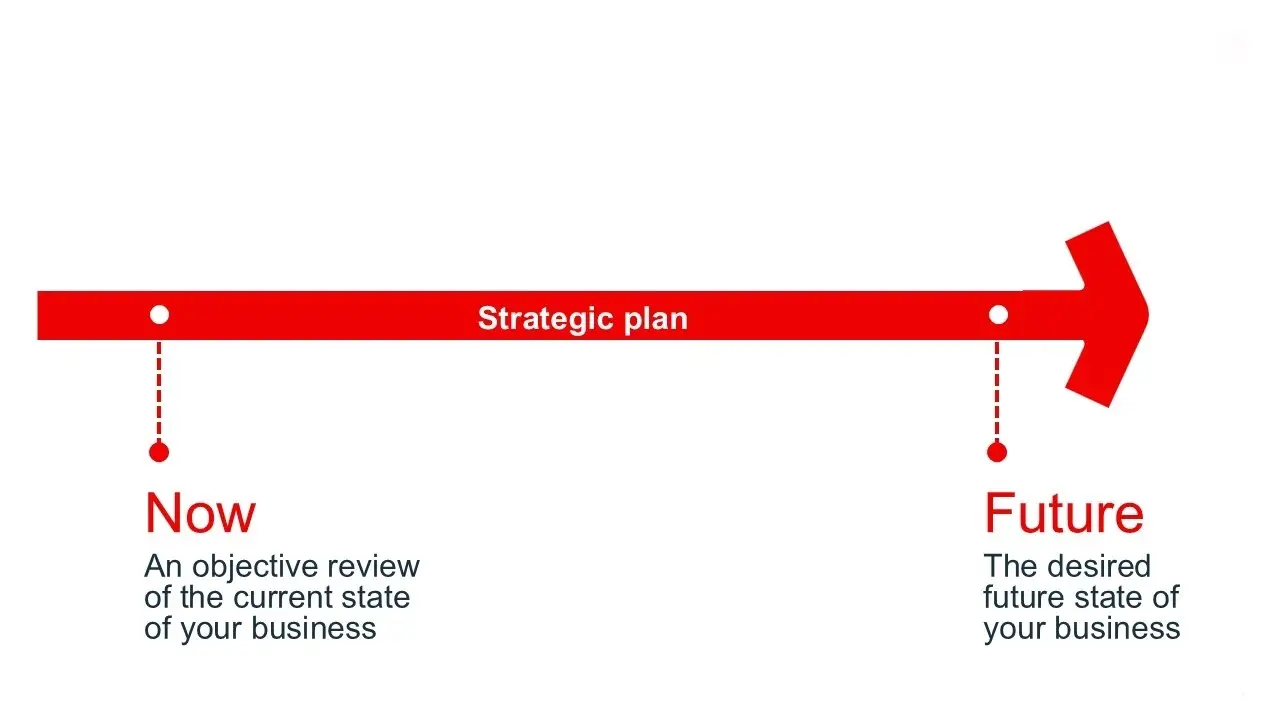
Strategic planning is the best way to uncover and address issues in your business. It helps you see where it stands today, define where you want it to go and establish concrete steps to get there.
Start by reviewing your current state:
- finances
- organizational structure
- products or services
- competitive environment
Then define your desired future state:
- vision
- long-term objectives
A good strategic plan outlines the steps to get there, with timelines and measurable goals so you can track progress.
A roadmap towards your future
Set clear objectives for your business transition
Know what you want to achieve before starting the process. Clear objectives make it easier to find the right match and plan effectively.
Here are some common reasons sellers and buyers have for pursuing a transition, and the ways each reason influences the process.
Sellers
| Objective | Strategy |
|---|---|
| Fund retirement or new venture | Maximize business value Get the highest price possible |
| Preserve legacy or continuity | Sell business to team members Transfer business to children |
| Exit business completely | Seek an experienced buyer |
Buyers
| Objective | Strategy |
|---|---|
| Grow the business | Target companies with high growth potential Seek businesses with systems that complement yours and create synergies |
| Increase market share | Acquire a competitor |
| Improve control over supply chain | Acquire a supplier |
| Become an entrepreneur | Target businesses where the owner will stay on during the transition |
Once your goals are clear, create a plan:
- Sellers: Exit or succession plan
- Buyers: Acquisition plan
These plans help you:
- define objectives
- prioritize actions
- monitor progress
Get your finances in order
Before starting a transition, make sure your finances are solid. Financial statements provide a snapshot of your company’s financial health and critical information about your business performance.
Sellers should be prepared to provide buyers with financial statements, projections, tax returns and other key documents. These records show the business’s stability and future potential, building buyer confidence.
Buyers should have financial statements to:
- Confirm your ability to purchase another business.
- Determine how much down-payment you can afford—usually, 20% to 30% of the purchase price.
- Discuss financing options with your banker.
- Avoid overextending yourself and ensure liquidity for unexpected costs.
Key financial statements and what they show
- Balance sheet: What your company owns and owes.
- Income statement: How profitable your business is.
- Cash flow statement: How money moves through your business.
- Statement of retained earnings: Cumulative earnings after costs, taxes and dividends.
Strong financials make negotiations easier and help secure financing.
Ownership transfer is a big change. […] A well-structured financing plan reduces risk for everyone.
Grace Bartz
Director, BDC Growth and Transition Capital
Know the value of the business
Before getting to the business transaction, both parties need a clear idea of what the business is worth. A proper valuation sets realistic expectations and prevents costly mistakes.
For sellers, knowing the value helps you price the business fairly and identify improvements that could boost the value before listing.
For buyers, it ensures you don’t overpay and that the deal supports your financial goals.
Who conducts a business valuation?
The kind of professional you need depends on how big and complicated the business deal is.
For smaller businesses or sales within families, an accountant with experience in business valuation can often give a fair idea of what the company is worth. Sometimes, banks will also do their own valuation if they are providing the financing.
For bigger deals, or if buyers and sellers can’t agree on the price, you might need to hire a Chartered Business Valuator.
Whatever the case, don’t try to value the business on your own. Sellers tend to think their business is worth more than it really is. Whereas buyers often underestimate the cost of the transition or overestimate the eventual savings from synergies.
Mistakes happen when entrepreneurs don’t use a professional business valuator. Common ones include:
- using the wrong valuation approach
- making incorrect assumptions
- ignoring changing trends
Reduce risk with the right financing structure
Financing isn’t just for buyers—both benefit from a structure that supports a smooth transition.
Why it matters
Ownership transfer is a big change. Buyers often need sellers to stay involved during the integration, and sellers rarely receive full payment upfront. A well-structured financing plan reduces risk for everyone.
Vendor financing
Vendor financing (also called a vendor note or takeback) is when the seller contributes to the financing package. This can help bridge financing gaps, especially if the business has a lot of intangible assets, like intellectual property.
Traditional banks usually prefer to give loans backed by physical assets, such as real estate or equipment. If a business’s value is mostly in things like its reputation or intellectual property, it can be hard for buyers to get enough money from the bank. When the seller offers vendor financing, it helps the buyer get the money needed to close the deal.
Vendor financing offers benefits for both sides:
- Reduces the buyer’s upfront cash requirement
- Leaves the buyer with liquidity to cover operations and unexpected costs
- Provides the seller with continued cash flow as the buyer repays the loan
- Keeps both parties invested in a successful transition
- Helps reconcile differences in perceived business value
Build flexibility into the financing package
Integration often costs more then expected. About two-thirds of companies underperform in the first year after a transfer. To manage this risk, financing structure should:
- Start with interest-only payments during the early transition.
- Delay principal payments until cash flow stabilizes.
- Maintain a comfortable liquidity margin for reinvestment and contingencies.
Types of financing available for business acquisitions
- Buyer’s equity: Cash downpayment
- Vendor financing: Seller contributes to financing
- Senior debt: Secured loans, lines of credit, mortgage
- Outside equity: Selling a stake to investors
- Mezzanine financing: Flexible, unsecured financing based on cash flow
A balanced mix—where everyone has “skin in the game”—is usually best.
Example: Financing for a $15 million acquisition
| Financing | Amount |
|---|---|
| Buyer’s equity | $2,250,000 |
| Vendor debt | $2,250,000 |
| Senior debt | $8,500,000 |
| Mezzanine financing | $2,000,000 |
| Total | $15,000,000 |
This structure gives the buyer flexibility to reinvest in growth while the seller is paid over time. Vendor and mezzanine financing typically require little or no cash payments initially, easing pressure during the integration.
When sellers remain involved and retain a financial interest, confidence increases for both the buyer and the bank—often resulting in a higher purchase price for the seller.
Bottom line, while buying or selling a business can be complicated, thoughtful preparation and the right financing options help ensure a smooth and successful transition for everyone involved.
Next step
Find out how BDC can provide financing tailored to your needs and expert advice to help you achieve a smooth and successful business transfer.